Engineer Shot Seeds From Guns to Reforest 12,000 Acres
When Ricardo Codorníu climbed a Spanish mountain in 1889 and saw not a single tree, he launched one of Europe's most creative reforestation projects. His team fired pine seeds from shotguns to reach impossible slopes, transforming 12,000 barren acres into a thriving forest that still stands 130 years later.
When Spanish engineer Ricardo Codorníu reached the peak of Morrón de Espuña in 1889, the view broke his heart. Decades of logging had stripped the Sierra Espuña mountains so bare he couldn't spot a single pine or oak tree anywhere.
What happened next became one of Europe's greatest environmental comeback stories. Codorníu convinced officials to let him attempt something nobody had tried at that scale: replanting an entire mountain range from scratch.
The project faced an immediate problem. Workers couldn't reach the steepest slopes to plant seeds by hand. So the team got creative and loaded pine nuts into shotgun barrels, firing them onto impossible terrain where gravity and rain would do the rest.
That unconventional method was just one piece of a massive 12-year effort. Between 1889 and 1901, crews built 150 miles of roads and trails across the mountains. They constructed seven nurseries covering 12 acres to grow millions of seedlings from native species.
The engineering went far beyond planting. To stop the catastrophic erosion and flooding that plagued the region, workers carved 420,000 small terraces into hillsides to hold soil in place. They built 90 miles of retaining dams and two major flood control structures to protect the Segura River basin below.
The transformation happened faster than anyone expected. Within 20 years, Sierra Espuña had regained much of its forest cover. The success inspired Spain to create its first national Hydrological-Forestry Service and sparked similar restoration projects across the country.
The Ripple Effect
Codorníu's vision reached far beyond those 12,000 acres. His detailed studies of climate, soil, and vegetation created a blueprint that shaped Spanish conservation policy for generations. In 1931, officials recognized the area as a Site of National Interest.
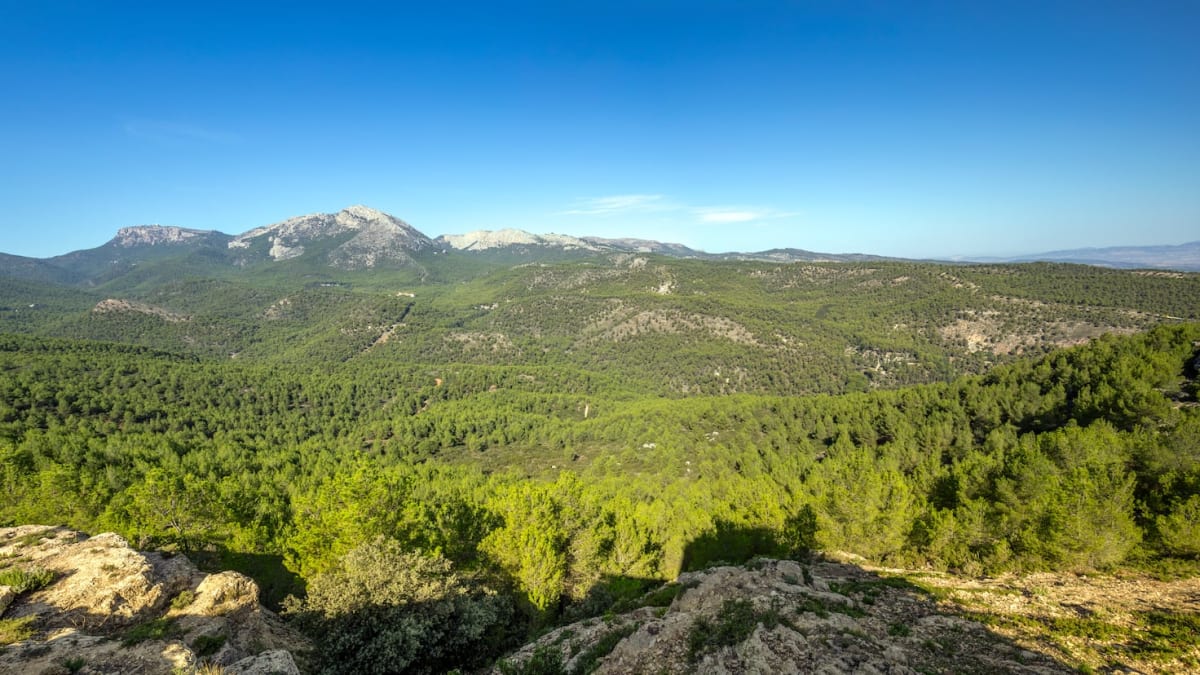
Today, the forest serves as the green lung of Spain's Murcia region. Hikers, researchers, and families enjoy trails through woods that were once completely bare. The project proved that even landscapes devastated by centuries of exploitation can recover with creativity, persistence, and smart engineering.
The success matters now more than ever as communities worldwide face similar environmental challenges. Sierra Espuña stands as living proof that damaged ecosystems can heal when people commit to long-term restoration, even if it means thinking outside the box and loading seeds into shotguns.
More Images

Based on reporting by Google News - Reforestation
This story was written by BrightWire based on verified news reports.
Spread the positivity!
Share this good news with someone who needs it