Engineers Solve Mystery With Falling Rain a Mile Underground
Engineers at a South Dakota research facility discovered that rainwater rushing down mine shafts pushes air like a giant piston, solving a ventilation mystery. The breakthrough could help underground operations worldwide manage airflow during storms and emergencies.
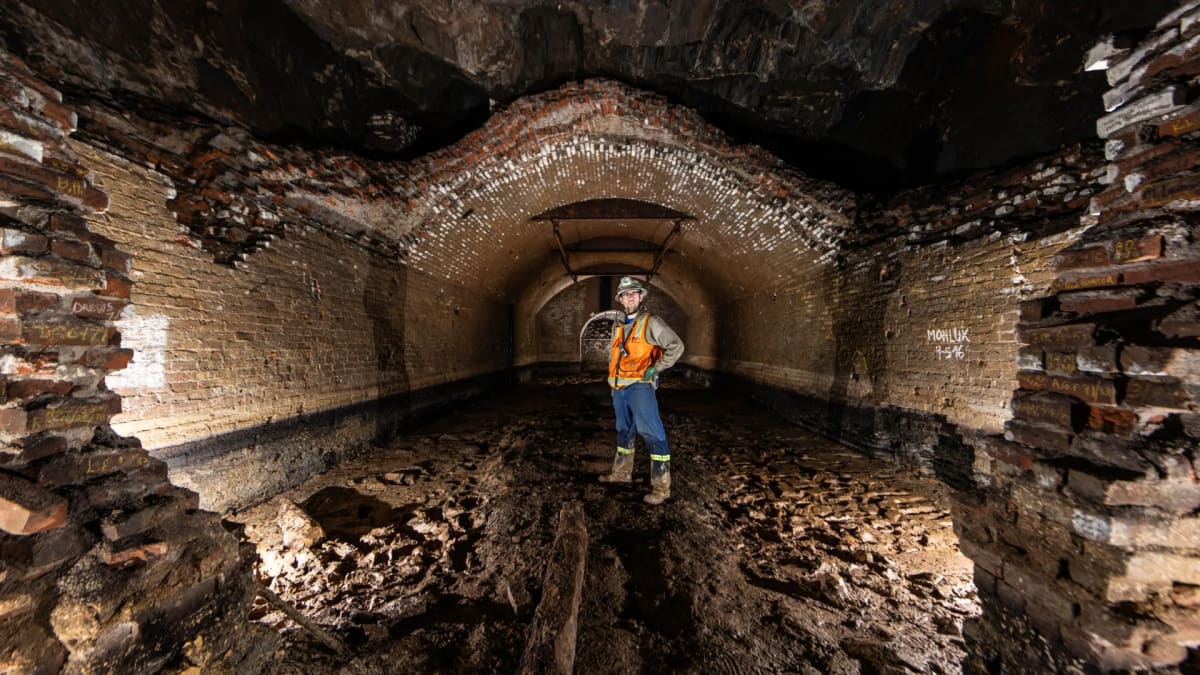
Deep beneath the Black Hills of South Dakota, mining engineers noticed something strange: during heavy rainstorms, the air itself would sometimes flow backward through their tunnels.
Jason Connot, who manages ventilation at the Sanford Underground Research Facility, first spotted the pattern in 2019. During intense rainfall, airflow would weaken or reverse direction in parts of the massive underground laboratory located nearly a mile below the surface.
"We could all see these airflow changes occurring throughout the underground, and we were like, why is this happening?" Connot said. The answer wasn't obvious, but it was critical for worker safety in the sprawling network of tunnels and shafts.
The facility operates much like an active mine, with fresh air entering through two shafts and exiting through two others. One exhaust route, called 5 Shaft, doubles as an overflow route when storms dump more water than the underground pumps can handle.
The breakthrough came after new sensors were installed to track air movement more precisely. During a test of the shaft's water system, sensors recorded an unexpected surge in airflow deep underground on the 4850 Level.
The culprit turned out to be surprisingly simple: falling water. As rainwater rushed down the 5 Shaft during storms, it pushed air through the tunnels like a giant syringe plunger forcing air through a needle.
Connot found similar reports from municipal sewer systems and worked with colleagues at South Dakota Mines to create mathematical models. When they plugged in SURF's measurements, the numbers matched perfectly with what they'd observed underground.
"You would not think the weight of water droplets could move so much air," Connot said. But the physics proved undeniable.
Why This Inspires
The discovery matters far beyond one research facility. Mining operations worldwide sometimes pour water down shafts to fight underground fires, and understanding how that affects airflow could save lives in emergencies.
Because SURF functions as a research lab rather than an active mine, engineers had time to investigate thoroughly. "This is not the kind of study you'd always have time to do in an operational mine," Connot noted.
Bryce Pietzyk, director of underground operations, praised Connot's determination to solve the puzzle. "No one had previously taken the time to grasp this issue, but it's absolutely critical," he said.
Now armed with predictive models, the team can anticipate airflow changes before storms hit and adjust their ventilation systems accordingly. What started as a confusing observation became a tool for keeping workers safer in underground facilities around the world.
Sometimes the most important discoveries come from someone who simply refuses to accept "that's just how it is" as an answer.
Based on reporting by Science Daily - Technology
This story was written by BrightWire based on verified news reports.
Spread the positivity!
Share this good news with someone who needs it