Europe Launches First Rocket to Orbit From Its Own Soil
A German startup just made history by launching the first rocket to orbit from Western Europe, ending the continent's reliance on foreign launch sites. After a failed first attempt, Isar Aerospace's Spectrum rocket soared from Norway and delivered five satellites to space.
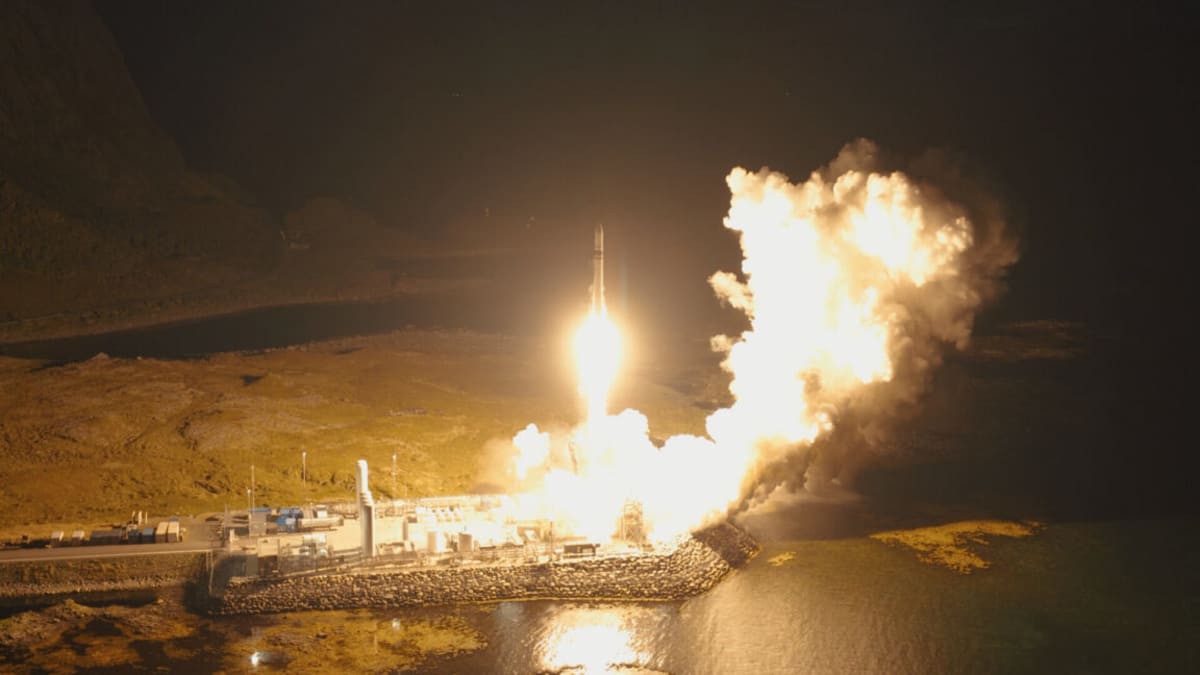
For decades, Europe built rockets powerful enough to reach space but always had to launch them from elsewhere. That changed on September 5, 2026, when a sleek white rocket lit up the night sky over Norway's Arctic Circle.
Isar Aerospace's Spectrum rocket lifted off at 10:12 pm from Andøya Spaceport in northern Norway, marking the first time an orbital-class rocket successfully reached space from Western European soil. The 28-metre vehicle carried five small satellites built by universities and companies across the continent.
The flight was textbook perfect. Spectrum's nine first-stage engines roared to life, pushing the rocket through the thickest part of the atmosphere before shutting down and separating. The second stage ignited, the protective nose cone fell away, and the rocket crossed the invisible boundary of space at 100 kilometres up.
But reaching space wasn't enough. The real achievement came when Spectrum accelerated to the blistering sideways speed needed to stay in orbit, then released its five passengers one by one. Universities in Germany, Slovenia, Austria, and Norway watched their CubeSats float free, along with a Bulgarian commercial satellite.
The success feels even sweeter considering what happened 17 months earlier. Spectrum's first launch attempt in March 2025 ended after just 30 seconds when a vent valve opened unexpectedly, causing the rocket to tumble and triggering its self-destruct system. The rocket splashed into the ocean, and skeptics wondered if Isar could recover.
The company treated that failure as a learning opportunity. Engineers identified the valve problem, redesigned the system, and prepared for a second attempt with actual customer payloads on board.
Why This Inspires
This achievement represents more than national pride. For years, European space agencies and companies depended on launching from French Guiana in South America or booking rides on rockets from other countries. Now, a startup with a homegrown design has proven that Europe can control its own access to space from its own territory.
The five satellites now circling Earth came from student teams and small companies who believed in Isar's vision enough to trust their hardware to an unproven rocket. Their faith paid off with a front-row seat to history.
One successful flight doesn't guarantee future success. Isar still needs to prove it can launch reliably and frequently. But the company now has something priceless: proof that its rocket works when everything goes right.
Europe's space industry just opened a new chapter written in fire and ambition.
More Images



Based on reporting by Google: SpaceX launch success
This story was written by BrightWire based on verified news reports.
Spread the positivity!
Share this good news with someone who needs it