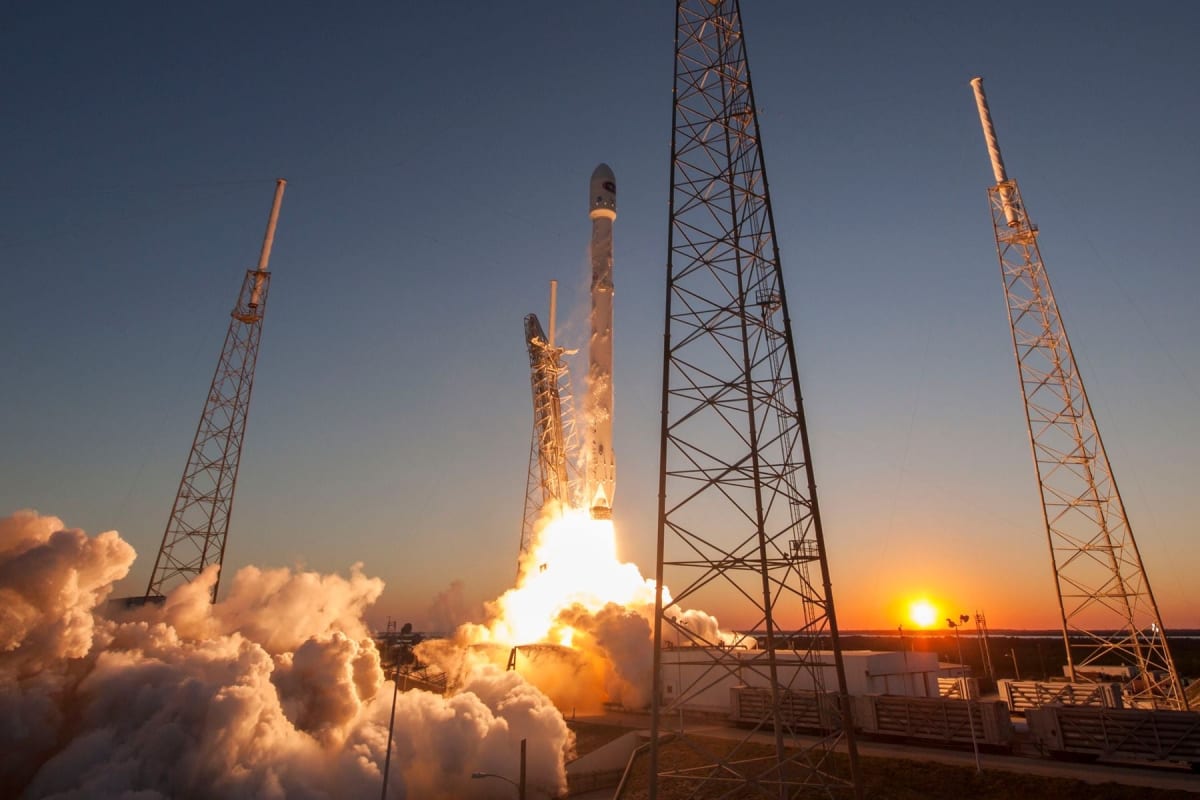
Europe's First Commercial Rocket Reaches Orbit from Norway
A German startup just launched Europe's first commercial rocket into orbit from Arctic Norway, while an Indian satellite company raised $100 million. Two continents are racing toward the stars with homegrown innovation.
Two space startups on opposite sides of the world just proved that reaching orbit doesn't require being a superpower anymore.
German company Isar Aerospace made history Sunday when its Spectrum rocket successfully launched from Arctic Norway and reached orbit. This marks the first time a commercial European rocket has achieved this milestone, giving the continent its own pathway to space without depending on other nations.
The launch site in Norway's far north represents a new era for European space ambitions. For years, Europe has relied on government programs and foreign partners to send satellites into orbit, but private companies are now stepping up to fill the gap.
Halfway around the world, Indian space tech startup Pixxel announced it secured $100 million in funding from major investors including Google. Singapore's state investor Temasek and British venture firm Seraphim led the Series C round, showing serious confidence in India's growing space industry.
Pixxel builds advanced satellites that capture detailed images of Earth, helping companies and governments monitor everything from crop health to climate change. The company represents a wave of Indian space startups transforming the country into a serious player in commercial spaceflight.
The Ripple Effect
These breakthroughs signal a fundamental shift in who gets to access space. What was once the exclusive domain of superpowers and massive government agencies is now opening to countries and companies that were locked out for decades.
Europe gaining independent commercial launch capability means scientists, businesses, and researchers across the continent can send satellites up faster and cheaper than ever before. They won't need to wait in line behind larger nations or pay premium prices for limited launch slots.
India's space tech investment boom creates high-skilled jobs and positions the country as a manufacturing and innovation hub for the global satellite industry. The $100 million heading to Pixxel will fund new technology, hire engineers, and prove that breakthrough space companies can emerge from anywhere.
The global satellite market is exploding as more industries realize how valuable space-based data and communications have become. From precision agriculture to disaster response to connecting remote communities, satellites solve real problems on Earth.
These twin successes show the future of space belongs to everyone willing to innovate and take risks, not just the usual suspects.
Based on reporting by Google News - Tech Breakthrough
This story was written by BrightWire based on verified news reports.
Spread the positivity!
Share this good news with someone who needs it