Ex-Zookeeper's Robot Vaccinates Badgers Without Stress
A retired London zookeeper invented a robot that can vaccinate wild badgers in seconds without human contact, offering a humane alternative to controversial culling programs. The machine, originally built for a shy tiger, could help protect Britain's largest wild carnivore while combating bovine TB.
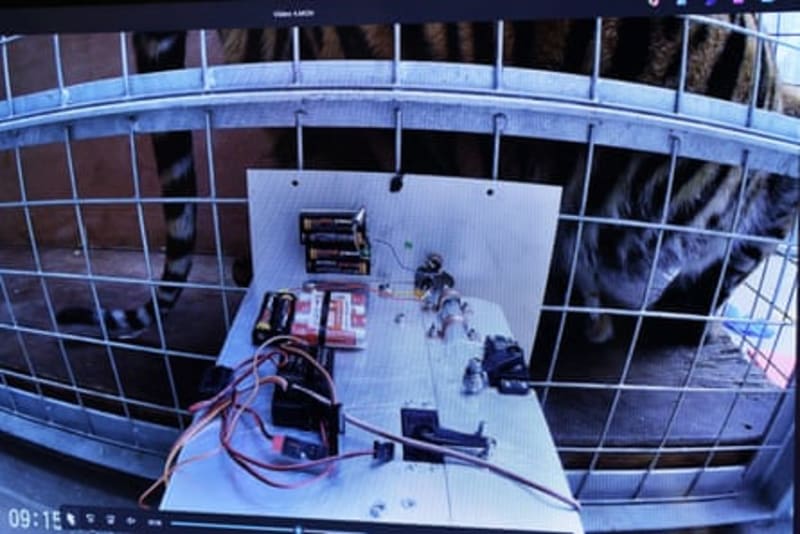
When Cinta the tiger was too timid to let zookeepers near her, Tony Cholerton built a robot to solve the problem. The retired London zookeeper, who spent decades as a motorcycle engineer, created Robovacc to deliver vaccinations remotely using parts from toy airplane controllers.
The invention worked brilliantly. Cinta sat up briefly as the needle administered her shot, then calmly returned to her meal.
Now Cholerton believes his fully automated version could end the decade-long badger culling controversy in England. Badgers have been killed to prevent bovine TB spreading to cattle, but wildlife charities argue vaccination is more humane for Britain's largest surviving wild carnivore.
The challenge has always been cost and stress. Traditional badger vaccination requires catching animals in traps, holding them for hours overnight, then having trained vaccinators inject them manually.
Cholerton's Autovacc changes everything. The machine can vaccinate up to 20 badgers per colony without human intervention, detaining each animal for only a minute or two.
Here's how it works: A badger follows food bait into a clear tunnel where sensors detect its position. Smart technology ensures no animal gets vaccinated twice by spraying nanoparticles that trigger sensors on return visits.
When an unvaccinated badger enters, doors guide it to the vaccination section. The animal's movement is briefly restricted so its hindquarters rest against sensors, triggering an instant injection from a protected needle.
Multiple safety mechanisms prevent injury, and doors immediately open to release the animal. The entire process takes seconds.
Cholerton spent evenings in his east London flat perfecting the design while working his day job at London Zoo for the past decade. Vets there successfully used versions to vaccinate lions and Diana monkeys.
The Ripple Effect
The technology could reach far beyond badgers. Cholerton envisions using it for endangered captive carnivores like Amur leopards, minimizing human contact so they can be returned to the wild.
Conservation scientists and farmers could trial the machines to prove badger vaccination works at scale. Mass production would be inexpensive, making the solution accessible across rural England.
Rosie Wood from Badger Trust praised the stress-free approach for captive animals and noted its potential for future zoonotic pandemic responses. The technology could be adapted for countless wildlife vaccination challenges scientists haven't even identified yet.
Cholerton dreams of collaboration between scientists, conservation charities, and interested farmers. His hope is simple: give researchers the tools to prove badger vaccination works, helping both wildlife and livestock farmers.
If successful, no government could justify culling over this humane alternative.
More Images



Based on reporting by Guardian Environment
This story was written by BrightWire based on verified news reports.
Spread the positivity!
Share this good news with someone who needs it