Eye Color Focus Discovery May Help Treat Nearsightedness
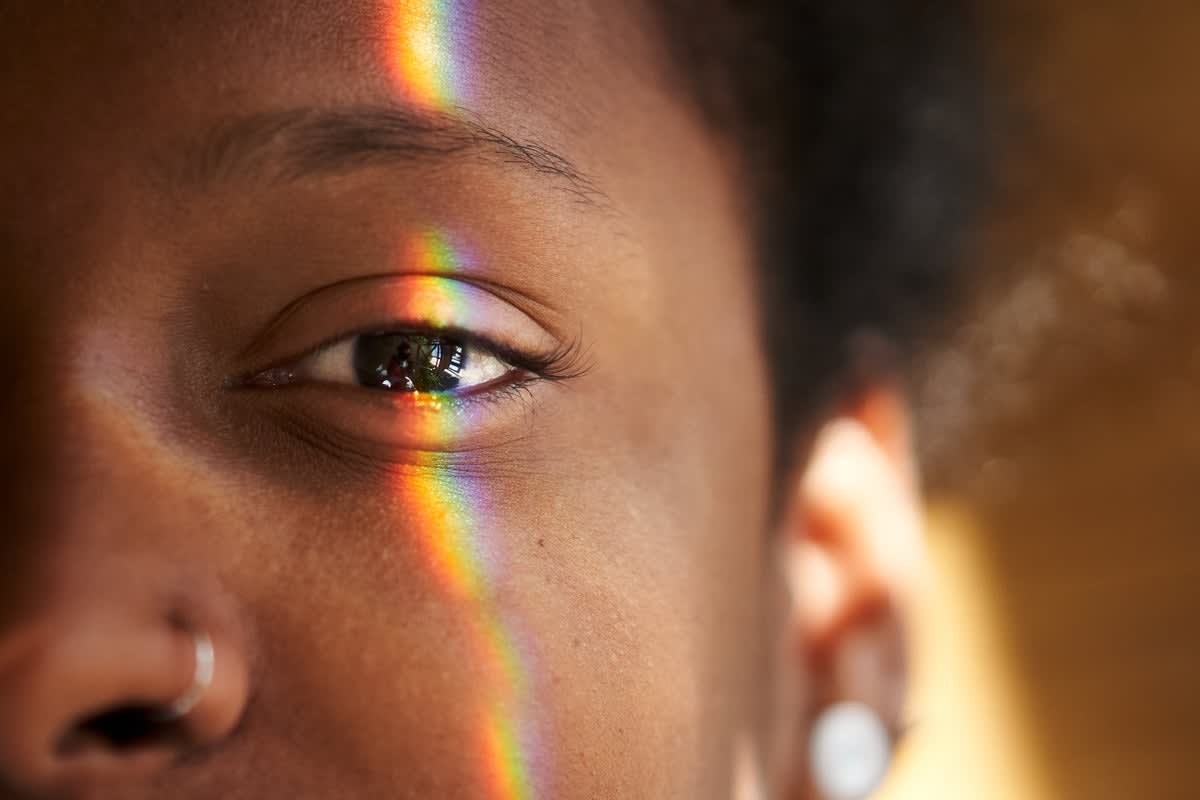
Scientists just solved a decades-old mystery about how our eyes choose which colors to focus on, and the answer could change how we treat the rising epidemic of nearsightedness. Your eyes have been making this choice millions of times without you ever knowing.
Scientists at the Rochester Institute of Technology just cracked a visual mystery that's been puzzling researchers for decades, and the discovery could help millions of people with nearsightedness see more clearly.
Our eyes can detect millions of colors, but here's the surprising part: they can only focus on one wavelength of light at a time. For years, scientists knew this happened but had no idea how our eyes decided which color to prioritize.
The answer turns out to be beautifully simple. Our eyes don't automatically focus on the brightest color or default to green like researchers expected. Instead, they focus on whichever color dominates the scene in front of us.
Lead researcher Benjamin Chin and his team at Rochester Institute of Technology made the discovery using a precise laser device that tracked how participants' eye lenses changed shape while viewing different colored images. When an image had more blue, eyes focused on blue. More red? Eyes shifted focus to red.
"This is a great example of an aspect of vision that's very automatic," says Chin, an assistant professor of imaging science. "We don't think about it, but it's actually really complicated."
The research started with a completely different goal: reducing virtual reality nausea. But as the team dug deeper, they realized understanding color focus could unlock answers about nearsightedness, a condition now affecting nearly half of young adults in some countries.
Nearsightedness happens when eyeballs grow too long during childhood, causing blurry distance vision. Scientists suspect that hours spent focusing on screens and books in poor lighting might trigger this growth, but the exact signals telling eyeballs to elongate have remained mysterious until now.
The Bright Side
The chromatic signals discovered in this study represent a major piece of the nearsightedness puzzle. Some labs are already testing whether exposing children's eyes to specific colors of light, or filtering out others, might slow the progression of myopia.
The research reveals that our eyes adjust their lens shape in less than a second, constantly making split-second decisions about focus based on our environment. Understanding these rapid changes could help scientists figure out what causes the long-term physical changes that lead to nearsightedness.
Vision scientist Shrikant Bharadwaj at L V Prasad Eye Institute in India, who wasn't involved in the study, praised the theoretical modeling that made these insights possible. While myopia likely has multiple causes, this chromatic discovery adds a crucial new tool for researchers working on treatments.
The findings could eventually lead to new interventions for the 2.6 billion people worldwide living with myopia, from special lighting for classrooms to screen filters that protect developing eyes.
Your eyes have been silently choosing colors millions of times since you started reading this, and now scientists finally understand how.
More Images



Based on reporting by Scientific American
This story was written by BrightWire based on verified news reports.
Spread the positivity!
Share this good news with someone who needs it