F1 Team Cuts Carbon With Electric Trucks Across Europe
Mercedes F1 is using all-electric trucks to transport race cars and equipment across all nine European races this season, proving long-haul electric transport works right now. The move could save hundreds of tons of carbon and shows even high-speed motorsports can tackle climate change.
Formula 1 racing just got a whole lot greener, and it's happening behind the scenes where it matters most.
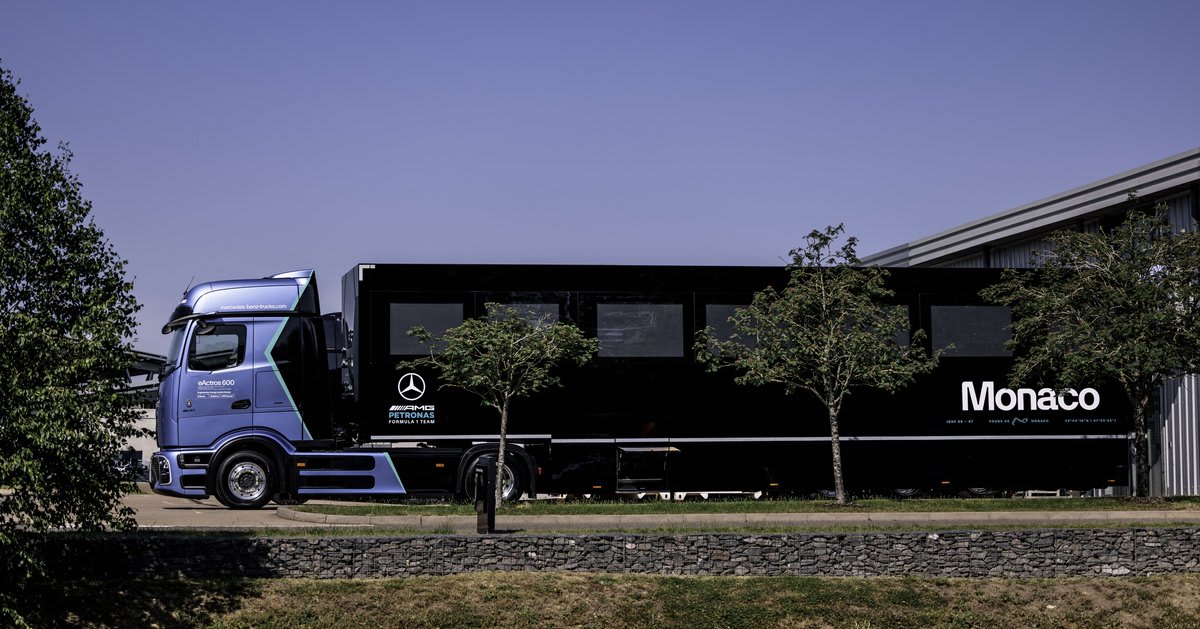
The Mercedes-AMG PETRONAS F1 Team is now using fully electric trucks to haul race cars and vital equipment to all nine European races this season. The eActros 600 trucks will cover roughly 15,000 kilometers over three months, transporting everything from the team's communication offices to medical facilities.
This isn't just a test run anymore. After a successful pilot at the 2025 British Grand Prix, Mercedes proved electric trucks could handle the demanding schedule of professional racing. One truck already completed a 1,600-kilometer journey from their base in Northamptonshire, England, to Monaco last weekend without breaking a sweat.
"We are realizing our ambition of deploying the Mercedes-Benz Trucks eActros 600 across all nine European races," says Alice Ashpitel, the team's Head of Sustainability. The quick jump from experimental runs to full deployment shows how fast electric transport technology is advancing.
For a sport built on speed and global travel, logistics creates a massive carbon footprint. The team is tackling this challenge head-on with a mix of electric vehicles and sustainable biofuels. Last year, they achieved 99% coverage of HVO100 biofuel across their European fleet, saving over 410 tons of carbon dioxide.
The Ripple Effect
This initiative reaches far beyond the racetrack. When a high-profile F1 team proves electric trucks can handle intense, time-sensitive logistics across thousands of kilometers, it sends a powerful message to the entire transportation industry.
Europe's charging infrastructure has evolved rapidly enough to support these demanding routes. What seemed impossible just a few years ago is now standard operating procedure. Other racing teams, shipping companies, and logistics providers are watching closely.
The team is also pushing suppliers throughout their network to adopt better environmental practices through strengthened codes of conduct and sustainability screening tools. When major brands demand greener operations, entire supply chains transform.
Mercedes is aiming for Race Team Net Zero by 2030, combining direct emissions cuts with carbon removal projects. They're addressing the hardest-to-change parts of their operations first, setting an example for how global organizations can decarbonize even the most challenging sectors.
Long-haul electric transport isn't a distant dream anymore—it's rolling across Europe right now, one race at a time.
More Images


Based on reporting by Google News - Emissions Reduction
This story was written by BrightWire based on verified news reports.
Spread the positivity!
Share this good news with someone who needs it