Father of Modern Cardiology Saved Millions of Hearts
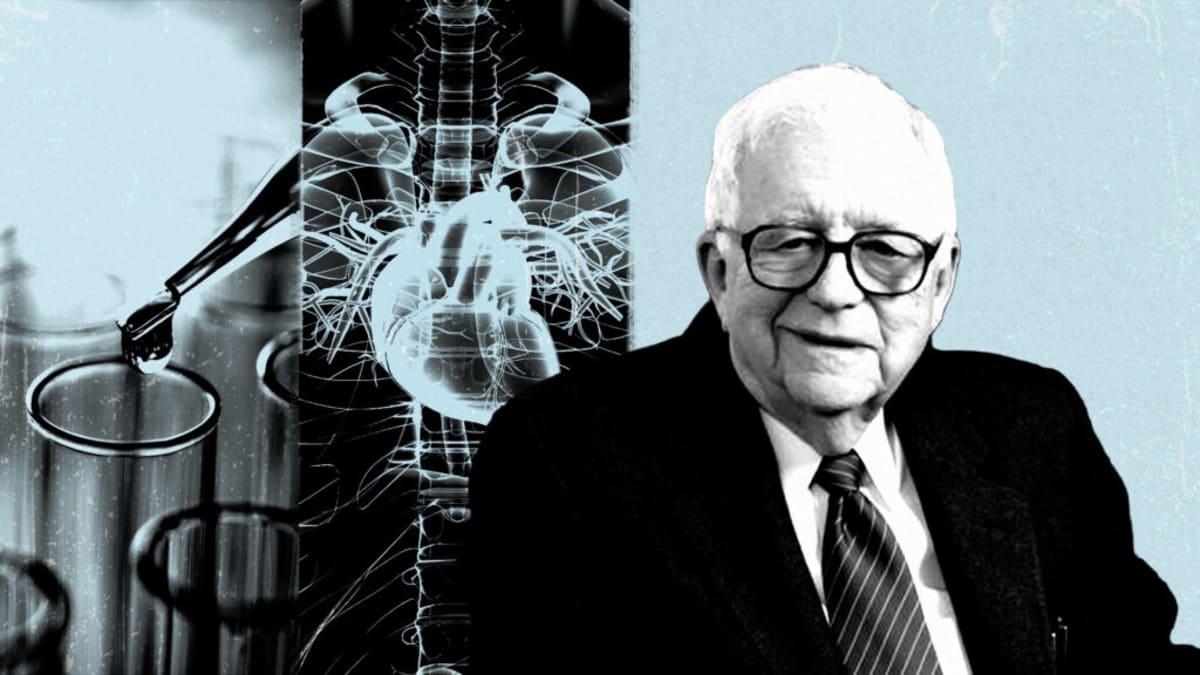
Eugene Braunwald revolutionized heart attack treatment and turned a fatal diagnosis into a survivable one for millions. His discoveries about how heart attacks progress gave doctors precious hours to save lives.
A cardiologist who changed everything we know about saving heart attack patients has died at 96, leaving behind a legacy that touches nearly every heart patient alive today.
Eugene Braunwald, known as the "Father of Modern Cardiology," spent his career proving that doctors had more time to save heart muscle than anyone believed possible. Before his work in the 1960s, the medical world thought heart attacks destroyed the heart instantly, like flipping a light switch.
Braunwald refused to accept that grim reality. While studying electrocardiograms at the University of California, San Diego, he noticed something everyone else had missed. Heart attacks actually progressed slowly over several hours, more like turning a dimmer switch than flipping one on and off.
That single insight changed everything. He proved in careful experiments that restoring blood flow during those crucial first hours could salvage heart muscle and save lives.
His discoveries didn't stop there. At the National Institutes of Health in 1962, Braunwald developed the ejection fraction test, a measurement doctors now use every single day to assess heart failure. The test measures how much blood the heart pumps with each beat, giving physicians a precise tool to guide treatment.
Later at Harvard, he and colleague Marc Pfeffer showed that a simple class of drugs could extend life for years in patients whose hearts had weakened after an attack. These medications became standard treatment worldwide.
The Ripple Effect
Braunwald's research didn't cure heart disease, but it gave millions of patients something more precious: time. People who would have died from heart attacks in the 1960s now live for years, even decades longer because of his work.
Every emergency room protocol for treating chest pain, every cardiac ICU around the world, every clot-busting drug given in those critical first hours traces back to his fundamental insight that doctors have a window to intervene. His work proved that hope and urgency belong together in cardiac care.
The discoveries he made didn't just advance science. They created entirely new fields of research focused on helping the growing number of heart attack survivors who now face heart failure as they age.
Braunwald's career touched every corner of modern cardiology, from the tests doctors order to the drugs they prescribe to the very way they think about saving hearts.
His greatest achievement wasn't just understanding hearts better, it was giving millions of people more heartbeats to share with the ones they love.
More Images




Based on reporting by STAT News
This story was written by BrightWire based on verified news reports.
Spread the positivity!
Share this good news with someone who needs it