Floating Lab Drifts to North Pole to Study Warming Arctic
A futuristic igloo-shaped research station just left France on a groundbreaking mission to drift with Arctic ice for over a year, collecting vital data on one of Earth's fastest-changing regions. Twelve countries are joining forces to understand Arctic life before it transforms forever.
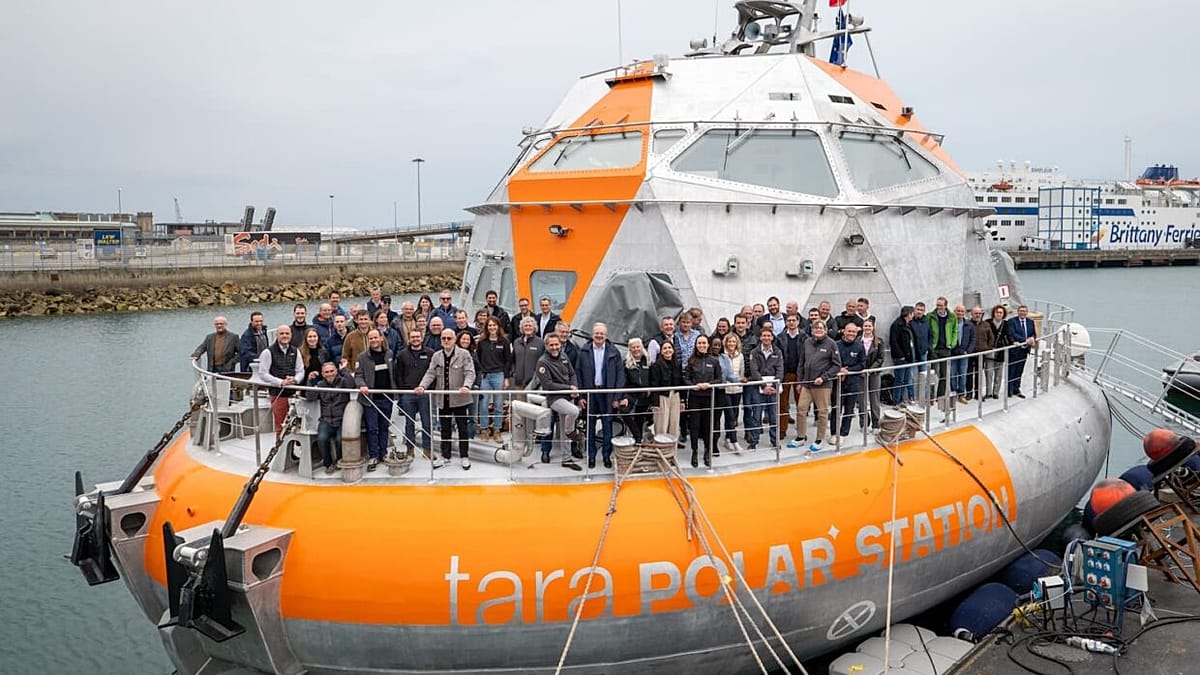
A floating laboratory shaped like a giant igloo set sail from France on Sunday, beginning an extraordinary journey to drift across the Arctic Ocean for up to 500 days. The Tara Polar Station will freeze itself into the pack ice and let ocean currents carry it toward Greenland, gathering crucial data about a region warming four times faster than the rest of our planet.
Hundreds of people gathered at the port of Lorient to watch the departure of this remarkable vessel, designed to withstand crushing ice pressure and temperatures plunging to negative 52 degrees Celsius. Twelve nations, including the United States, Canada, Germany, Japan, and Switzerland, are collaborating on this ambitious scientific adventure.
The mission represents something hopeful: scientists racing to understand Arctic biodiversity before it changes forever, working together across borders to solve a global challenge. Starting in September, when the station locks into the ice, researchers will collect more than 10,000 samples from ocean depths of 2,000 meters, ice cavities, and the atmosphere above.
Up to 18 crew members will rotate through the station during summer months, while 12 brave souls will overwinter through five months of polar darkness. Every team member passed rigorous medical and psychological testing, then bonded through team-building exercises to prepare for the isolation and extreme conditions ahead.
The crew will drift an average of 10 kilometers daily, carried by ice currents from the Russian coast to the Fram Strait between Greenland and Svalbard. A specially trained Lapponian herder dog will accompany them, serving as an early warning system for approaching polar bears.
The Ripple Effect
This six-million-euro mission launches a 20-year program of ten expeditions scheduled through 2045, creating an invaluable long-term dataset on Arctic change. The research will improve global climate models by studying everything from bacterial activity in cloud formation to the mysteries of deep-ocean Arctic life that scientists have barely begun to explore.
Each expedition will build on the last, tracking how this critical region evolves over two decades. The data gathered will help scientists worldwide understand not just what's happening in the Arctic, but how those changes will ripple across our entire planet's climate system.
Nations that don't always agree on everything are united in this peaceful scientific mission, proving that when faced with planetary challenges, humanity can choose cooperation over competition. The floating laboratory represents both cutting-edge technology and timeless human curiosity about our changing world.
By 2045, we'll have an unprecedented window into Arctic transformation, giving future generations the knowledge they need to respond wisely.
More Images

Based on reporting by Euronews
This story was written by BrightWire based on verified news reports.
Spread the positivity!
Share this good news with someone who needs it