Flying Kite Generates Clean Power at 350 Meters High
A Dutch company is launching a kite-like wind energy system that flies higher than traditional turbines and fits inside a shipping container. By 2026, the Falcon system could bring clean electricity to remote places where diesel generators still dominate.
Imagine powering an entire school with what looks like a kite dancing through the sky. That's exactly what a groundbreaking Dutch energy system does, proving that the future of renewable power doesn't always need massive towers or spinning blades.
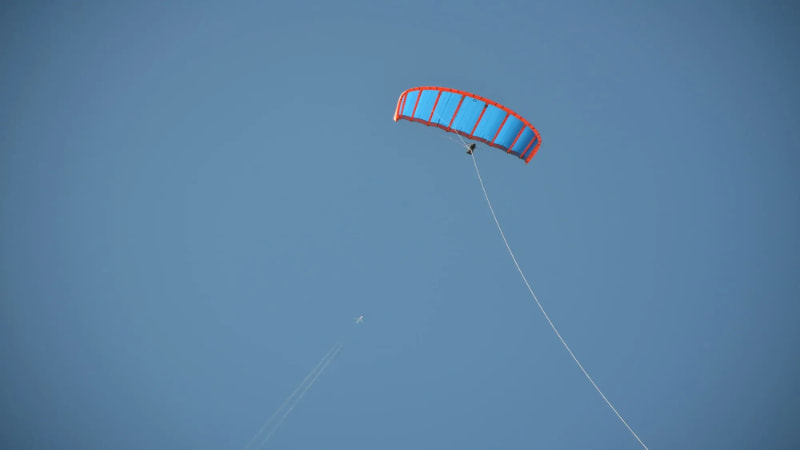
Kitepower, a Netherlands-based company, is preparing to launch the Falcon by 2026. This 100-kilowatt airborne wind system uses a large flying wing tethered to a ground station that fits inside a standard shipping container.
The wing soars up to 350 meters high, where winds blow stronger and more consistently than at ground level. As it flies in a controlled pattern, the tether builds tension and converts that mechanical energy into electricity through a pumping cycle.
When the wing climbs back up to reset, it uses only a small fraction of the power it just generated. This simple back-and-forth motion repeats continuously, producing clean energy without the steel towers, concrete foundations, or massive land footprint of traditional turbines.
The system targets places where conventional wind farms can't go. Remote islands, mining operations, disaster zones, and off-grid communities often rely on expensive, polluting diesel generators that are difficult to transport and maintain.
A portable wind system that packs into a shipping container offers a cleaner alternative that deploys quickly and leaves the ground beneath it usable. No permanent infrastructure means communities can access high-altitude winds without sacrificing precious land.
The environmental benefits are striking. A life-cycle assessment conducted with TU Delft found the system produces less than 9 kilograms of CO₂ per megawatt-hour, significantly lower than diesel generators and many established renewable technologies.
By eliminating towers and foundations, Kitepower dramatically reduces the materials needed while still delivering reliable electricity. All the power equipment stays on the ground in that compact unit, making maintenance simpler and transportation more practical.
The Ripple Effect
This innovation could transform energy access for communities that have been left behind by traditional renewables. Places too remote for grid connection or too rugged for conventional turbines suddenly have a pathway to clean, affordable power.
When disaster strikes and power infrastructure fails, a system that arrives in a shipping container and launches within hours could keep hospitals running and communication systems online. Mining operations in isolated locations could replace their diesel generators, slashing both costs and emissions.
The technology also opens possibilities for temporary power needs, from construction sites to outdoor events, proving that renewable energy can be as flexible as it is clean.
What started as an unconventional idea has become one of the most promising tools in the renewable energy transition, proving that sometimes the best solutions move quietly through the sky rather than standing firmly on the ground.
Based on reporting by Google News - Clean Energy
This story was written by BrightWire based on verified news reports.
Spread the positivity!
Share this good news with someone who needs it