Forest Coffee from India Reaches Global BRICS Summit
Coffee grown under ancient forest canopies in tribal regions of Odisha just made its debut at an international summit in Delhi. What started as an experiment in 1930 is now bringing new value to 3,200 small farmers.
When 1,500 packets of Tiger Bright coffee left Koraput district for Delhi on September 9th, they carried nearly a century of patient work with them.
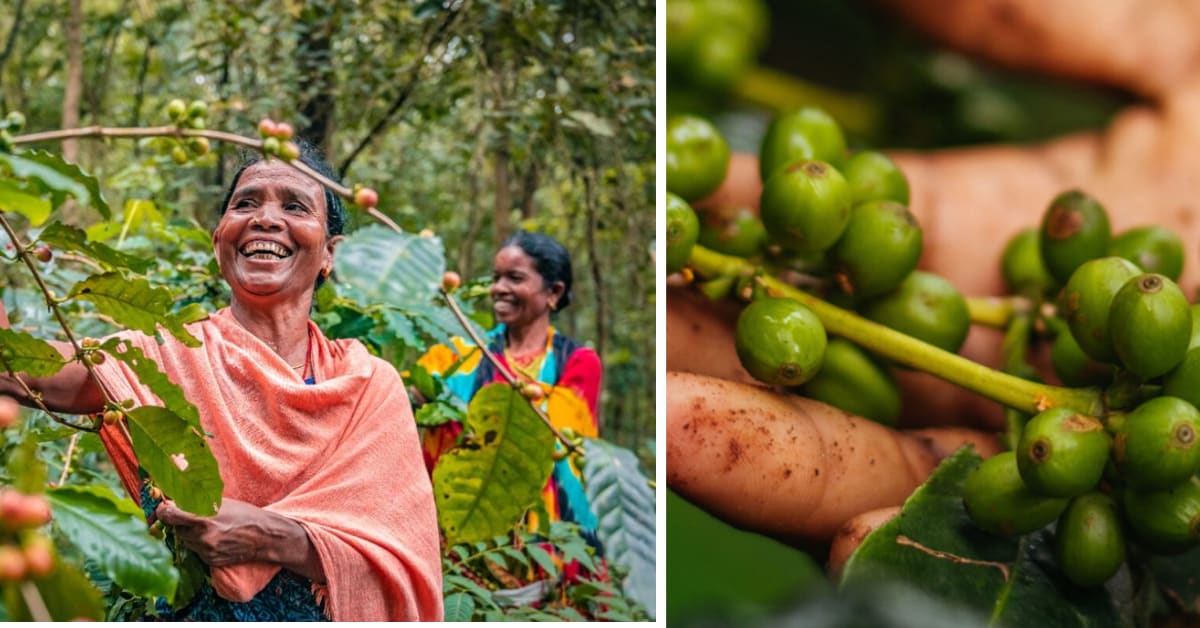
The Arabica coffee inside those packets grows in the shade of mango, jackfruit, and silver oak trees across the forested hills of southern Odisha. It was headed for media kits at the 2026 BRICS Summit, representing India's One District One Product initiative on a global stage.
Koraput sits in India's Eastern Ghats, far from the famous coffee belts of Karnataka and Kerala. The Coffee Board still considers Odisha a non-traditional coffee region. But coffee has quietly thrived here since 1930, when the Jeypore royals established an experimental plantation at Bichalkota.
The crop expanded in 1958 when the government planted more coffee beneath existing forest canopies, partly to reduce erosion around the Machhkund hydroelectric project. The trees stayed, and coffee grew underneath them in a multi-layered landscape that preserved the region's ecological character.
For decades, tribal farmers harvested the cherries and sold them raw to middlemen from neighboring states for around 35 rupees per kilogram. The coffee traveled to Andhra Pradesh and Karnataka for processing, and most of the value traveled with it.
That started changing in 2016 when the district established the Coffee Development Trust. Today, around 3,200 growers cultivate coffee across 3,000 hectares in tribal-dominated blocks, producing 550 metric tonnes annually.
The district now processes its own coffee and markets it under the Koraput Coffee brand through the Tribal Development Co-operative Corporation. In 2024, their Koraput A-1 Coffee earned recognition in the Coffee Board's Arabica Experimental category.
The Ripple Effect
The shift from selling raw cherries to branded, locally processed coffee means more income stays in farming communities. Processing facilities in Koraput now handle work that used to happen hundreds of kilometers away.
The BRICS appearance puts forest-grown coffee from one of India's smallest coffee regions in front of diplomats and journalists from around the world. It shows how shade-grown agriculture can create economic opportunity while preserving tree cover.
For communities in Laxmipur, Kashipur, and other blocks across Koraput, coffee has become more than a crop grown under trees. It's becoming a product connected to place, processed locally, and recognized beyond state borders.
From experimental plantation to international summit, the journey took 96 years and the work of thousands of farmers. The coffee still grows in the shade, but it's finally stepping into the light.
More Images
%2Fenglish-betterindia%2Fmedia%2Fmedia_files%2F2026%2F09%2F18%2Fkoraput-2026-09-18-19-04-07.png)

%2Ffilters%3Aformat(webp)%2Fenglish-betterindia%2Fmedia%2Fmedia_files%2F2026%2F09%2F18%2Fkoraput-1-2026-09-18-19-06-47.png)
%2Fenglish-betterindia%2Fmedia%2Fmedia_files%2F2026%2F09%2F12%2Fimg_6113-2026-09-12-17-47-48.jpeg)
Based on reporting by The Better India
This story was written by BrightWire based on verified news reports.
Spread the positivity!
Share this good news with someone who needs it