Forester's Curiosity Leads to New Crab Species Discovery
A forest patrol in Karnataka's Western Ghats turned into a scientific breakthrough when beat forester Ajmeer K spotted an unusual crab and decided to investigate. His curiosity led to the discovery of a new species now named Ghatiana karnataka.
During a routine patrol through Karnataka's Mookambika Wildlife Sanctuary, beat forester Ajmeer K noticed something most people would have walked right past: a freshwater crab with unusual colors and movements that didn't quite fit.
Instead of continuing his route, Ajmeer stopped to look closer. That single moment of curiosity has now added a completely new species to science.
The crab has been officially named Ghatiana karnataka, and Ajmeer didn't just find it. He co-authored the scientific description alongside Santanu Mitra from the Zoological Survey of India, with their research recently published in the journal Species.
Ajmeer first spotted the crab in the Kollur range last year. He contacted Mitra, who suspected they might be looking at something science hadn't documented before.
After getting permission from the forest department, they collected specimens and began detailed study. Researchers examined both male and female crabs, documenting their physical features, colors, and habitat before confirming this was indeed a new species.
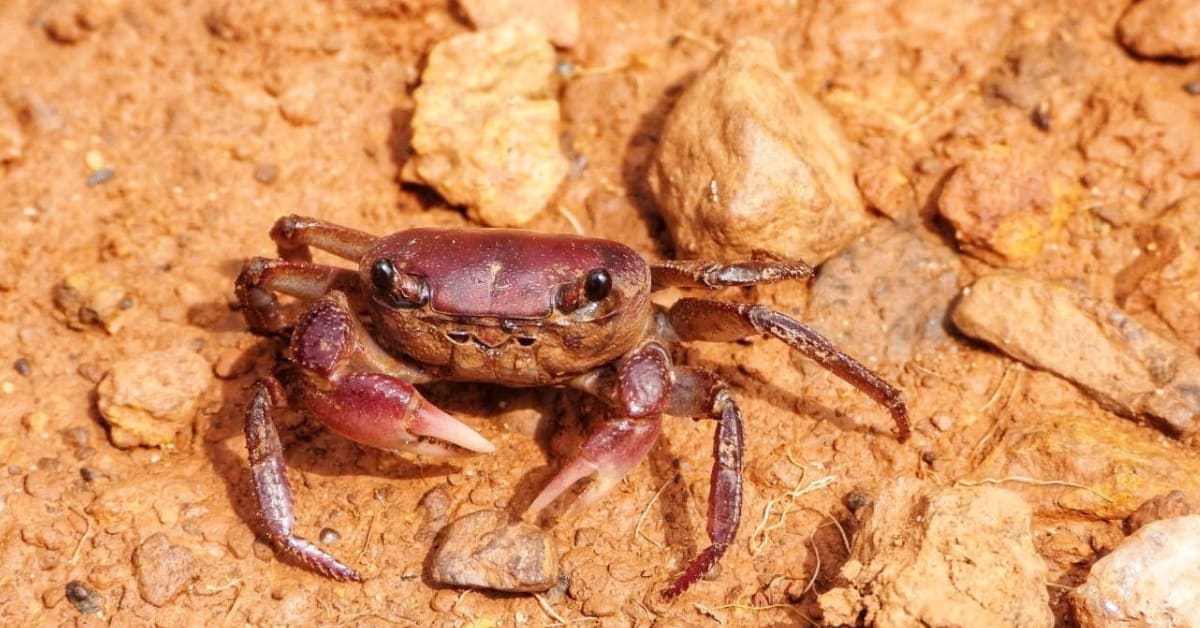
The male crab sports a dark purple body with a striking light pink V-shaped marking on its shell. Females look quite different, displaying grey-violet fronts and dark grey-brown backs.
These crabs aren't easy to spot in the wild. They live in highly moist evergreen forests, hiding in tiny crevices between boulders, water-filled holes in laterite rocks, and damp tree cavities.
During monsoon season, they venture across wet rocks. When the forest dries out, they retreat into their moist hideaways, feeding on decaying plant matter, bark, algae, and other organic material.
Why This Inspires
Ajmeer's story shows how scientific discovery doesn't always happen in laboratories. Originally from Hosapete in Vijayanagara district with a BA degree, he has developed a passion for documenting wildlife during his forest duties.
His daily patrols take him to places scientists cannot always reach regularly. Every walk through the forest brings the possibility of encountering something extraordinary.
The genus Ghatiana now includes 15 known species, all found only in the Western Ghats. Karnataka alone has eight recorded species in this genus.
When Ajmeer first made the discovery, he hoped the crab might be named after the local area where he found it. Instead, Mitra suggested naming it after Karnataka itself, recognizing the state's incredible biodiversity.
The discovery reminds us how much remains to be documented in the Western Ghats. A crab hiding in a damp tree cavity might seem small against the vastness of a rainforest, but it represents a piece of our natural world that science hadn't formally recognized.
All it took was one person paying attention to the details around them.
More Images
%2Fenglish-betterindia%2Fmedia%2Fmedia_files%2F2026%2F08%2F17%2Fnew-crab-species-karnataka-2026-08-17-13-16-37.png)
%2Fenglish-betterindia%2Fmedia%2Fmedia_files%2F2025%2F11%2F20%2Fwild-at-heart-banner-image-microsite-banner-2025-11-20-16-17-04.jpg)
%2Ffilters%3Aformat(webp)%2Fenglish-betterindia%2Fmedia%2Fmedia_files%2F2026%2F08%2F17%2Fnew-crab-species-karnataka-2026-08-17-13-26-35.png)
Based on reporting by The Better India
This story was written by BrightWire based on verified news reports.
Spread the positivity!
Share this good news with someone who needs it