Four Nurses Beat Rare Ebola Strain in Congo
Four healthcare workers in the Democratic Republic of Congo have fully recovered from a rare strain of Ebola after treating infected patients. Their recovery proves that early treatment can save lives, even without a licensed vaccine.
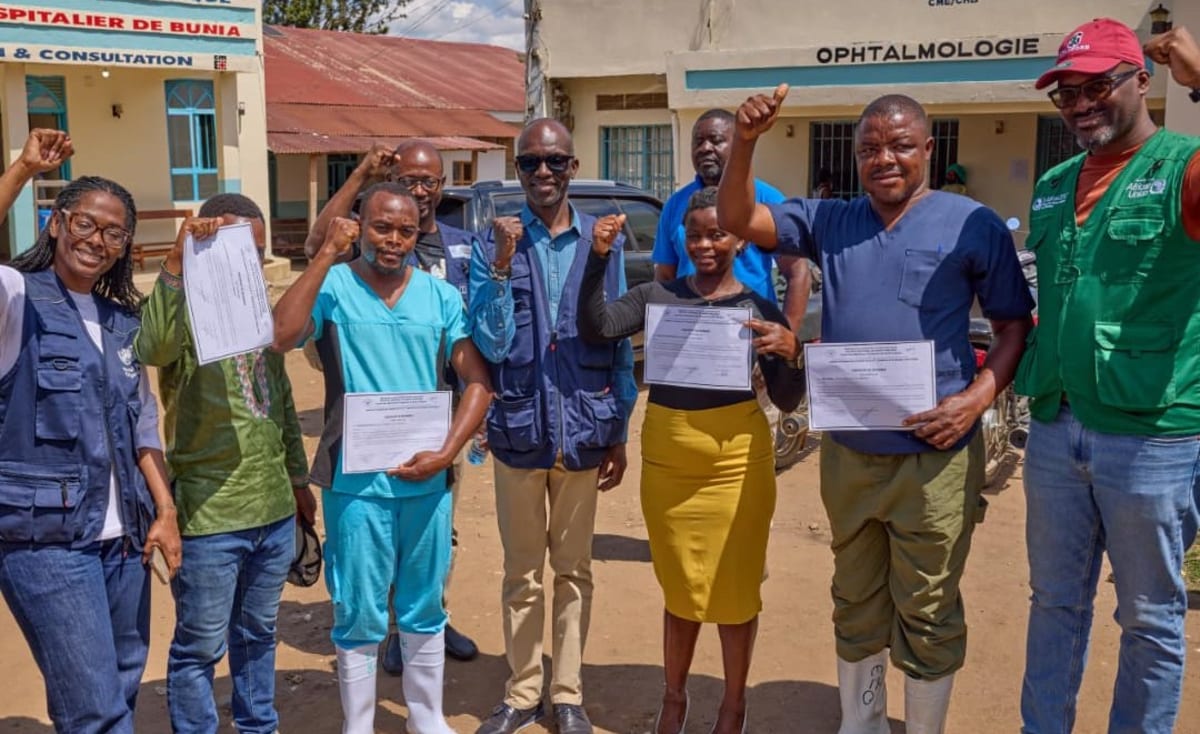
Four nurses walked out of a hospital in Bunia, Congo this week, fully recovered from the Bundibugyo strain of Ebola after caring for infected patients in May. Their survival brings hope to a region facing an outbreak with no approved vaccine or treatment.
The healthcare workers had contracted the virus while treating Ebola patients at their facility earlier this month. They join a laboratory worker who recovered on May 28, bringing the total number of survivors to five people.
"This is a victory worth celebrating," said Dr. Dieudonne Mwamba Kazadi, Director-General of Congo's National Institute of Public Health. "It's a strong message that it is possible to recover from Ebola when seeking care early in a dedicated health facility."
The World Health Organization responded by handing over a newly refurbished Ebola Treatment Centre in Bunia to local health authorities. The facility currently holds 24 beds but can expand to 60, with an additional annex of 42 beds coming in the following weeks.
As of May 31, Congo reported 210 confirmed cases with 17 deaths and 349 suspected cases under investigation. Sixteen health workers have fallen ill during this outbreak, making the four recoveries particularly significant for frontline medical staff.
The Bright Side
WHO Director-General Dr. Tedros Adhanom Ghebreyesus visited Bunia on May 30 to deliver an encouraging message. While the Bundibugyo strain has no licensed treatments, survival is absolutely possible with proper medical care and early intervention.
This week, WHO advisory groups identified several promising candidate vaccines and treatments worth testing in clinical trials. The organization is now working with Congo and Uganda to fast-track evaluation of these products, potentially bringing approved treatments within reach.
Since the outbreak was declared on May 15, Congo has implemented comprehensive response measures including laboratory testing, disease surveillance, infection prevention, and community engagement. WHO committed to ensuring essential health services continue across Ituri and beyond, with infrastructure improvements benefiting communities long after the outbreak ends.
These four nurses prove that even the rarest forms of Ebola can be defeated with quick action and dedicated care.
Based on reporting by AllAfrica - Headlines
This story was written by BrightWire based on verified news reports.
Spread the positivity!
Share this good news with someone who needs it