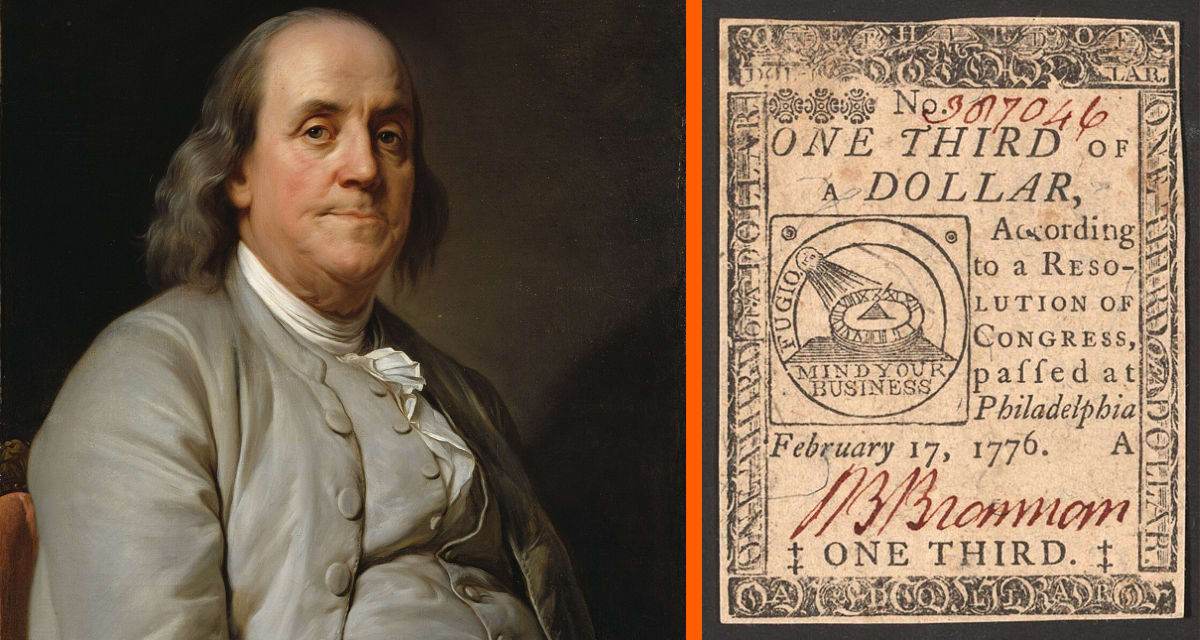
Franklin Beat Counterfeiters with Mica and Colored Silk
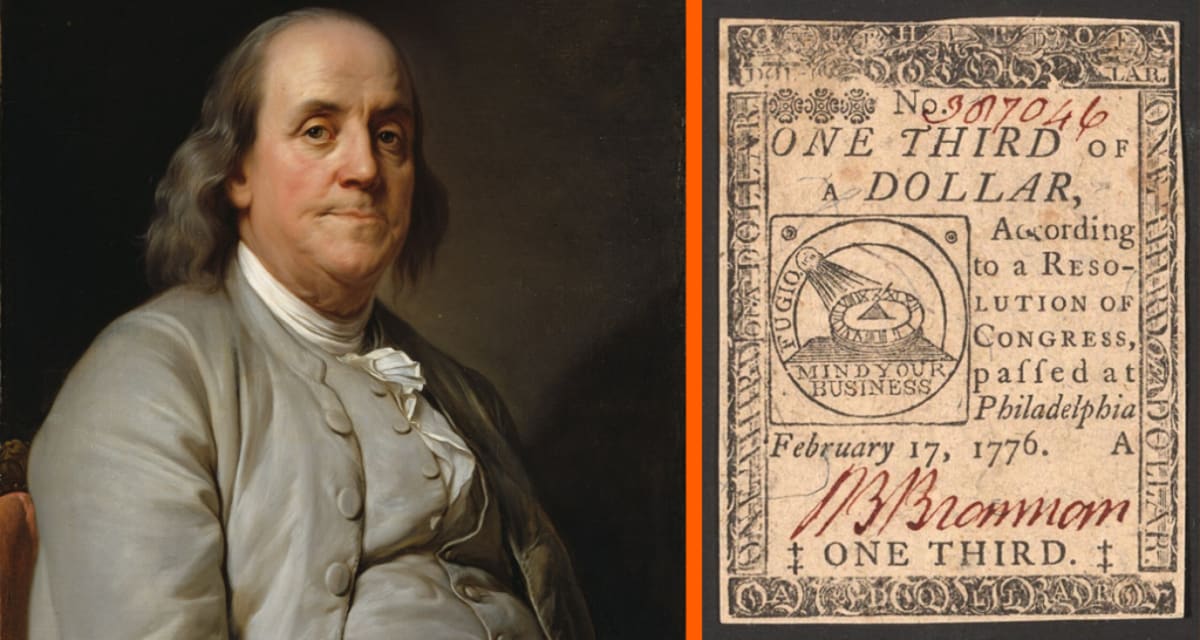
Benjamin Franklin didn't just print America's first paper money—he invented brilliant anti-counterfeiting tricks over 100 years ahead of his time. His secret weapons included shiny mica crystals, hidden silk fibers, and special graphite ink that fooled forgers for decades.
Before America had its own currency, Benjamin Franklin was already outsmarting criminals with innovations that wouldn't become standard practice for another century.
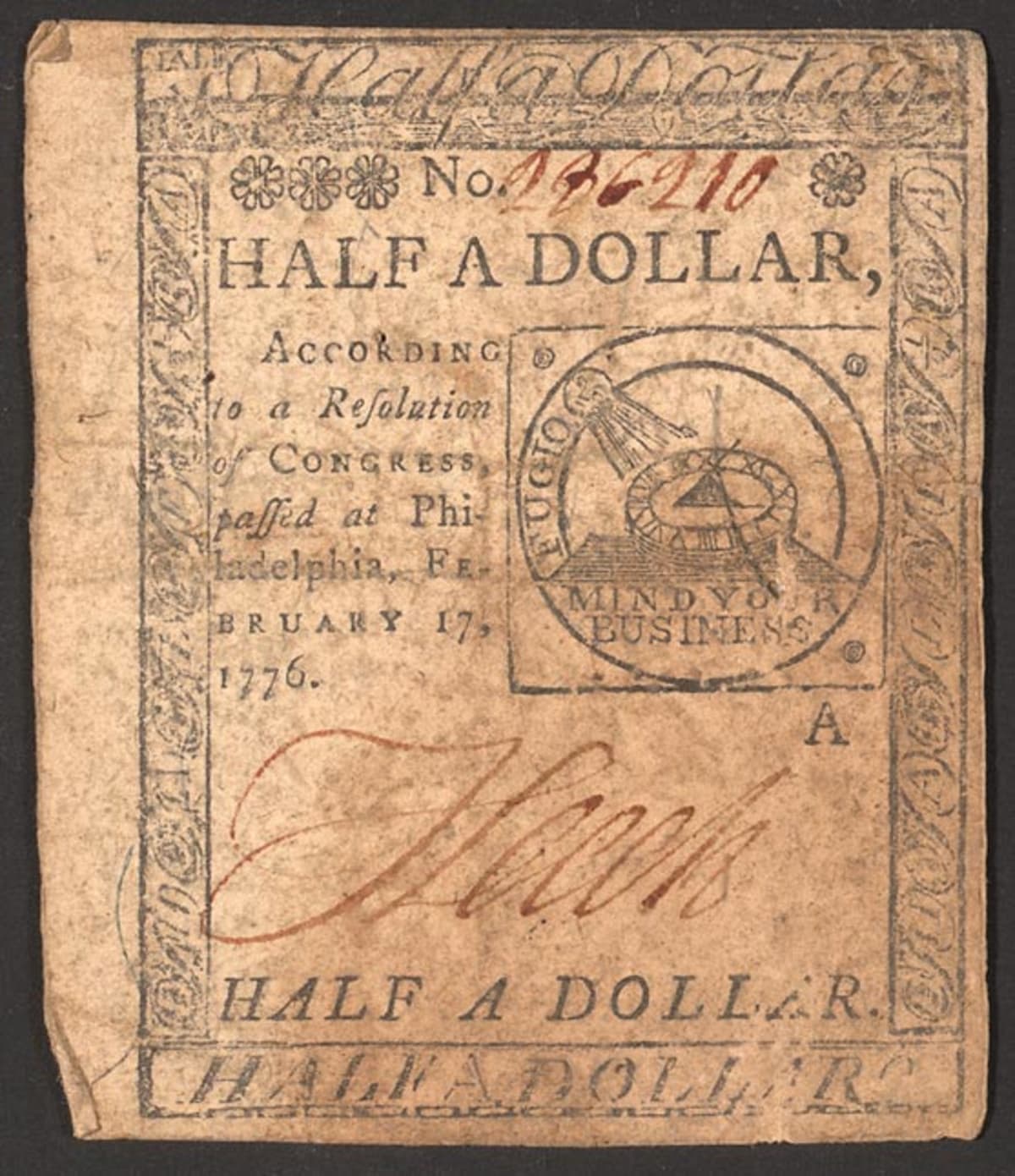
Franklin wasn't just a founding father and inventor. He was also the official printer for Pennsylvania starting in 1730, responsible for printing nearly 2.5 million banknotes across the American colonies. But printing money came with a massive problem: counterfeiters.
"Benjamin Franklin saw that the Colonies' financial independence was necessary for their political independence," explained Khachatur Manukyan, a researcher at the University of Notre Dame. The colonies desperately needed paper currency because British coins kept flowing back overseas to pay for imported goods.
Franklin knew that fake bills could destroy trust in the entire system. So he got creative with science.
His first trick involved ink chemistry. While he used regular lampblack (burned vegetable oil) for normal printing jobs, Franklin reserved special graphite-based black ink exclusively for currency. Counterfeiters couldn't easily replicate the unique shade.
Next, Franklin embedded tiny colored silk fibers directly into the paper pulp during manufacturing. This technique was so advanced that it wouldn't become common practice until 1844, when paper manufacturer Zenas Marshall Crane allegedly introduced the same method more than 100 years later.
Franklin also partnered with naturalist Joseph Breintnall to add botanical leaf prints to his bills. Each leaf created a unique, nearly impossible-to-forge impression in the paper.
His most ingenious addition might have been muscovite crystals, commonly called mica. Franklin originally added the shiny mineral flakes to make bills more durable, but quickly realized they created another barrier for counterfeiters trying to copy his work.
Why This Inspires
Franklin's anti-counterfeiting innovations show how creative problem-solving can protect entire communities. He wasn't content with simply printing money and hoping for the best. Instead, he applied scientific thinking to safeguard the colonial economy, helping secure the financial foundation America needed for independence.
His methods worked so well that some wouldn't be reinvented for over a century. The colored fibers, special inks, and embedded materials Franklin pioneered are ancestors of the security features we still use in modern currency today.
Franklin understood that protecting trust in paper money meant protecting people's livelihoods and the colonies' future—and he rose to that challenge with characteristic ingenuity.
More Images


Based on reporting by Upworthy
This story was written by BrightWire based on verified news reports.
Spread the positivity!
Share this good news with someone who needs it


%2Fhttps%3A%2F%2Ftf-cmsv2-smithsonianmag-media.s3.amazonaws.com%2Ffiler_public%2F51%2F62%2F51625ade-c2d1-4eff-aec9-4262cb020a02%2Fedistone-hotel_19-1024x575.jpg)