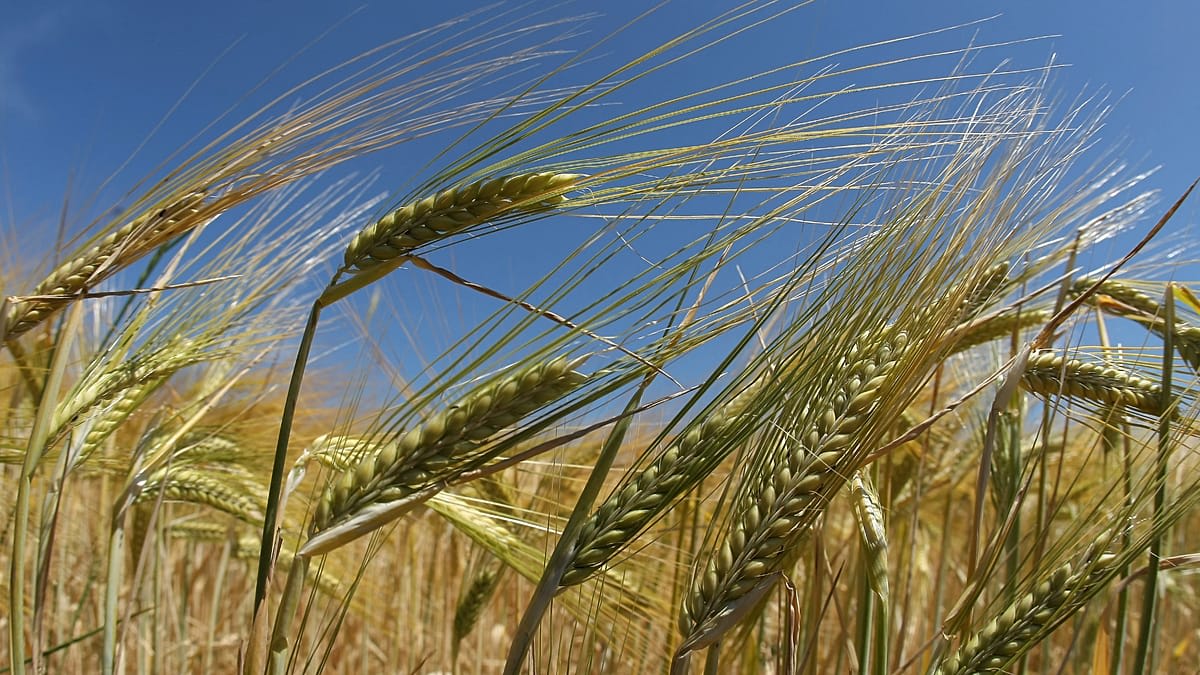
French Farms Cut Drought Losses 66% With Soil Methods
Regenerative farms in France lost three times less wheat during severe droughts than conventional farms, protecting enough grain to make 130 million baguettes. A groundbreaking study of over 1,200 farms proves healthier soil acts like a sponge during dry spells.
Imagine saving enough wheat during a drought to bake 130 million fresh baguettes. That's exactly what French farmers discovered when they decided to work with nature instead of against it.
A major study tracking 1,262 farms across France revealed something remarkable. Farms using regenerative practices lost only 8% of their crop yields during the brutal 2023 droughts, while conventional farms saw 22% losses.
The research, conducted by Soil Capital and Belgium's KU Leuven university, analyzed three years of data across 331,600 hectares. It's the largest real-world study of its kind, moving beyond theory to show what actually works in farmers' fields.
The secret lies beneath our feet. Regenerative farming treats soil like a living ecosystem rather than just dirt to hold plants. Farmers grow cover crops between harvests, rotate different crops through their fields, and reduce how much they plow the earth.
Healthy soil packed with organic matter works like a natural sponge. French research shows regenerative soils hold up to 15% more water than conventionally tilled fields. In some cases, just a 1% increase in organic matter lets one hectare store an extra 350,000 liters of water.
The timing couldn't be better. The UN warned in January 2026 that Earth has entered an era of "global water bankruptcy," with drought damages now exceeding $307 billion worldwide each year. By 2050, droughts are projected to affect three out of four people.
Europe's farmers are already feeling the pain. Between 60 and 70% of European soils are considered unhealthy after decades of intensive farming that strips nutrients and compacts earth. Traditional methods that rely on heavy plowing, synthetic fertilizers, and growing the same crop year after year have taken their toll.
The Ripple Effect
The benefits ripple far beyond individual farms. If France adopted these regenerative practices nationwide, it would protect 17 weeks of wheat supply for a typical flour mill during similar droughts. That's food security that protects both farmers' livelihoods and consumers' dinner tables.
Professor Erik Mathijs from KU Leuven says the dataset fills a crucial research gap. "What has held us all back is the lack of robust field-level data across large geographies and multiple successive years," he explains.
The study found regenerative practices reduced drought losses by at least 10% in roughly 85% of France's cereal-growing regions. Researchers controlled for factors like soil type to ensure the results reflected farming choices, not luck.
The European Commission estimates soil degradation already costs the EU over €50 billion annually. The EU's new Soil Monitoring Law, launched in 2025, aims to assess and improve soil health across member states for the first time.
Farmers are proving that caring for the earth pays back in resilience when times get tough.
More Images



Based on reporting by Euronews
This story was written by BrightWire based on verified news reports.
Spread the positivity!
Share this good news with someone who needs it

