French Wheat Field Becomes World's Largest Living Photo
A Spanish artist is growing a giant eye image in a two-hectare French wheat field using nothing but different wheat varieties as pixels. After the living photograph emerges this spring, the wheat will be harvested and shared as flour with the local community.
Imagine a photograph that grows from the soil, changes with the weather, and feeds people when it's done.
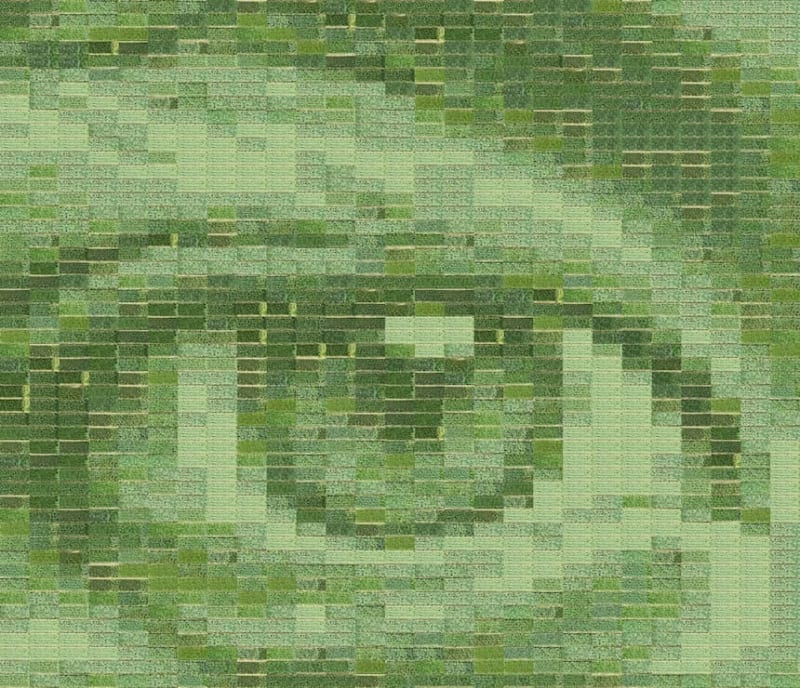
Spanish artist Almudena Romero is creating exactly that in France. She's transforming a two-hectare wheat field into the world's largest living photograph, and it will reveal a giant eye by spring 2026.
Instead of using chemicals or cameras, Romero is relying on photosynthesis. Each wheat plant acts as a single pixel, with subtle color variations between wheat varieties creating the image as the crop grows and matures.
The project, called Farming Photographs, is a collaboration with INRAE, France's national agriculture and environment institute. It reimagines a 19th-century technique called anthotype photography, but on an environmental scale that's never been attempted before.
"I wanted to see what photography could become if it worked with living systems rather than industrial processes," Romero said. "The landscape becomes both the medium and the message."
Romero comes from a family of sustainable orange farmers in Valencia. That background shaped her vision for making art that works with nature instead of against it.
"I have always been aware of the importance of how we do things as much as what we do, particularly in the context of the current environmental crisis," she told Positive News. "With Farming Photographs, I feel I have come full circle, making my photographic practice more sustainable."
The Ripple Effect
The artwork will be visible from above and will shift throughout the seasons as light and weather change. But the most meaningful transformation happens at harvest time.
Once the image has fully emerged, the wheat will be harvested, milled, and distributed locally as flour. Art becomes food, returning to the community that hosted it.
INRAE researcher Claire Manceau called it "a meeting of art and ecology that shows how creativity can reconnect us with the land." The project demonstrates that sustainable agriculture and creative expression don't have to exist in separate worlds.
When you see beauty growing in a field, you remember that the earth isn't just something to extract from—it's something to collaborate with.
Based on reporting by Positive News
This story was written by BrightWire based on verified news reports.
Spread the positivity!
Share this good news with someone who needs it