Frozen Fiber Boosts Light-Sound Interaction 1,000x
Scientists froze liquid inside optical fibers at -196°C, creating a breakthrough that makes light and sound interact 1,000 times more powerfully than before. This discovery could slash energy use in future computers and unlock new quantum technologies.
Imagine a computer that uses a fraction of the energy while working faster and smarter. Scientists just brought that future closer by doing something surprisingly simple: they froze optical fibers.
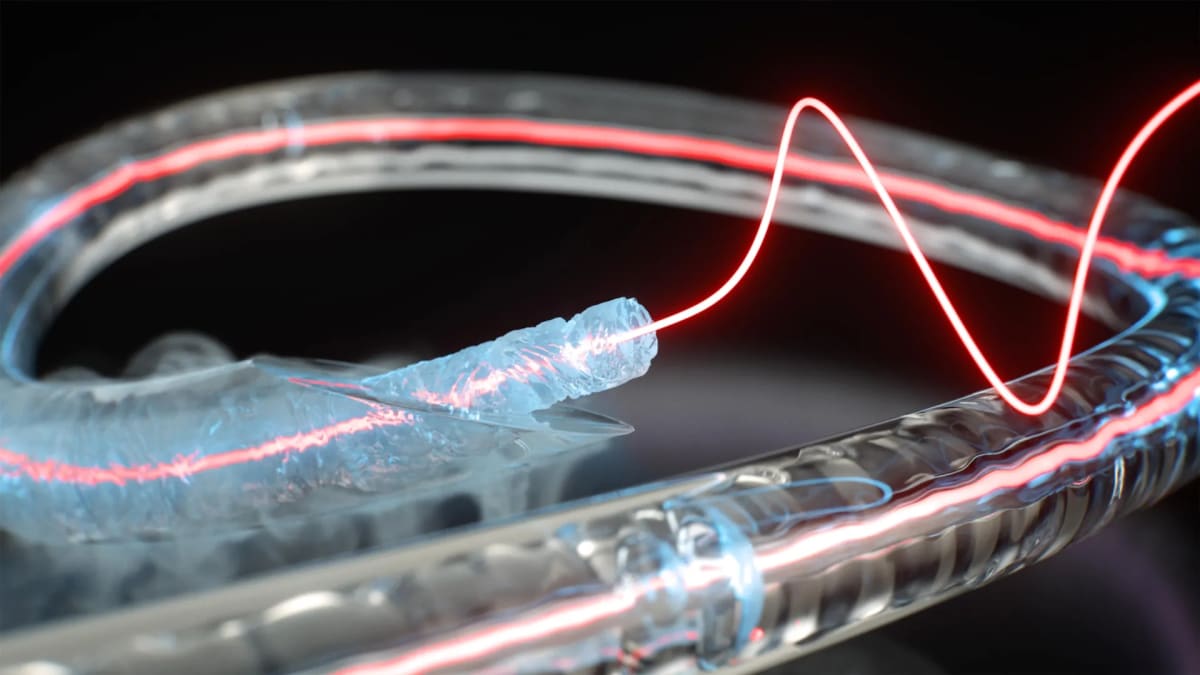
Researchers from Germany's Max Planck Institute for the Science of Light discovered that cooling the liquid core of special optical fibers to -196°C creates an extraordinary environment. Inside these frozen fibers, light and sound waves interact more than 1,000 times more strongly than in regular fibers.
The breakthrough centers on a phenomenon called Brillouin-Mandelstam scattering, where light and sound naturally interact. When the team froze the liquid core, it became exceptionally dense and tightly confined. This dramatically amplified the interaction between the two types of waves.
Simon Seiderer, one of the lead researchers, explains that both the liquid and frozen sections of the fiber can guide light and hypersonic sound waves. The frozen section retains its ability to carry light while creating this supercharged interaction environment.
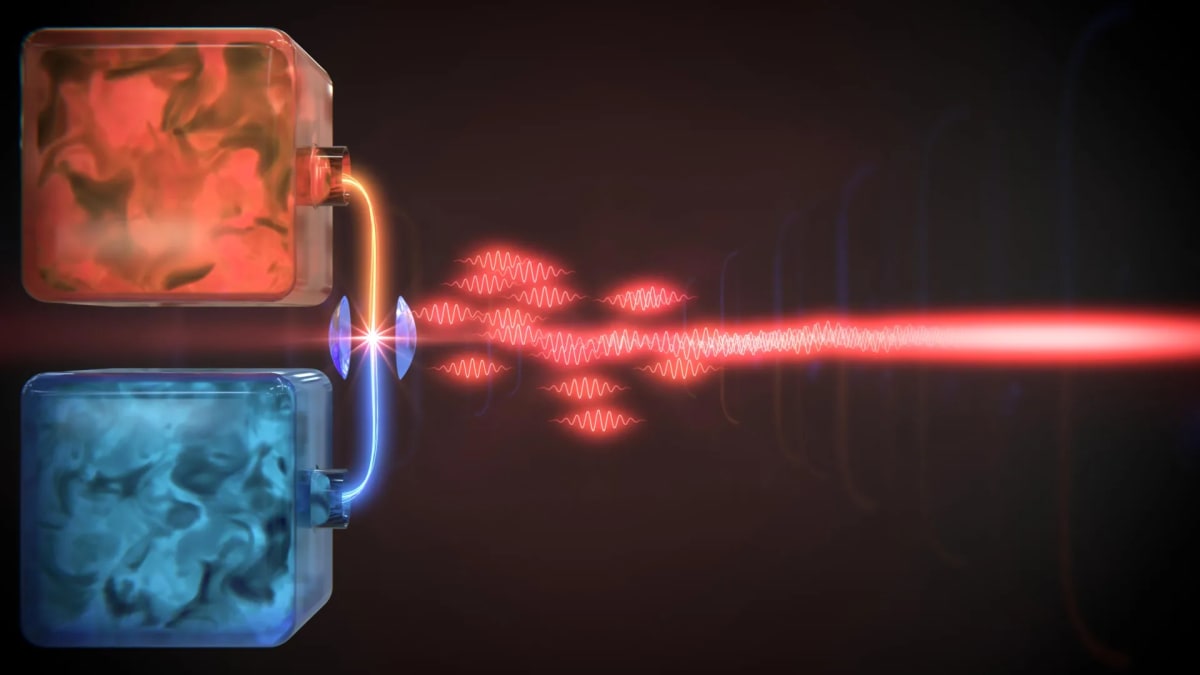
The team used this powerful effect to demonstrate optoacoustic memory, a technology that could transform computing. The system works by exploiting the huge difference between light speed and sound speed. Information traveling on fast light waves gets transferred to slower sound waves, where it's temporarily stored, then converted back to light.
This approach could drastically reduce energy consumption in photonic computers. Because the frozen fibers enable such efficient interaction between light and sound, they need far less power to store and process information.
The Ripple Effect
The discovery builds on years of collaboration with researchers who pioneered liquid core optical fibers. Adding the freezing step unlocked a whole new level of possibility.
Professor Birgit Stiller, who leads the project, says they've created an entirely new physical platform that provides extreme nonlinearities while remaining easy to handle. The technology extends beyond computing into quantum information processing, microwave photonics, and high-precision sensing.
Future computers might process information like our brains do, using light instead of electricity. These frozen fibers could make that neuromorphic computing approach practical and energy-efficient. The same technology might also advance quantum computers, which promise to solve problems beyond the reach of today's machines.
The research transforms a familiar natural process into cutting-edge technology. Just as water freezes into ice and lava hardens into rock, scientists can now freeze fiber cores to unlock new capabilities.
This elegant solution proves that sometimes the most powerful innovations come from taking existing technologies in unexpected directions.
Based on reporting by Science Daily
This story was written by BrightWire based on verified news reports.
Spread the positivity!
Share this good news with someone who needs it