Galaxies Collide in Stunning 21-Hour Photo from Texas
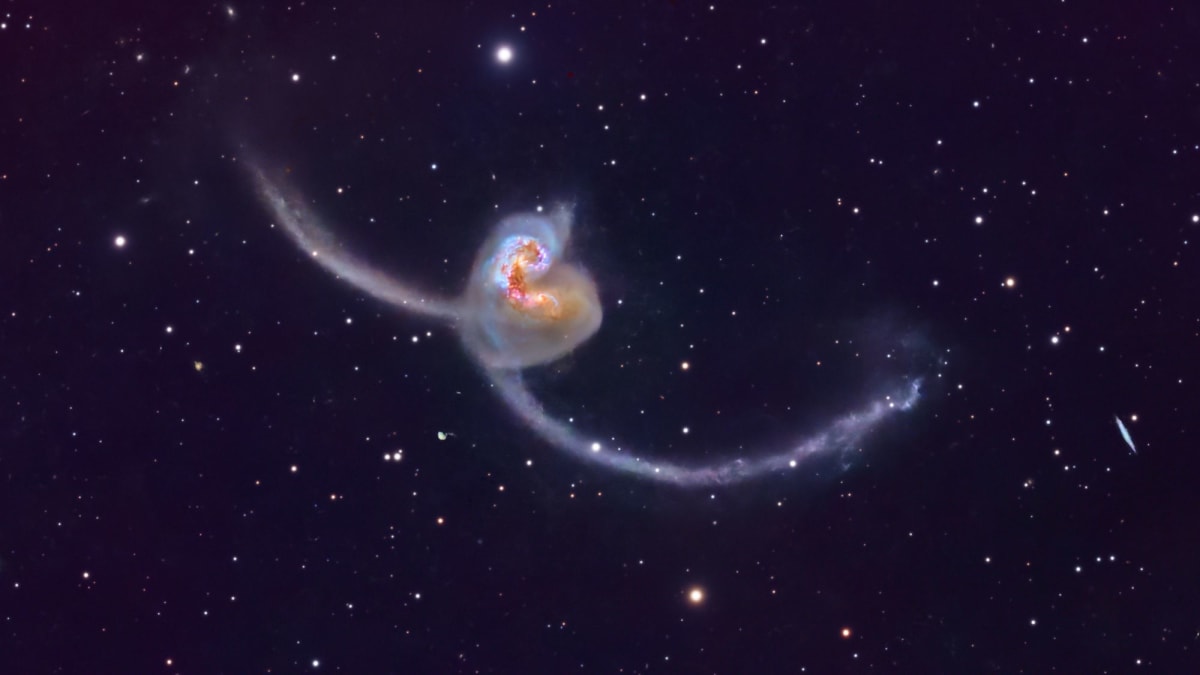
A Texas astrophotographer captured two galaxies merging 45 million light-years away in a cosmic dance that's been unfolding for hundreds of millions of years. The breathtaking image reveals star clusters being born in the collision's spectacular tidal tails.
Greg Meyer pointed his telescope at the night sky above Rockwood, Texas, and captured something most of us will never see with our own eyes: two entire galaxies locked in a cosmic embrace.
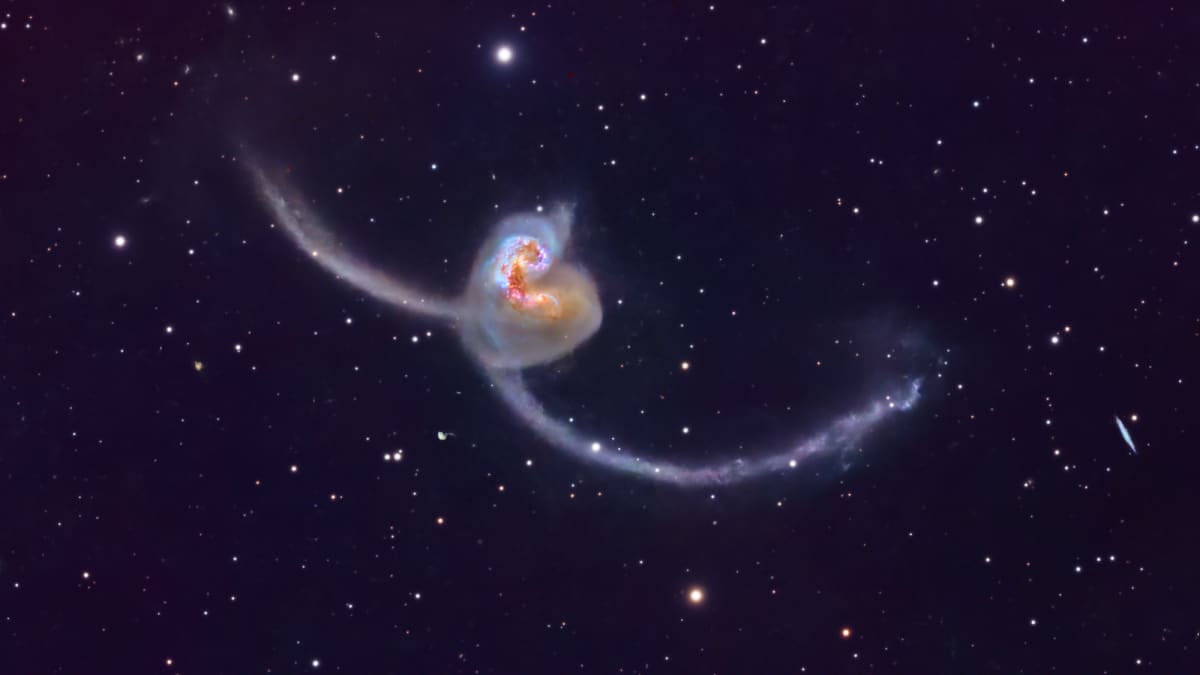
The Antennae Galaxies, located 45 million light-years away in the constellation Corvus, are slowly merging into a single massive galaxy. Meyer's stunning photograph freezes a moment in this ancient collision that's been happening for hundreds of millions of years.
The image reveals the orange-yellow cores of galaxies NGC 4038 and NGC 4039 glowing amid swirling clouds of gas, dust, and stars. Stretching out on either side are sweeping "tidal tails" made from elongated spiral arms that reach across light-years of space. These structures look so much like insect antennae that they gave the galaxies their nickname.
Meyer spent just under 21 hours collecting light from the distant galaxies using his Sky-Watcher Esprit 120 telescope at Starfront Observatory. He then compiled the data using specialized astrophotography software and Adobe programs to create the final image.
"This is such a cool image of 2 galaxies, with an amazing backstory," Meyer told Space.com. He specifically chose this target because it was within reach of his telescope's 840mm focal length.
Why This Inspires
Meyer's dedication shows what patience and passion can reveal about our universe. While professional observatories use billion-dollar equipment, this amateur astronomer from Texas captured a cosmic masterpiece from his own backyard.
The collision itself tells an inspiring story about transformation. According to NASA, the gravitational tug of war has triggered massive bursts of star formation, creating "super star clusters" in the antenna-like arms. While 90% of these giant clusters will eventually disperse, the remaining ones will survive as globular clusters in the newly formed galaxy.
What looks like destruction is actually creation on the grandest scale imaginable. New stars are being born by the billions in this collision, lighting up the darkness of deep space.
Meyer's photograph reminds us that the universe is constantly creating beauty, even in processes that take longer than human civilization has existed.
More Images


Based on reporting by Space.com
This story was written by BrightWire based on verified news reports.
Spread the positivity!
Share this good news with someone who needs it