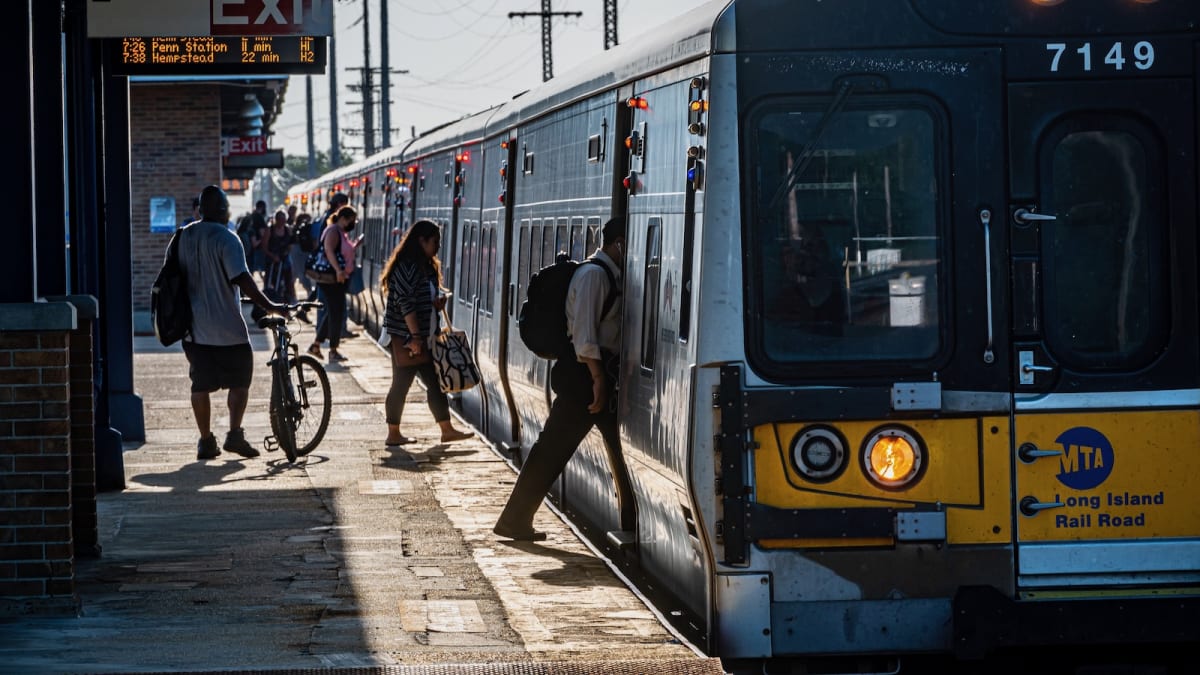
Gas Prices Push Americans Back to Buses and Trains
As gas prices soar past $4.50 nationwide, Americans are rediscovering public transit, with cities like San Francisco and San Diego seeing their highest ridership since the pandemic. The shift offers a glimpse of what's possible when transit becomes the practical choice.
When gas hit $6.15 per gallon in California this spring, something remarkable happened. People started coming back to buses and trains in numbers not seen since before the pandemic.
San Francisco's transit system recorded its highest ridership totals since 2020 in March. San Diego saw a 6.5 percent jump compared to last year, and cities from Washington D.C. to Texas are reporting similar gains.
Mark Olson from San Diego's transit system says the pattern makes sense. "A lot of our riders are low income, and certainly gas prices can be much more sensitive to lower income residents," he explains.
The numbers back up what transit agencies are seeing. Research from the University of Maryland found that when gas prices climb 10 percent over 13 months, light rail ridership increases by 1.2 percent and bus ridership by 0.8 percent.
But there's something deeper happening than simple math. When gas crosses psychological barriers like $3 or $4 per gallon, people who never considered transit suddenly start exploring their options.
Commuter rail riders are leading the charge because their longer trips make the savings add up fast. One round trip between home and work can suddenly look a lot more affordable on a train.
The Bright Side
Transit agencies are making the most of this moment. San Diego launched a commute calculator showing riders exactly how much they save by leaving the car at home. San Francisco's system, fresh off speed and reliability upgrades, is welcoming riders back to a better experience than they left.
Even intercity rail is seeing the benefits. Amtrak and Brightline are reporting increases as people choose trains over long highway drives.
The challenge ahead is making these gains stick. Transit expert Elisa Ramirez notes that reliable service matters more than fare prices. "Time is money, and even though people can afford a $2 fare, they can't afford to be late for work or miss doctor's appointments," she says.
Right now, only 13 percent of trips in America happen without a car. But cities with strong transit systems are proving that when gas prices make driving painful and alternatives work well, people will make the switch.
This moment shows what Americans will choose when transit becomes truly competitive with driving.
More Images


Based on reporting by Grist
This story was written by BrightWire based on verified news reports.
Spread the positivity!
Share this good news with someone who needs it

