German Lab Creates World's Most Efficient Solar Panel at 34%
Scientists in Germany just shattered the world record for solar panel efficiency, reaching 34.2% with breakthrough technology that could make solar power practical in places where space is tight. The achievement pushes past physical limits that have held conventional solar panels back for years.
Solar panels just got a massive upgrade that could change where and how we power our future.
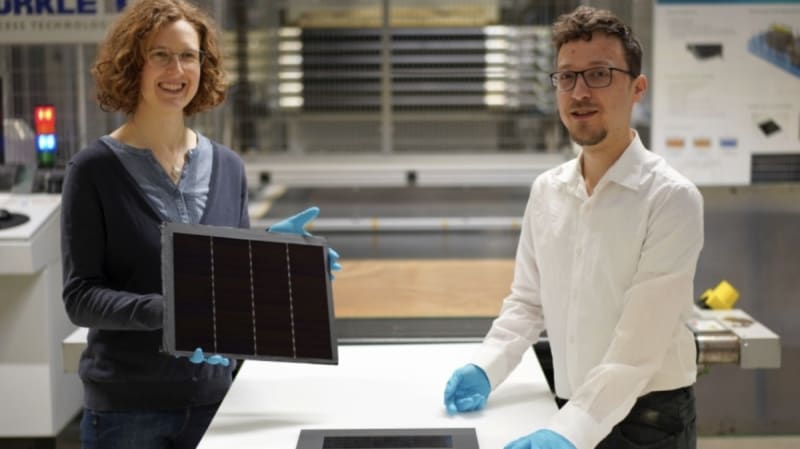
Germany's Fraunhofer Institute for Solar Energy Systems has created the world's most efficient solar module, converting an impressive 34.2% of sunlight into electricity. That might not sound revolutionary at first, but it demolishes previous records and proves we can push well beyond the limits of current technology.
The breakthrough comes from stacking different materials that each capture different parts of the solar spectrum. The winning panel uses special semiconductor compounds from groups three and five of the periodic table, combined with germanium, in a design originally developed for powering spacecraft.
Here's what makes this exciting: conventional silicon solar panels hit a physical ceiling at 29.4% efficiency. They simply can't go higher because of how silicon interacts with light. By layering multiple materials, the Fraunhofer team found a way around this fundamental limit.
The technology came together through collaboration. Azur Space Solar Power provided cells adapted from their space solar technology. Another company called temicon used nanotechnology to etch tiny patterns onto the glass surface, reducing reflection and squeezing out extra performance.
The team also announced a second record: 31.3% efficiency for a different design that pairs the advanced materials with more affordable silicon. This approach could offer a middle ground between cutting edge performance and reasonable cost.
Why This Inspires
Lead scientist Laura Stevens points to a future where we're not stuck choosing between cheap panels that need lots of space or expensive ones that perform better. These new technologies could fill the gap perfectly.
Director Andreas Bett sees practical applications everywhere space is limited. Think urban rooftops, building facades, or vehicles where every square inch counts. The silicon hybrid version offers better performance than standard panels at a manageable price point, while the germanium version delivers maximum power when space is truly at a premium.
The research builds on the institute's track record of pushing solar boundaries. Just last summer, they hit 40% efficiency with an indoor solar cell, and they previously set records with individual cells before scaling up to full modules.
What's particularly promising is that these aren't just laboratory curiosities. The manufacturing processes adapt existing production methods used for space solar cells, meaning the path to real world production already exists.
Solar energy keeps getting better, and these breakthroughs show we haven't come close to reaching its full potential yet.
More Images
Based on reporting by PV Magazine
This story was written by BrightWire based on verified news reports.
Spread the positivity!
Share this good news with someone who needs it