German Lab Hits 31% Efficiency in Solar Hydrogen Tech
Scientists in Germany just broke the world record for turning sunlight directly into clean hydrogen fuel, reaching 31.3% efficiency. The breakthrough could slash the cost of green hydrogen below $3 per kilogram.
Scientists at Germany's Fraunhofer Institute for Solar Energy Systems just achieved something remarkable: they converted sunlight into clean hydrogen fuel at a record 31.3% efficiency, beating previous records by 5%.
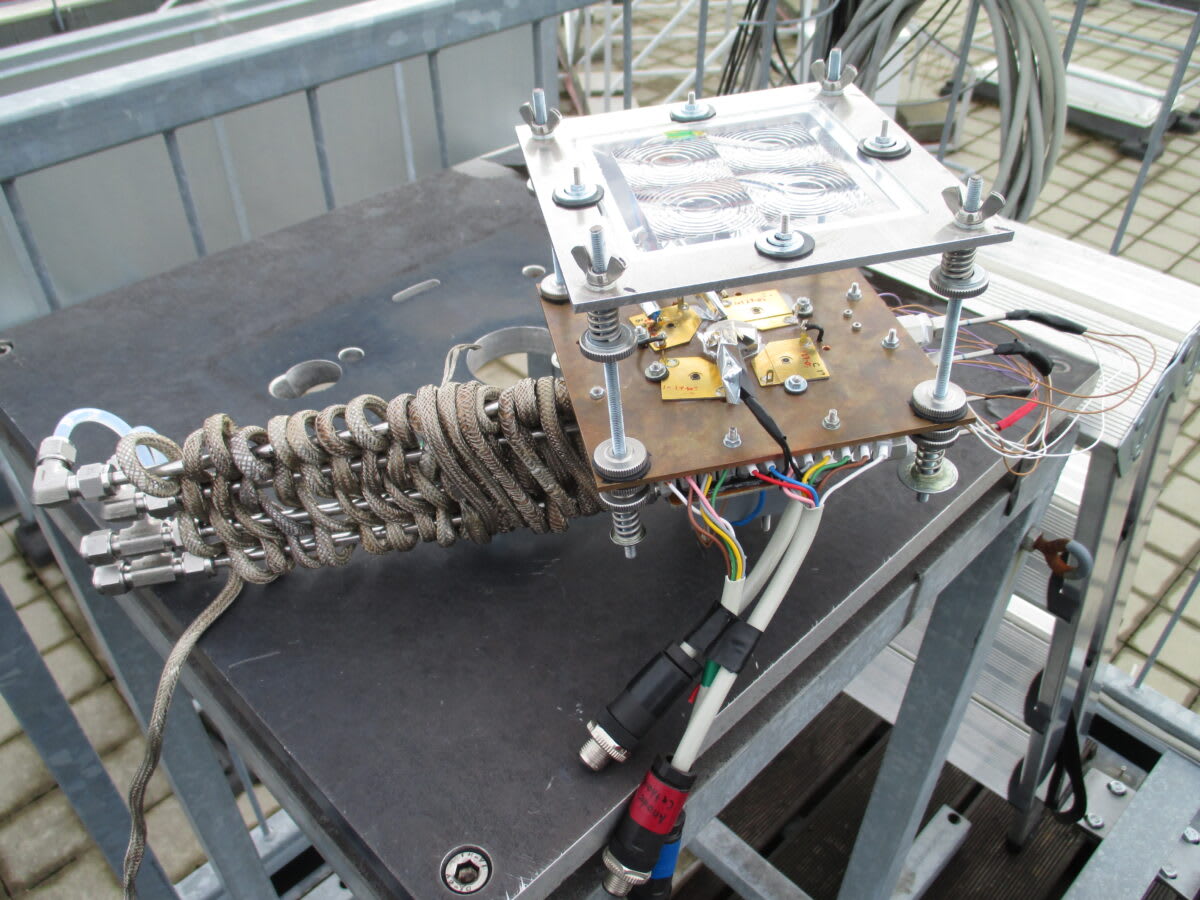
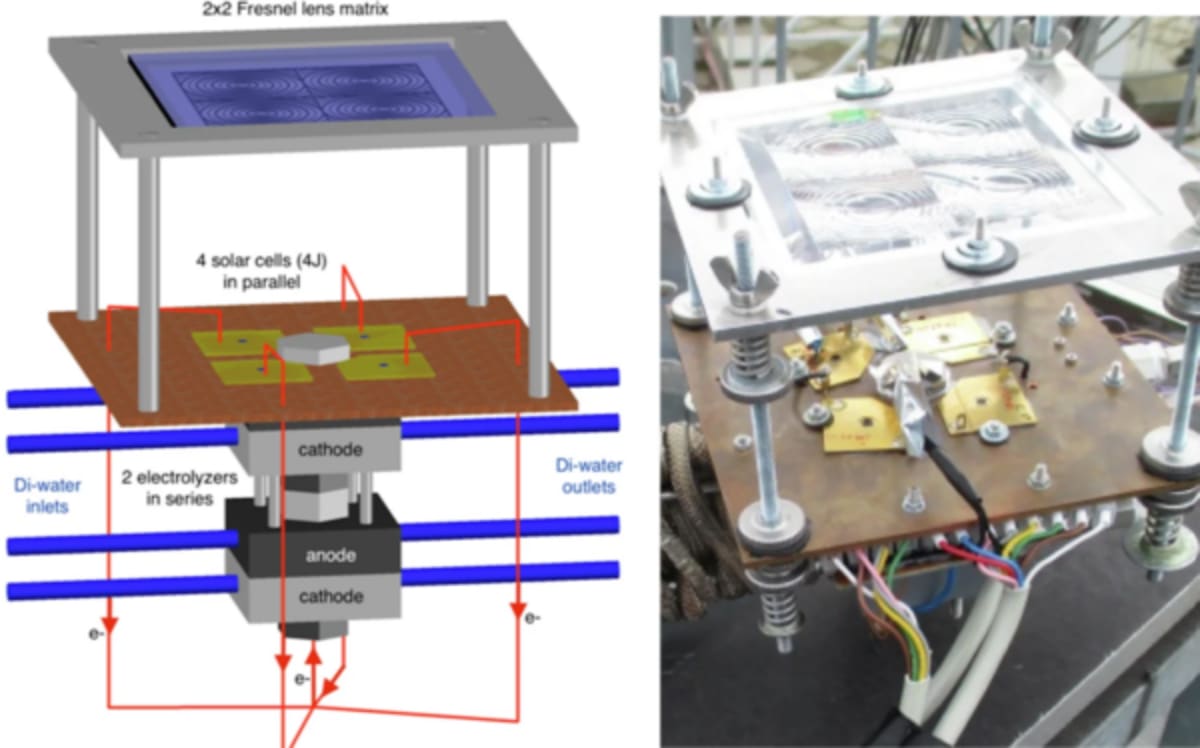
The system combines concentrated solar cells with water electrolysis in a single elegant package. Four tiny solar cells, each just 7mm across, sit under Fresnel lenses that focus incoming sunlight. These high-tech cells split water molecules into hydrogen and oxygen using nothing but concentrated sunshine.
The secret sauce lies in the four-junction solar cells, built by bonding together multiple semiconductor layers. These same cells previously set a world record by converting 47.6% of concentrated sunlight into electricity. Now they're proving equally impressive at making hydrogen fuel.
Lead researcher Frank Dimroth and his team tested the system outdoors in Freiburg over 13 summer days. The concentrator cells hit 34.7% efficiency while the electrolysis portion ran at 91.1% efficiency. The system showed no performance loss after 107 hours of operation through 13 daily cycles.
Previous outdoor systems maxed out at 19.8% efficiency and required careful voltage matching between components. Indoor lab setups reached around 30% but couldn't maintain that performance under real sunlight conditions. This new approach surpassed both.
The system still needs refinement before it reaches commercial viability. Right now it requires external heating to maintain optimal temperatures, though future versions will capture waste heat from the solar cells. Dimroth rates the technology at level three on the nine-point readiness scale, meaning it's proven in principle but needs development partners.
Why This Inspires
Green hydrogen could revolutionize industries that can't easily run on batteries, from shipping to steel production. But it only works if the price drops low enough to compete with fossil fuels.
The Fraunhofer team calculates that scaling up their HyCon technology to run 35% of the time could push hydrogen costs below $3 per kilogram. That's approaching the sweet spot where clean fuel becomes economically viable for heavy industry.
Dimroth's team is already working with startup Clearsun Energy to commercialize concentrated solar technology. This hydrogen system could become a next-generation product once they secure funding for a pilot installation.
The breakthrough shows how combining existing technologies in smarter ways can yield dramatic improvements. Sometimes the path to clean energy isn't inventing something entirely new but rather perfecting how different pieces work together.
Sunshine and water transformed into fuel at record efficiency: that's progress you can see.
More Images
Based on reporting by Google News - Solar Power Record
This story was written by BrightWire based on verified news reports.
Spread the positivity!
Share this good news with someone who needs it