German Town Cuts 12,800 Tons of CO2 With Play Money
A Bavarian region invented its own colorful currency 22 years ago to support local shops. Now it's saving thousands of tons of carbon by rewarding residents who make eco-friendly choices with free money.
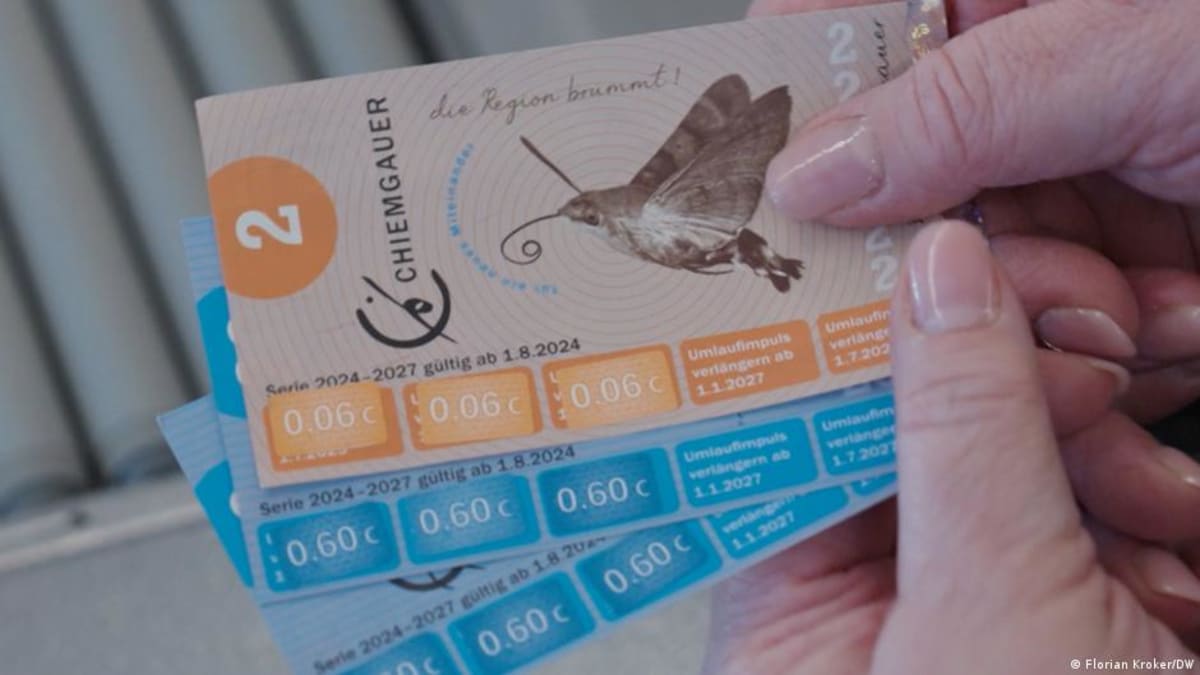
In the Chiemgau region of Bavaria, customers at bakeries and bookshops regularly pay with bills covered in grasshoppers and ladybugs. This isn't Monopoly money, though it looks like it could be.
The Chiemgauer started in 2003 as a high school economics project. Teacher Christian Gelleri and his students wanted to help local businesses compete against big shopping malls, so they designed a currency that could only be spent in their region.
The classroom experiment worked better than anyone imagined. Today, 4,200 people and 300 businesses use five million Chiemgauers annually, worth the same as five million euros.
The currency has a clever trick to keep money moving through the local economy. Every six months, users must buy small stamps to keep their bills valid, and after three years the notes expire completely. Businesses can convert Chiemgauers back to euros, but they pay a 5% fee that supports local nonprofits.
Four years ago, Gelleri added an environmental twist. Residents now earn bonus Chiemgauers for climate-friendly actions like repairing clothes instead of buying new ones, installing balcony solar panels, or insulating homes with natural materials.
A resident who installs two balcony solar panels receives 100 Chiemgauers, about $100. Those panels will prevent 11 tons of carbon dioxide over 20 years.
The rewards come from a community pool where locals and businesses contribute to offset their emissions. The system works surprisingly well: for every ton of carbon offset through the fund, the climate bonuses drive behaviors that save nine additional tons.
The Ripple Effect
Independent auditors at TÜV Nord confirmed the system has eliminated 12,800 tons of CO2 over four years. That equals taking 2,000 German cars off the road for the same period.
The idea is spreading beyond Bavaria. Four more German regions have launched similar climate bonus programs using complementary currencies.
About 300 of these alternative currencies exist worldwide, concentrated in Europe and Brazil. In Viladecans, Spain, the Vilawatt rewards people for saving energy. In Indonesia and the Philippines, Plastic Bank tokens encourage plastic bottle recycling.
Researcher Ester Barinaga at Sweden's University of Lund notes these currencies automatically cut transport emissions. When people shop locally, supply chains shrink because vendors buy locally produced goods.
Freight transportation accounts for 8% of global greenhouse gas emissions, according to MIT and the International Energy Agency. What started as a classroom project to save corner stores has become a blueprint for fighting climate change one neighborhood at a time.
More Images

Based on reporting by DW News
This story was written by BrightWire based on verified news reports.
Spread the positivity!
Share this good news with someone who needs it