Germany Hits 34% Electric Vehicle Share in Early 2026
Electric vehicles just claimed over a third of all new car sales in Germany, marking the country's strongest start to any year on record. Affordable models and renewed government incentives are powering the shift away from gas-powered cars.
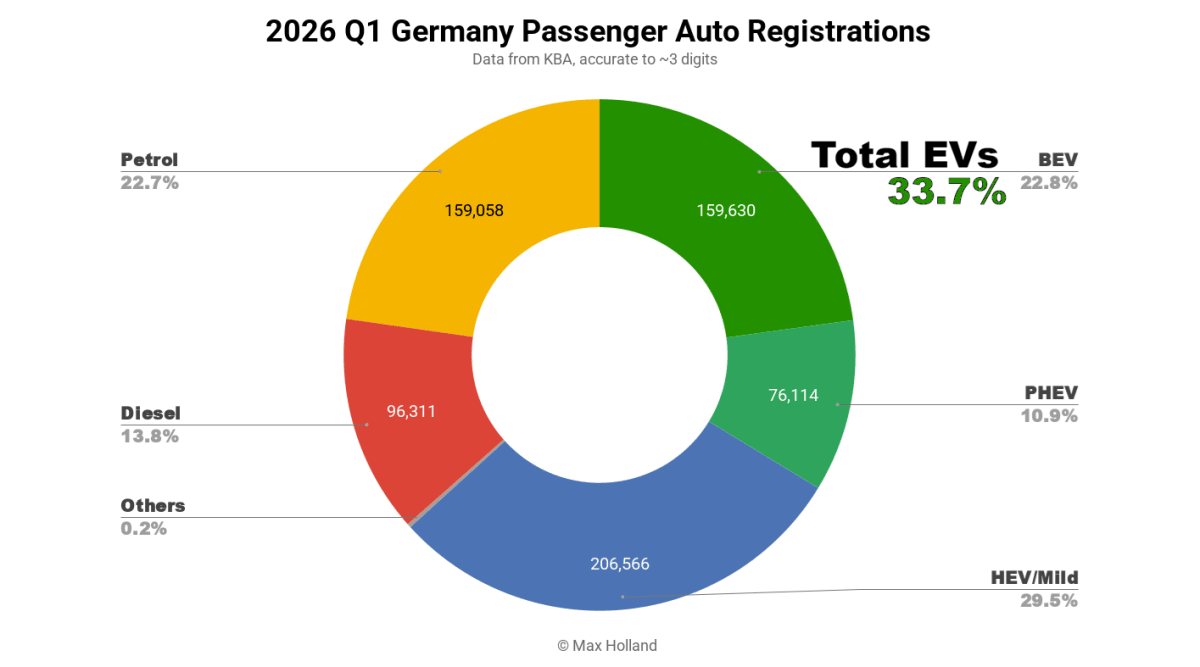
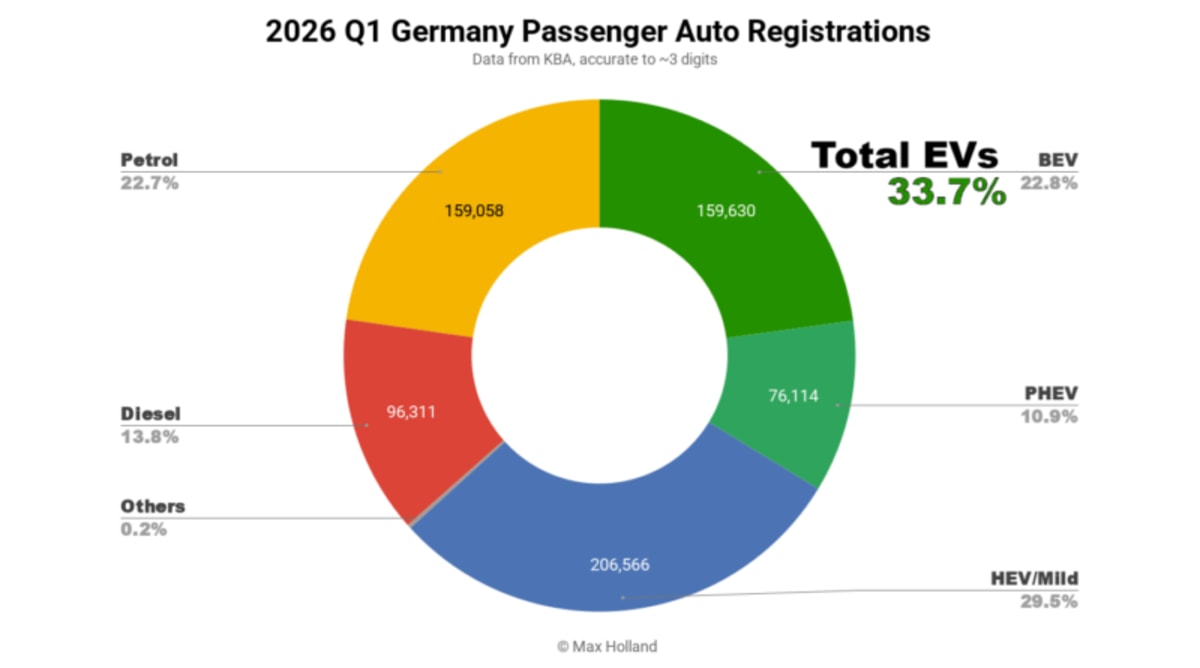
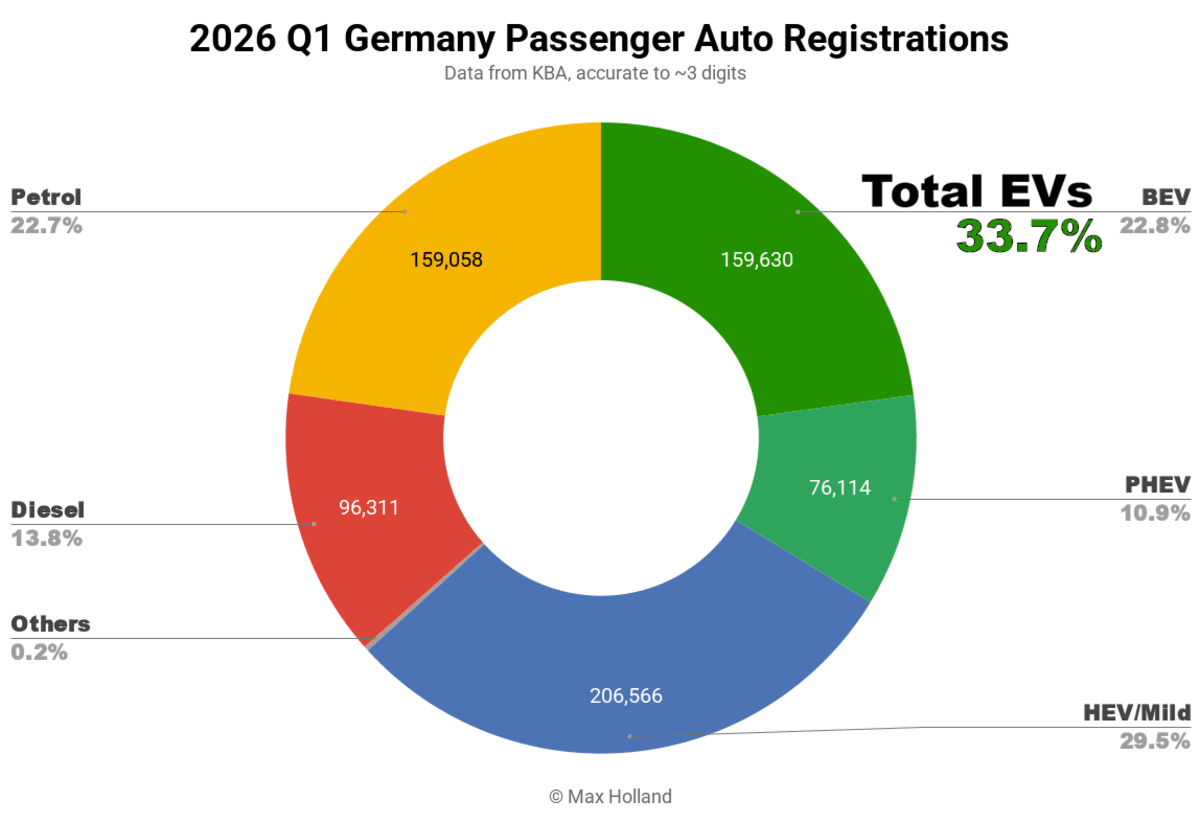
Germany just hit a major milestone in the shift to cleaner transportation, with electric vehicles capturing 33.7% of all new car sales in the first quarter of 2026.
That's a huge jump from 26.6% during the same period last year. Fully electric cars reached 22.8% of the market, while plug-in hybrids took another 10.9%, proving that drivers are ready to make the switch when given the right options.
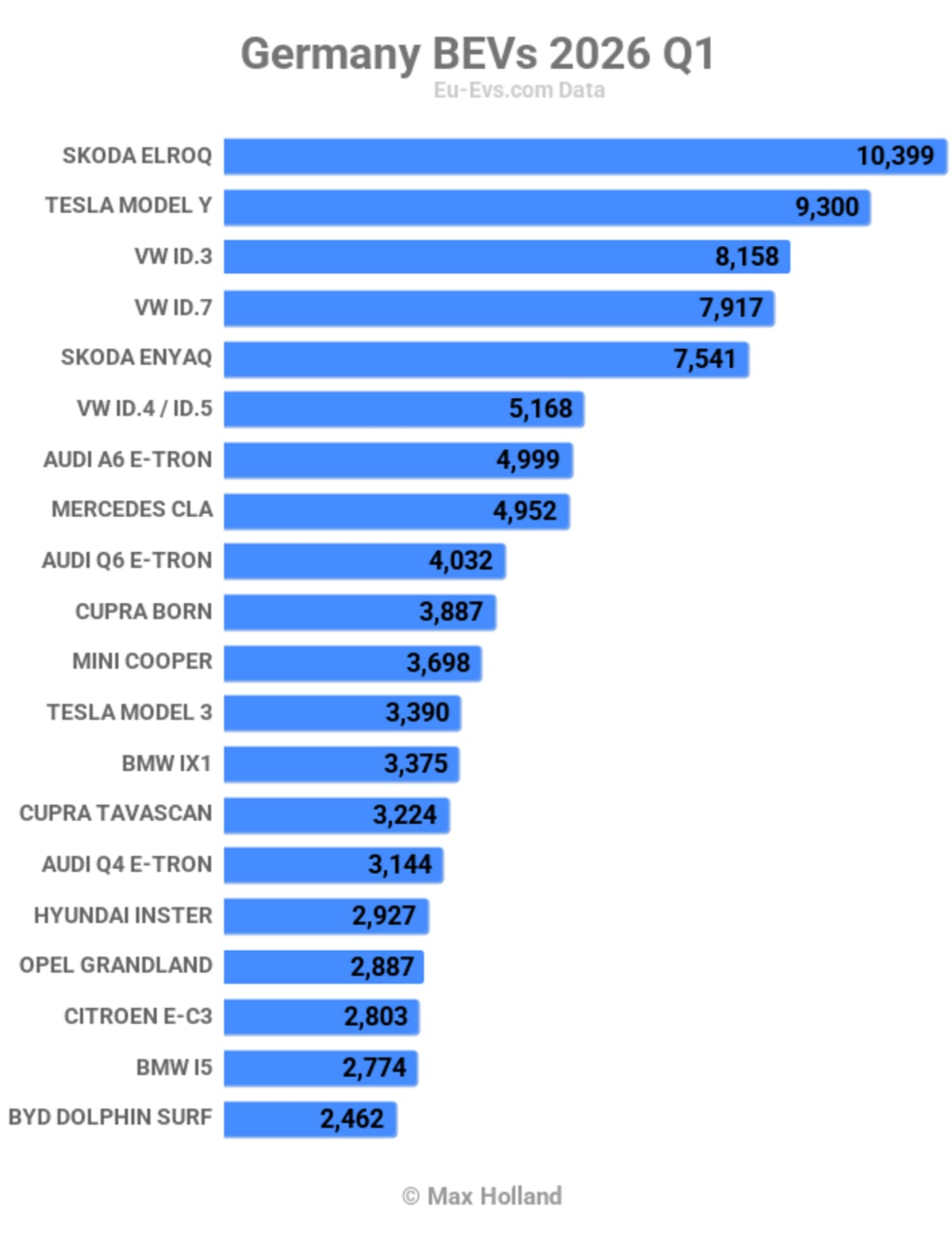
The surprise winner? The Skoda Elroq topped the charts with over 10,000 sales, beating out Tesla's popular Model Y. The affordable crossover has been climbing steadily since its debut last year, showing that practical, reasonably priced electric cars are what German families actually want.
Government support made a real difference here. Germany brought back purchase incentives offering €3,000 off electric cars and €1,500 off plug-in hybrids, with extra help for lower-income families. The result is a smoother, steadier climb in electric car adoption instead of the wild ups and downs of previous years.
Meanwhile, gas-powered cars are losing ground fast. Petrol car sales dropped 16.6% compared to last year, while diesel fell 6.5%. Traditional automakers are scrambling to catch up, many turning to temporary hybrid solutions while they ramp up their electric lineups.
The real excitement is happening at affordable price points. New models like the Nissan Micra (starting at €27,990), Kia EV2 (€26,600), and Renault Twingo (just €19,990) are finally bringing electric cars within reach of everyday drivers. For years, most electric options cost €40,000 or more, pricing out ordinary families.
The Ripple Effect
Germany's electric vehicle boom is creating positive change far beyond showroom floors. As Europe's largest car market shifts away from fossil fuels, it's pushing automakers worldwide to speed up their electric plans and invest in more affordable models.
The cleaner air in German cities will benefit everyone, especially children and people with respiratory conditions. Each gas car replaced with an electric one means less local pollution and quieter streets.
This momentum is also creating thousands of jobs in battery production, charging infrastructure, and electric vehicle manufacturing across the country. When one of the world's traditional automotive powerhouses goes electric, it proves the transition isn't just possible but inevitable.
Germany's success shows that smart policy plus affordable options can transform an entire market in just a few years.
More Images
Based on reporting by CleanTechnica
This story was written by BrightWire based on verified news reports.
Spread the positivity!
Share this good news with someone who needs it