Ghana Hosts Workshop to Protect Civilians from Explosives
African leaders gathered in Accra this week to turn a groundbreaking 2022 declaration into real action that could save thousands of civilian lives. When explosive weapons hit populated areas, 90% of victims are civilians, but experts say this harm is entirely preventable.
Ghana is leading a continental push to protect African civilians from one of modern conflict's most devastating yet preventable threats.
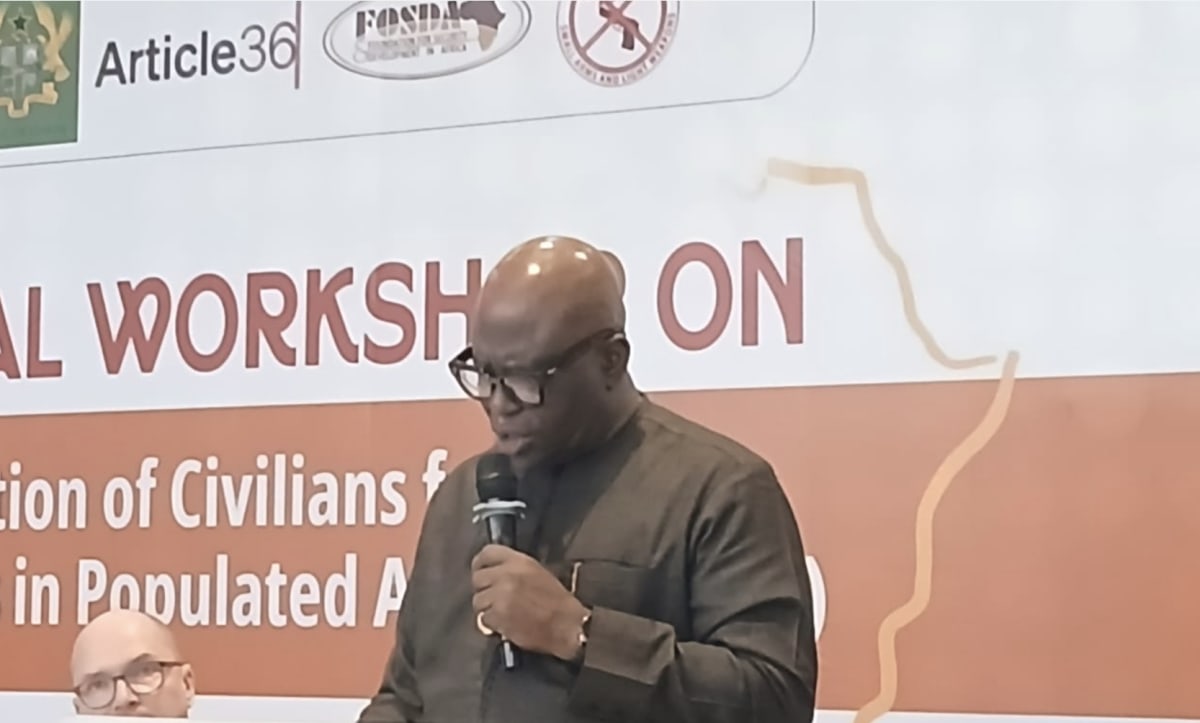
The two-day workshop in Accra brought together government officials, security experts, and humanitarian organizations from across Africa to strengthen protections for people living in conflict zones. Co-hosted by Ghana and Austria, the gathering focuses on implementing the 2022 Political Declaration on Explosive Weapons in Populated Areas, a commitment to reduce civilian casualties from bombs and artillery in cities and towns.
The statistics reveal an urgent crisis. When explosive weapons strike populated areas, civilians account for 90% of casualties, with half of those victims being children, according to Austrian Ambassador Jurgen Heissel. But as Laura Boillot, Director of Article 36, emphasized, this suffering isn't random or unavoidable.
"When explosive weapons are used in towns and cities, the harm to civilians is not accidental. It is predictable and it is preventable," Boillot told attendees. That simple truth drives the workshop's mission: turning awareness into action.
Ghana isn't just hosting conversations. Deputy Interior Minister Ebenezer Okletey Terlabi announced that the country has begun steps to formally endorse the declaration and is reviewing its National Arms Bill to strengthen civilian protection mechanisms. He framed the issue in deeply human terms, reminding participants that "explosive harm is a matter of real lives, real families and real communities who demand concrete actions."
The Ripple Effect
The Accra workshop represents Africa taking the lead in shaping global humanitarian standards. Dr. Adam Bona, Executive Secretary of Ghana's National Commission on Small Arms and Light Weapons, sees the continent moving from observer to architect in international protection norms.
Participants are developing practical solutions that could transform how military operations happen near civilian populations. The discussions cover improving how casualty data gets collected, ensuring humanitarian workers can reach affected communities, and providing better support for survivors. These aren't abstract policy debates but concrete measures that could protect families caught in conflict zones across the continent.
The declaration itself, while not legally binding, reinforces international humanitarian law with actionable steps. It brings together governments, the United Nations, the Red Cross, and civil society organizations in a united effort to end preventable civilian deaths.
As African nations face rising security challenges, this gathering shows leaders choosing protection over destruction, coordination over isolation, and hope over resignation in the face of violence.
Based on reporting by Myjoyonline Ghana
This story was written by BrightWire based on verified news reports.
Spread the positivity!
Share this good news with someone who needs it