Giant Echidna Fossil Solves 100-Year Mystery in Australia
A museum scientist discovered a fossilized giant echidna skull that had been sitting in storage since 1907, proving these ancient creatures once roamed Victoria. The finding connects fossil sites across Australia and reveals how Ice Age animals spread across the continent.
A fossil that waited 114 years in a museum collection just rewrote part of Australia's ancient history.
Tim Ziegler was studying old fossils at Museums Victoria in 2021 when he spotted something remarkable. A skull fragment collected from Foul Air Cave in 1907 belonged to Owen's giant echidna, a species never confirmed in Victoria until now.
This matters because scientists had found giant echidna fossils in Tasmania and New South Wales, but nothing in between. The gap puzzled researchers for decades because Victoria's environment should have been perfect for these animals.
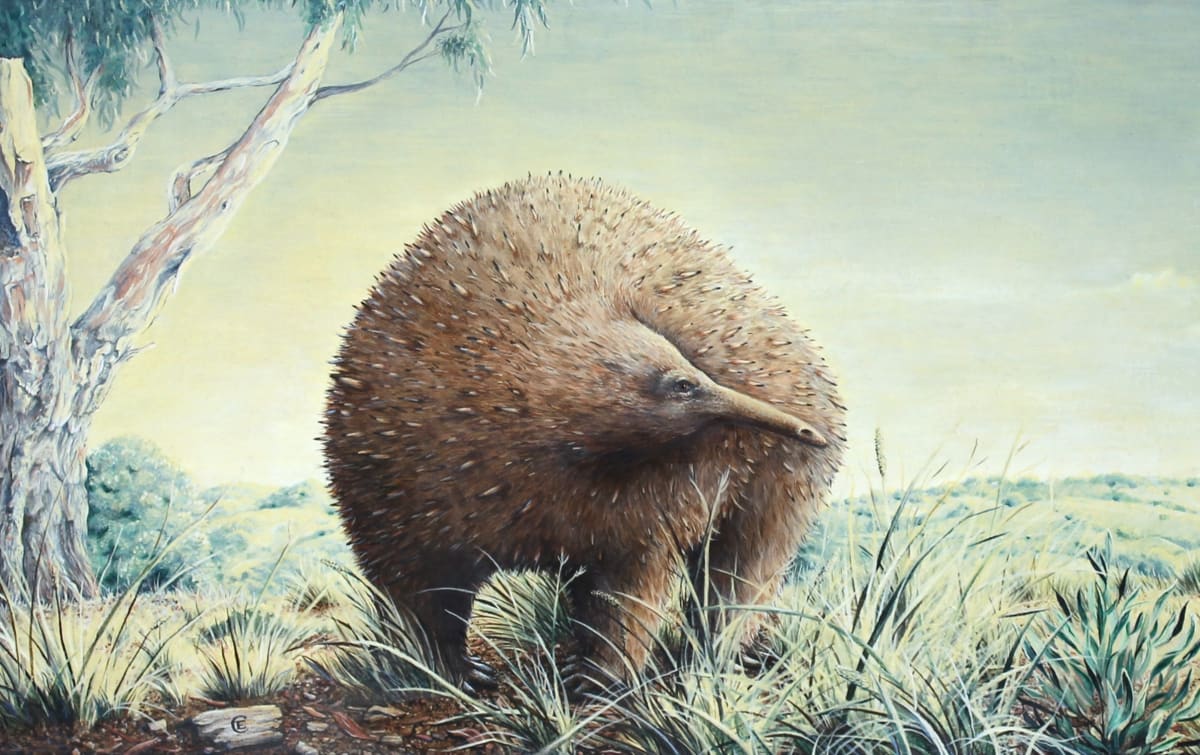
Owen's giant echidna wasn't like the small, shy echidnas waddling around Australia today. These Ice Age relatives stretched about three feet long and weighed 33 pounds, roughly the size of a small child. Their long, straight snouts helped them dig into hard ground during harsher climates.
The discovery happened in one of Australia's natural time capsules. Foul Air Cave worked like a trap, capturing animals that fell inside and couldn't escape. Over thousands of years, their bones fossilized alongside remains of ancient kangaroos and wombats.
The original collectors who explored the Buchan Caves in 1907 used only ropes and kerosene lamps. They had no idea they'd found something that would still excite scientists over a century later.
Ziegler and his colleague Jeremy Lockett carefully measured the skull and compared it with other fossils and living echidnas. The size and shape confirmed their identification, finally proving giant echidnas lived across a wider stretch of Australia than anyone realized.
The Ripple Effect
This discovery does more than add one species to one location. It helps scientists understand how animals moved and adapted during the Ice Age, when Australia hosted much larger versions of today's wildlife.
Museum collections worldwide hold millions of specimens, many still unstudied. This giant echidna sat in storage for 114 years before someone looked at it with fresh eyes and new questions.
The research team believes more surprises wait in both museum drawers and unexplored caves. Each fossil fills another piece of the puzzle showing what Australia looked like when giant wombats, enormous kangaroos, and meter-long echidnas ruled the landscape.
The giant echidna may be extinct, but its rediscovery proves the past still has stories to tell.
Based on reporting by Google: fossil discovery
This story was written by BrightWire based on verified news reports.
Spread the positivity!
Share this good news with someone who needs it