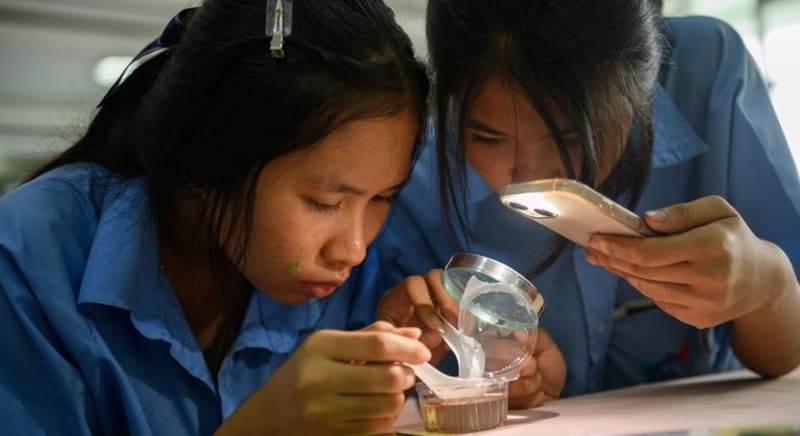
Girls in Science Program Closes STEM Gap in Kyrgyzstan
A chemist from Kyrgyzstan is proving girls can excel in science and have families too, while mentoring thousands through UNICEF's program. Her work is helping change minds in communities where fathers once worried education would keep daughters from marriage.
When Asel Sartbaeva visits families in Kyrgyzstan, fathers often share the same worry: if their daughters pursue science, they won't have families. The chemist and entrepreneur has a powerful answer: she's living proof they can have both.
Sartbaeva is an associate professor at the University of Bath and CEO of biotech company EnsiliTech. Her research solves a critical global health problem by making vaccines stable at high temperatures so they can reach remote communities without refrigeration.
But her impact extends far beyond the lab. As a UNICEF ambassador for the Girls in Science program in Kyrgyzstan, she's mentoring thousands of girls who are breaking barriers in traditionally male fields.
The program combines science masterclasses with confidence building and communication training. Many participants have gone on to pursue university degrees in STEM fields, armed with skills and belief in their potential.
The challenge these girls face reflects a global pattern. Women make up only 35 percent of science graduates worldwide, despite being more likely than men to pursue higher education. In technology, the gap widens further: women represent just 26 percent of workers in data and artificial intelligence, and only 12 percent in cloud computing.
UN Secretary General António Guterres warns that excluding women from science weakens humanity's ability to tackle urgent challenges. From climate change to public health, solving tomorrow's problems requires every bright mind we can find.
Why This Inspires
Sartbaeva's story shows how one person can shift cultural attitudes across generations. By simply being visible and successful, she's rewriting what families believe is possible for their daughters.
The impact ripples outward. When fathers see successful women scientists who also have fulfilling family lives, stereotypes crumble. When girls participate in the program and discover their aptitude for STEM, they imagine futures they never knew existed.
The changes are already visible. When Sartbaeva was in university, women professors were rare. Today she sees far more balance and stronger policies supporting inclusion across academic institutions.
The invitation she extends to girls considering science is direct: "We need you." Those three words carry weight because they're true. The world's toughest problems won't solve themselves, and they certainly won't be solved by using only half of humanity's talent.
Every girl who pursues science because someone believed in her becomes another proof point for the next generation.
Based on reporting by UN News
This story was written by BrightWire based on verified news reports.
Spread the positivity!
Share this good news with someone who needs it
%2Ffile%2Fattachments%2Forphans%2F6I1A1413_975311.jpg)