Google, Meta, McKinsey Back $131K Appalachia Forest Rebirth
Three tech giants just committed to a decade-long project that will plant forests across 131,240 tonnes worth of abandoned Appalachian mine land while paying local landowners for restoration. The deal transforms environmental wastelands into thriving ecosystems and paychecks. #
Land scarred by decades of mining and abandoned farming across Appalachia is getting a second chance, thanks to a major commitment from some of the world's biggest companies.
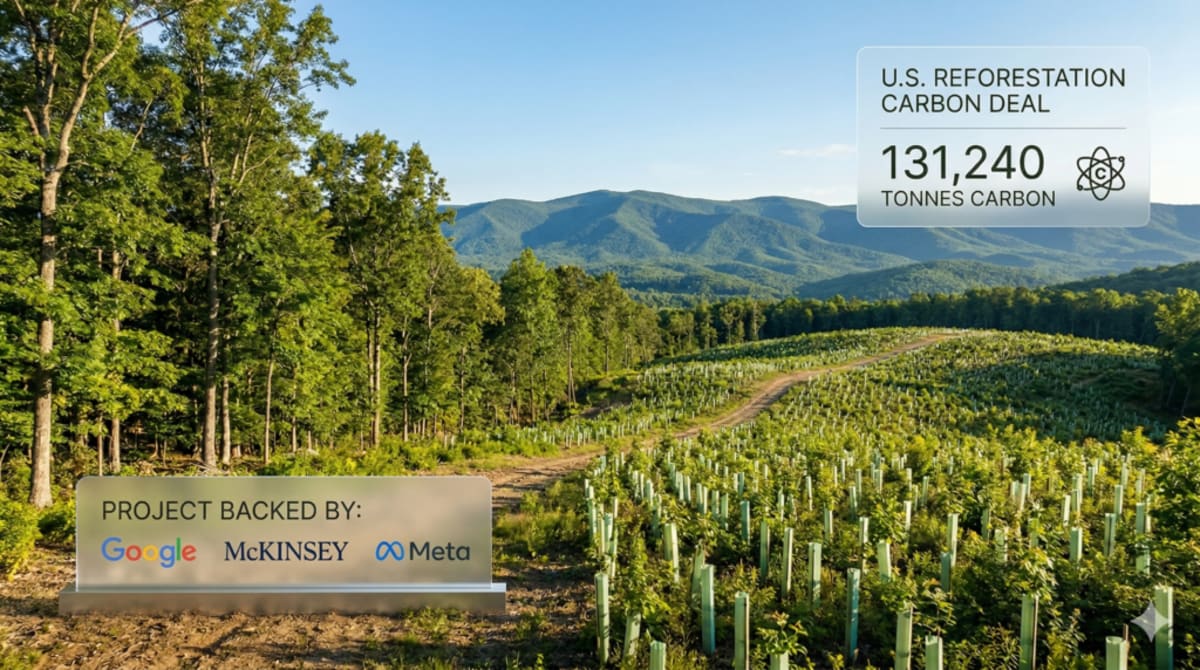
Google, McKinsey, and Meta have signed 10-year agreements to fund reforestation projects that will remove 131,240 tonnes of carbon from the atmosphere. The initiative, coordinated through the Symbiosis Coalition and executed by Living Carbon, targets former mine sites and underutilized agricultural land across the Appalachian region.
The project plants native hardwood and pine species on land that has struggled to recover after industrial use. Poor soil quality, erosion, and contamination have left many of these acres economically idle for years, generating little value for communities that need it most.
But the environmental restoration is just part of the story. Landowners will receive lease payments for property that previously sat unused, creating a new income stream in an economically challenged region.
Local workers are finding employment in the restoration effort, and equipment once used for mining is being repurposed for land rehabilitation. Legacy industries are connecting to new economic opportunities, creating a bridge between past and future.
The Ripple Effect
The environmental benefits extend far beyond carbon capture. Restored forests will improve soil and water quality throughout the watershed, addressing contamination issues that have plagued communities for generations.
Native plant and animal species will regain lost habitat as ecosystems rebuild themselves over the coming decades. What was once barren ground will transform into functioning forests that support biodiversity.
The project went through rigorous vetting before receiving funding. Field assessments, geospatial analysis, and third-party technical evaluations ensured the science was sound and the execution viable.
Maddie Hall, CEO of Living Carbon, emphasized that multi-year agreements like this provide the financial confidence needed to scale high-quality carbon removal. The certainty allows project developers to invest in expansion and attract additional financing.
Julia Strong, Executive Director of Symbiosis Coalition, said the project stood out for both its scientific rigor and its thoughtful approach shaped around local communities, ecosystems, and economies. The coalition applies strict quality criteria covering accounting integrity, durability, ecological outcomes, community benefit, and transparency.
The deal is part of a broader strategy to deliver over 500,000 tonnes of carbon removal across multiple reforestation and agroforestry projects over the next decade. Corporate buyers are increasingly seeking high-integrity, nature-based carbon credits tied to measurable community and environmental outcomes.
Across the United States, millions of acres of abandoned mine land and underutilized agricultural property remain available for similar restoration efforts, suggesting this model could scale significantly beyond Appalachia.
Environmental liabilities are becoming productive carbon sinks that deliver jobs, habitat restoration, and cleaner water alongside climate benefits.
#
Based on reporting by Google News - Reforestation
This story was written by BrightWire based on verified news reports.
Spread the positivity!
Share this good news with someone who needs it