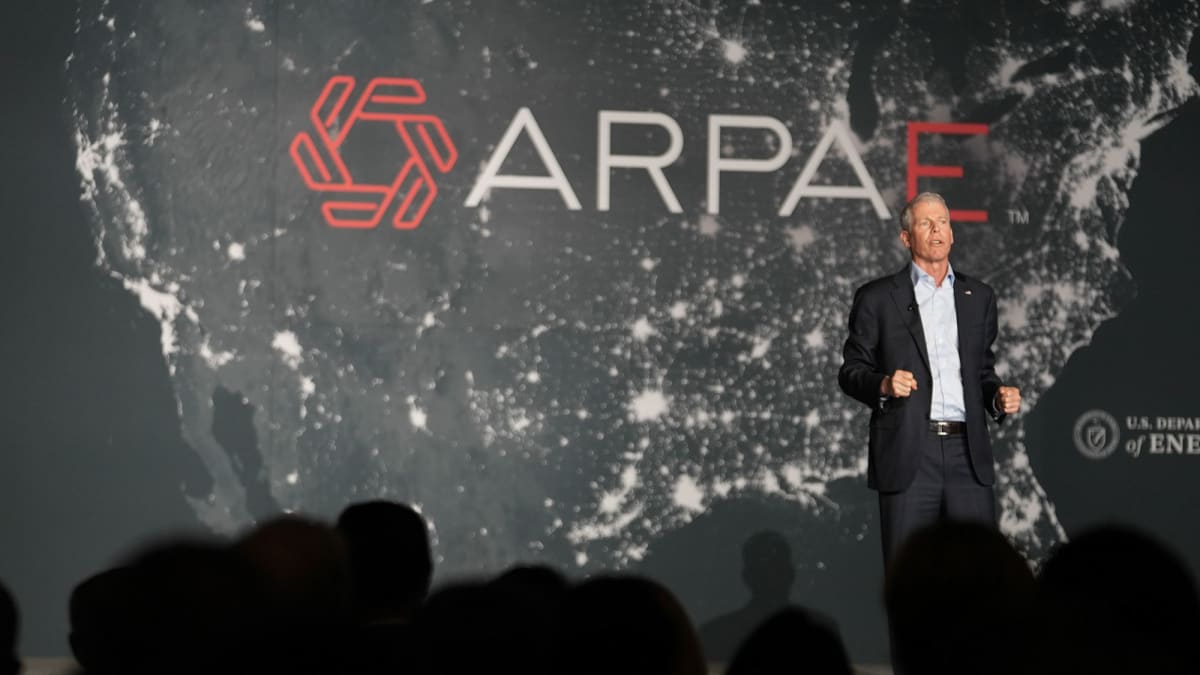
Government Program Turns $4B Into $20B in Clean Energy Wins
A federal program backing risky clean energy ideas has sparked over $20 billion in follow-up funding and 1,400 patents in 15 years. Companies developing geothermal power, long-lasting batteries, and small nuclear reactors are now signing major deals thanks to early government support.
A modest government investment is quietly powering America's clean energy revolution, and the results are finally paying off in a big way.
For 15 years, a Department of Energy program called ARPA-E has been funding the kind of wild energy ideas that most investors won't touch. The reason? These technologies can take decades to become profitable, and most startups die in what experts call the "valley of death" between laboratory and marketplace.
But a landmark report from the National Academies of Science just confirmed what energy experts hoped was true. Every dollar ARPA-E invested attracted five more dollars from private companies, turning $4 billion in government funding into over $20 billion in total investment.
The program has particularly excelled at solving one of clean energy's toughest puzzles: how to keep power flowing when the sun isn't shining and the wind isn't blowing. Solar and wind are now cheap enough to compete with coal and gas, but factories and data centers need electricity around the clock.
Enter companies like Fervo, which taps into the Earth's natural heat through super-deep wells to generate constant geothermal power. After receiving ARPA-E support in 2019, Fervo just signed deals with Google to power Nevada data centers.
Form Energy developed iron-air batteries that store clean energy for days at a time. X-energy built small-scale nuclear reactors that could replace traditional power plants. Both got their start with ARPA-E backing.
The Ripple Effect
The real magic happens after ARPA-E proves a technology works. About 40 percent of funded projects sparked what scientists call a "crowding in" effect, where other companies see the proof and jump in to develop similar solutions.
Chris Bataille, a clean energy expert at Columbia University, says the program enables talented people to take risks on technologies that won't pay off for decades. Without government support, these breakthrough ideas would never attract the tiny fraction of funding they need to succeed.
The report authors now recommend Congress significantly expand ARPA-E's budget and shift focus to even harder problems. Future targets include nuclear fusion, batteries that could store solar power through entire winters, and carbon-free ways to make steel and cement, which together account for 16 percent of global emissions.
Projects that received ARPA-E money were far more likely to get patents and attract additional private investment than similar projects that applied but were denied funding. The difference wasn't the quality of ideas but rather that crucial early support to prove the concept works.
The program started in 2009 focusing on solar panels and lithium-ion batteries when those technologies still needed help competing. Now those markets have matured, freeing ARPA-E to tackle the next generation of climate challenges that could take another decade or more to solve.
Even as political winds shift, the Department of Energy continues handing out new grants for experimental technologies like long-duration energy storage, fusion reactors, and critical mineral mining. The evidence is clear: patient government investment in risky ideas creates the clean energy breakthroughs of tomorrow.
More Images

Based on reporting by Grist
This story was written by BrightWire based on verified news reports.
Spread the positivity!
Share this good news with someone who needs it