Guyana and Brazil Launch Caribbean Agriculture Innovation Hub
The Caribbean's first agricultural innovation hub will open in Guyana within a year, giving farmers access to cutting-edge technology and reducing the region's dependence on food imports. The partnership brings decades of Brazilian tropical farming expertise to help strengthen climate resilience across Caribbean nations.
The Caribbean is getting its first Science, Technology, and Innovation Hub for agriculture, and it could transform how the region feeds itself.
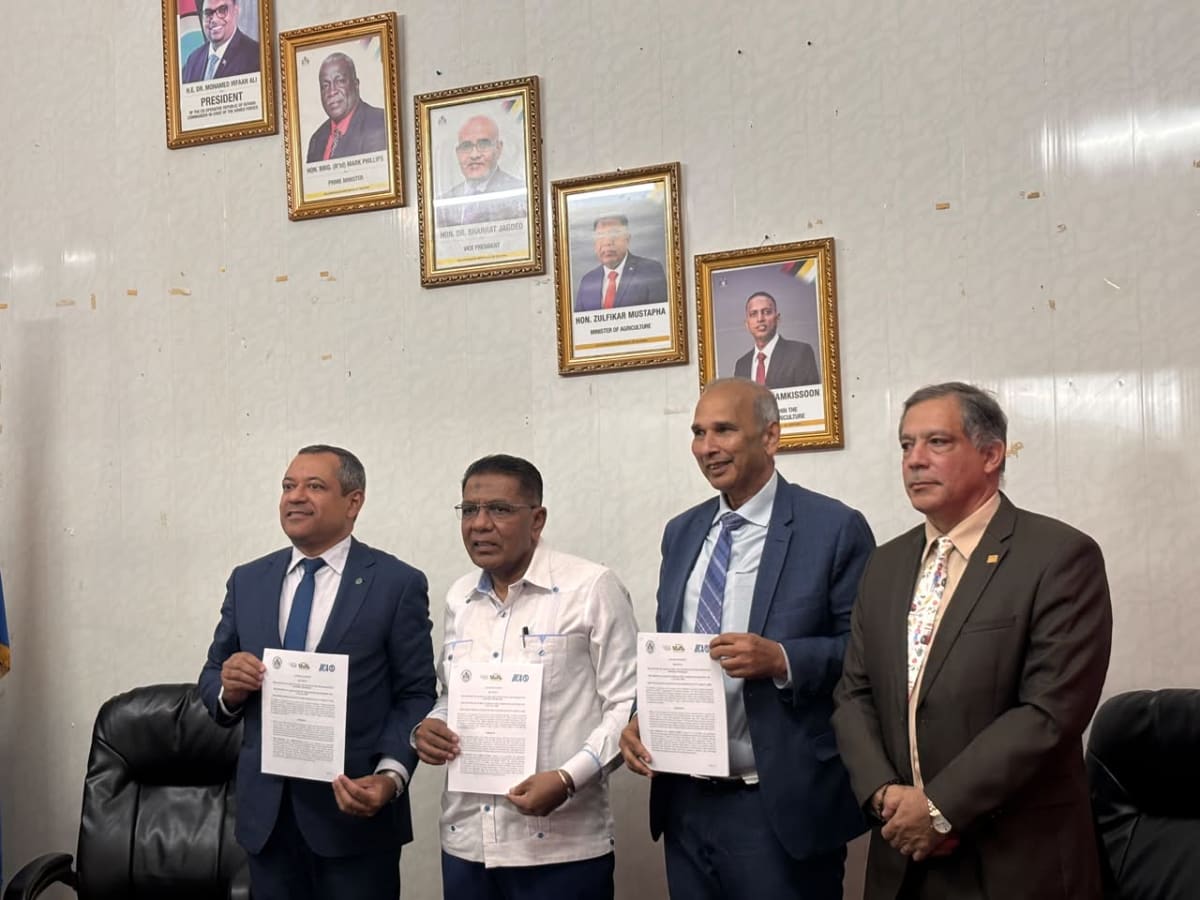
Guyana's Minister of Agriculture Zulfikar Mustapha, Brazil's Deputy Minister of Agriculture Cleber Soares, and the Inter-American Institute for Cooperation on Agriculture signed the landmark agreement this week. The hub will be fully operational within a year.
The facility will give Caribbean farmers access to technologies that have made Brazil one of the world's largest food exporters. Local farmers will gain tools to strengthen their crops against climate threats while Guyanese scientists train at Brazil's renowned Embrapa agricultural research facilities.
"Innovation is no longer optional. It is essential for our agricultural system and food security," Minister Mustapha said. Guyana already leads the Caribbean Community's food production task force, positioning the country to share these advances across the region.
The timing couldn't be more critical. Caribbean nations currently depend heavily on food imports, leaving them vulnerable to global supply chain disruptions and price shocks.
Brazil's experience offers a proven roadmap. The country transformed itself into an agricultural powerhouse through decades of investment in science and technology, despite facing similar tropical climate challenges.
The Ripple Effect
This partnership extends far beyond Guyana's borders. As the hub develops climate-smart farming methods, neighboring Caribbean nations will gain access to the same knowledge and technologies.
The initiative also focuses on engaging young people and building entrepreneurship among a new generation of Caribbean farmers. IICA Director General Muhammad Ibrahim emphasized that youth involvement is essential for long-term food security success.
"We are in a tropical region in which climate change is a threat and Embrapa has developed methodologies that are very applicable to our conditions," Ibrahim explained. Those methods include drought-resistant crops, sustainable livestock practices, and soil management techniques suited to tropical climates.
Brazil's Deputy Minister Soares pointed to concrete results from his country's approach. "We are the biggest producer and exporter of food in the world but why? Because we invest a lot in science and technology and innovation," he said.
The hub represents more than just technology transfer. It signals a shift toward regional cooperation on one of the Caribbean's most pressing challenges: ensuring every nation can reliably feed its people despite climate uncertainty.
Within a year, Caribbean farmers will have a resource that helps them compete globally while building resilience at home.
Based on reporting by Google News - Brazil Innovation
This story was written by BrightWire based on verified news reports.
Spread the positivity!
Share this good news with someone who needs it