Hanoi Removes Park Fences, Sees Immediate Community Boost
When Hanoi tore down the iron fences around four major parks, something remarkable happened. What was once a deliberate destination became part of daily life, drawing more families, students, and morning exercisers than ever before.
Hanoi just proved that sometimes the best way to bring a community together is to take down the barriers that keep them apart.
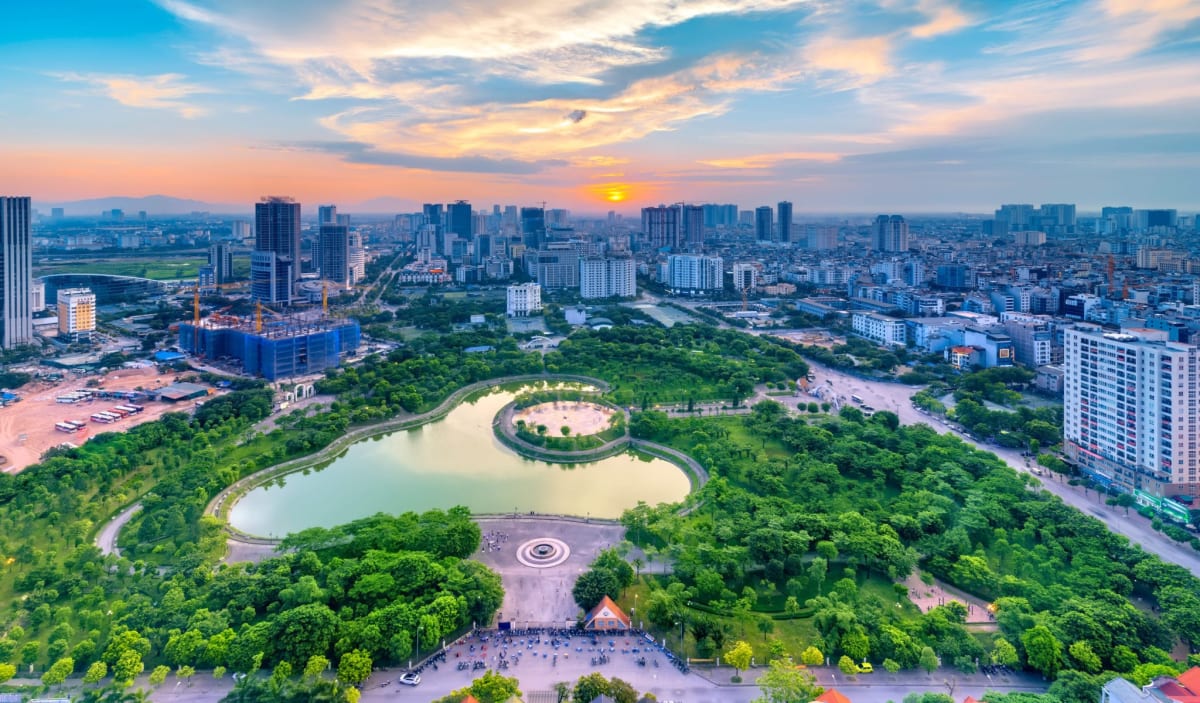
The Vietnamese capital recently removed all fences and gates from four major parks, including Thống Nhất, Bách Thảo, Cầu Giấy, and Indira Gandhi. Instead of needing to find an entrance and make a deliberate detour, residents can now walk through from any direction, weaving the green spaces seamlessly into their commutes and daily routines.
The change was immediate and measurable. At Thống Nhất Park, more than two kilometers of fencing came down, and foot traffic surged almost overnight.
"Before, we had to walk far to get in through the main gate," said Hoàng Thị Hiền, a local resident. "Now I can enter the park from anywhere. It feels open and natural, like it's part of my neighborhood."
Early mornings and late afternoons now draw a much broader cross-section of people than before. Elderly exercise groups, young families with children, international visitors, and students all share the space throughout the day.
At Bách Thảo Park, removing the entrance fees alongside the fences brought in a noticeably younger crowd. "We are seeing more young visitors coming to take photos, picnic and children playing in areas newly connected to sidewalks," said Nguyễn Thị Lành, who heads the park's maintenance team.
The Ripple Effect
The transformation goes beyond simple convenience. Architect Phạm Anh Tuấn from Hà Nội University of Civil Engineering explains that physical access and psychological access are two different things.
Even when gates were unlocked, the fence itself sent a message that the park was separate, a place requiring intention to visit. Without that barrier, the entire atmosphere shifts.
"Removing the fences has created a much more open environment," Tuấn said. "More importantly, it brings a sense of closeness. Parks become a natural part of daily life."
The open views are even changing how people perceive the surrounding neighborhoods. At Indira Gandhi Park, the removal helped soften the visual density of nearby concrete buildings, creating a gentler transition between urban spaces.
The parks aren't managing themselves, though. Higher foot traffic brought new challenges like illegal parking and unauthorized vendors. Some wards responded by increasing patrols and reorganizing activity zones within the parks.
But planners are betting on something more powerful than enforcement. When people truly feel a space belongs to them, they tend to protect it. Early results suggest that removing a simple barrier achieved what urban planning often struggles to accomplish: making public space feel genuinely public.
What started as a fencing project became a lesson in community building, one open gate at a time.
Based on reporting by Optimist Daily
This story was written by BrightWire based on verified news reports.
Spread the positivity!
Share this good news with someone who needs it