Hidden Quantum Geometry Discovered, Could Transform Electronics
Scientists have proven that a hidden geometry inside materials bends electrons like gravity bends light, opening doors to ultra-fast quantum computers. What was once just a theory is now real and measurable.
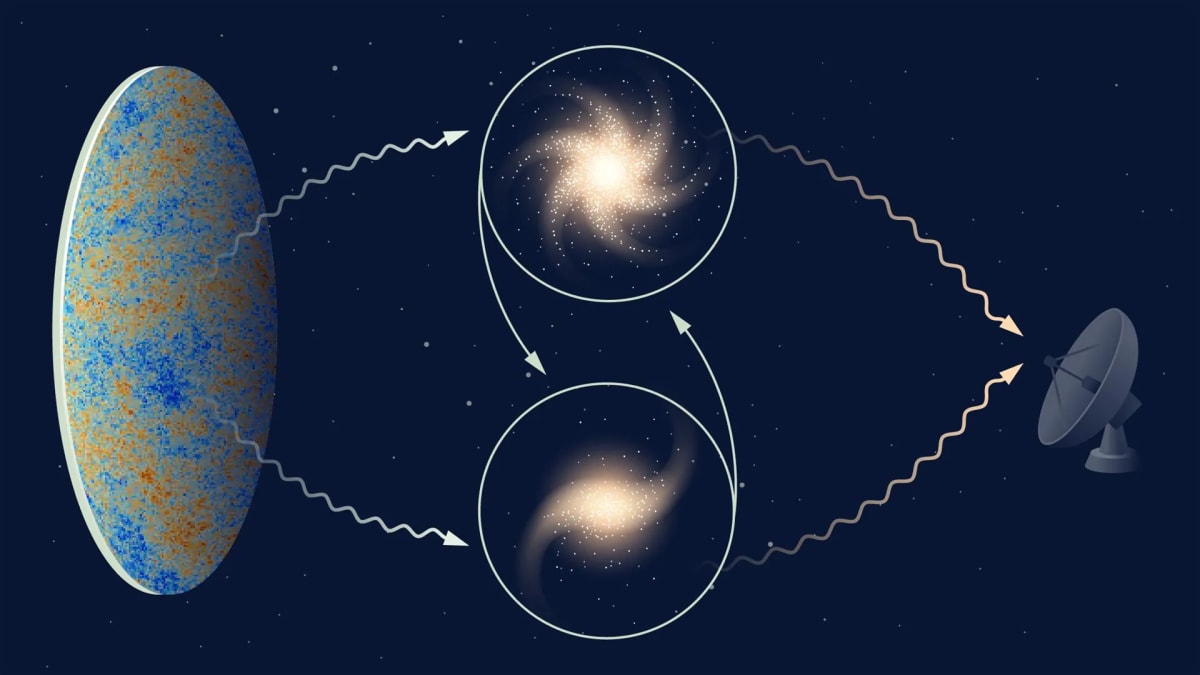
Scientists just confirmed something that sounds like science fiction: a hidden geometry inside materials that steers electrons the same way gravity bends starlight through space.
Researchers at the University of Geneva, working with teams in Italy, detected this quantum effect for the first time in real materials. For nearly 20 years, physicists theorized this "quantum metric" existed, but no one could prove it actually shaped how electrons move.
The breakthrough came when the team studied the boundary between two oxide materials, strontium titanate and lanthanum aluminate. By applying intense magnetic fields, they watched electron paths curve and bend in ways that matched the hidden geometry's predictions perfectly.
Think of it like discovering invisible hills and valleys that electrons must navigate as they travel through a material. Just as Einstein showed that massive objects curve the fabric of space itself, this quantum geometry curves the landscape electrons experience at microscopic scales.
Lead researcher Giacomo Sala explains that revealing this effect lets scientists measure how materials conduct electricity and interact with light with unprecedented accuracy. The team discovered something even more exciting: this quantum geometry isn't rare but actually fundamental to many materials we already use.
Why This Inspires
This discovery transforms quantum geometry from abstract math into a tool engineers can use. Scientists can now design materials that guide electrons along specific paths, potentially creating computers that process information at terahertz speeds, a trillion cycles per second.
Professor Andrea Caviglia, who directed the research, sees applications beyond faster electronics. The quantum metric could improve superconductors that carry electricity without loss and enhance how materials interact with light for better solar panels and communication devices.
The findings, published in Science, represent decades of theoretical work finally meeting experimental reality. What makes this especially hopeful is that researchers didn't need exotic conditions or rare elements to observe the effect.
The breakthrough opens pathways for quantum technologies that seemed impossibly distant just months ago. When invisible forces become visible, the future gets a little closer.
Based on reporting by Google News - Scientists Discover
This story was written by BrightWire based on verified news reports.
Spread the positivity!
Share this good news with someone who needs it