Homer's Iliad Found Inside Egyptian Mummy at Oxyrhynchus
Archaeologists in Egypt discovered a rare papyrus fragment from Homer's Iliad tucked inside a Roman-era mummy, alongside golden tongue amulets meant to help the dead speak in the afterlife. The find reveals how ancient cultures blended Egyptian, Greek, and Roman traditions in surprising ways.
A team of Spanish and Egyptian archaeologists just uncovered something extraordinary inside an ancient Egyptian mummy: a piece of the world's most famous epic poem.
Working at Oxyrhynchus in Egypt's Minya region, researchers from the University of Barcelona found a papyrus fragment containing text from Book II of Homer's Iliad. The passage comes from the "Catalog of Ships," which lists the Greek forces that sailed to Troy over 3,000 years ago.
The discovery raises a captivating question: why would someone be buried with Greek poetry in ancient Egypt? Scholars believe it might have symbolized education, wealth, or cultural identity for the deceased.
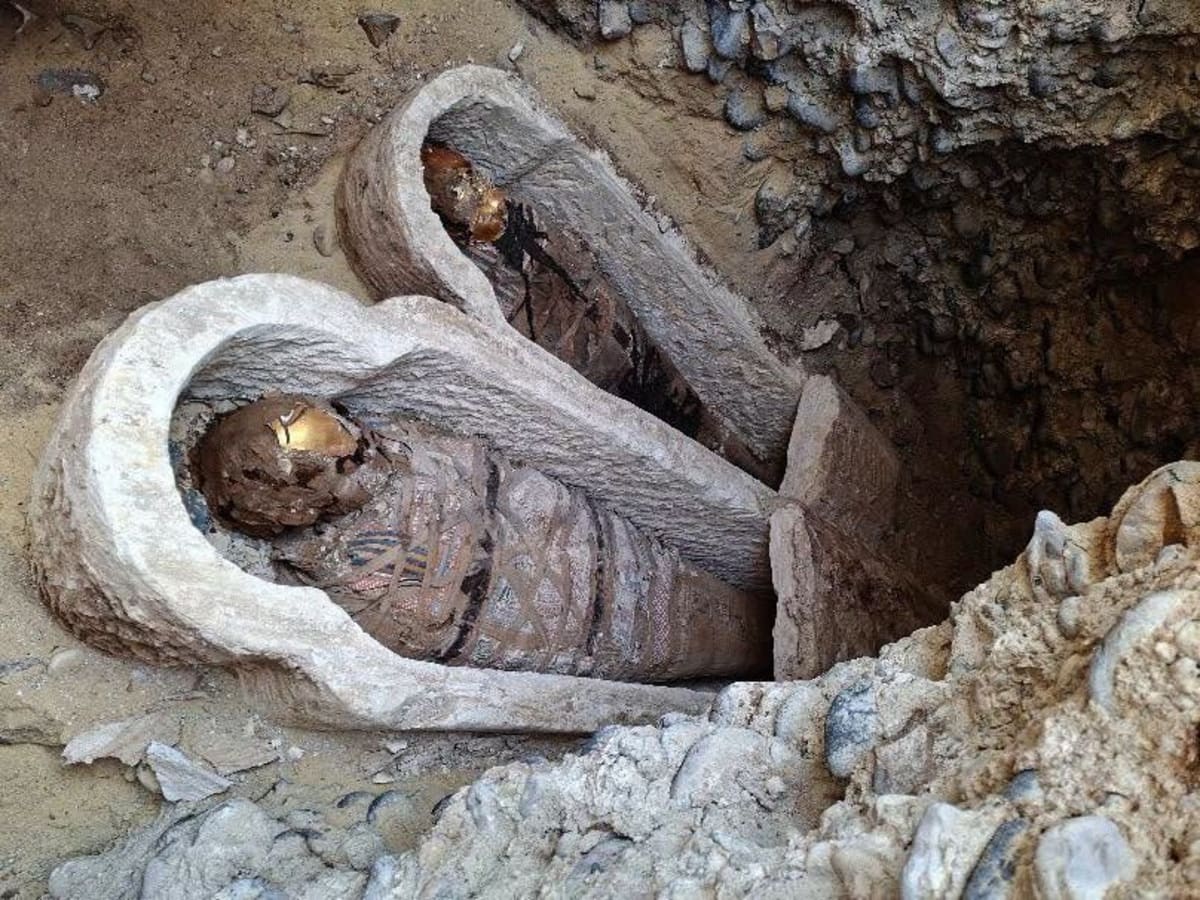
The mummy wasn't alone in showing this cultural blend. Inside the Roman-era tomb complex, archaeologists found golden tongue amulets placed in the mouths of several mummies. These were meant to ensure the dead could speak when facing Osiris, the Egyptian god of the underworld, in judgment.
Dr. Maite Mascort and Dr. Esther Pons Mellado led the excavation team that opened three limestone burial chambers east of an older Ptolemaic tomb. Inside, they found cremated remains in ceramic vessels alongside infant bones and even feline skulls, all carefully wrapped in textiles.
The team also discovered terracotta and bronze figurines, including statues of the god Harpocrates and Cupid. These artifacts show how Egyptian, Greek, and Roman beliefs coexisted in daily life during this period.
Why This Inspires
This discovery reminds us that cultural exchange isn't new. Thousands of years ago, people in Egypt were reading Greek poetry, honoring Egyptian gods, and adopting Roman customs all at once.
Finding the Iliad inside a mummy is especially rare because most ancient texts from Oxyrhynchus were discovered in rubbish heaps, not burials. This deliberate placement suggests the poem held deep personal meaning.
Dr. Hisham El-Leithy, Secretary General of Egypt's Supreme Council of Antiquities, noted that the local elite weren't just influenced by Greek culture but actively engaged with its literary traditions. They valued these stories enough to carry them into the afterlife.
The artifacts are now being preserved and studied using advanced imaging techniques. Researchers hope the papyrus will reveal more about how classical works spread beyond major centers like Alexandria and what role literature played in ancient spiritual beliefs.
Egypt's Minister of Tourism and Antiquities called the discovery part of a series of important finds in Minya, highlighting the region's rich historical heritage. As scholars continue their work, this tomb offers a beautiful snapshot of a world where different traditions merged and enriched each other.
More Images


Based on reporting by Google: archaeological discovery
This story was written by BrightWire based on verified news reports.
Spread the positivity!
Share this good news with someone who needs it