Honeybees Create Perfect Baby Food from Imperfect Pollen
Scientists discovered honeybees can detect when their food lacks the right nutrients and actually transform mismatched pollen into perfectly balanced meals for their young. This hidden superpower reveals how these tiny creatures solve a problem most of us never knew existed.
Honeybees are doing something remarkable inside their hives that scientists are only now beginning to understand.
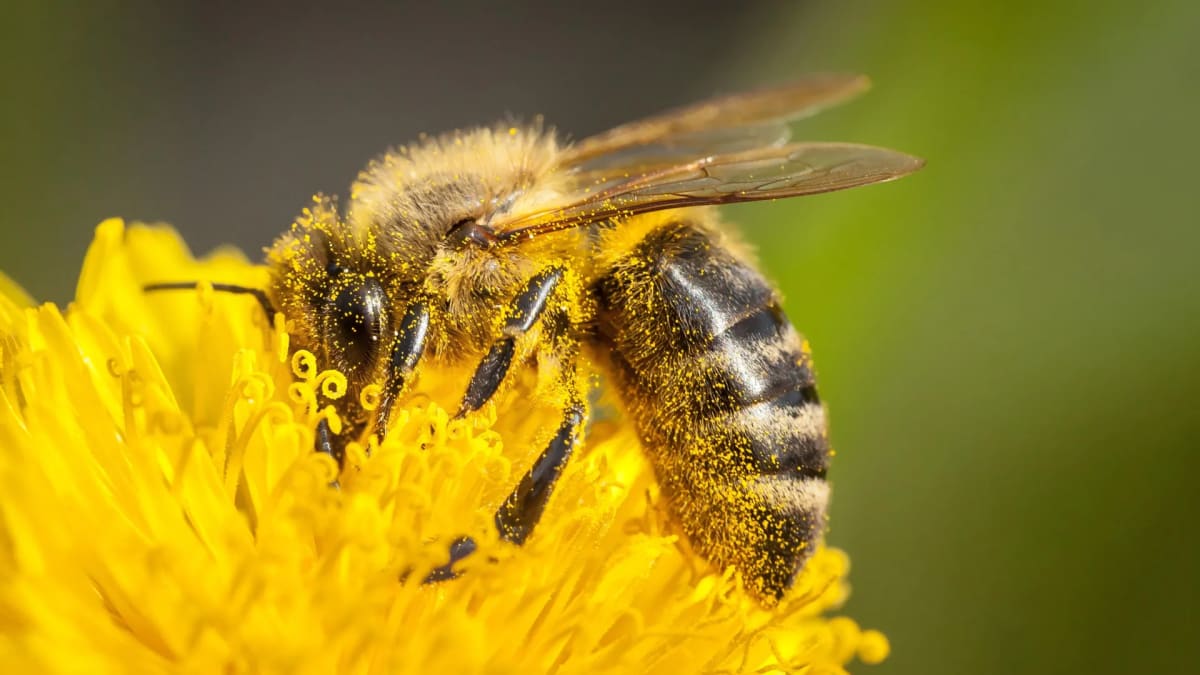
Researchers at the University of Oxford discovered that bees can sense when pollen doesn't have the right balance of essential amino acids and adjust how much they eat to avoid harmful excesses. Even more impressive, they transform nutritionally imperfect pollen into surprisingly well-balanced "baby food" for their larvae.
The finding solves a puzzle that has long puzzled scientists. Pollen didn't evolve primarily as food for bees. It's the male reproductive material of plants, so its nutritional makeup doesn't necessarily match what bees need to thrive.
The research team compared the essential amino acid composition of honeybee tissues with pollen from 99 UK flowering plant species. Most pollen turned out to be a relatively poor nutritional match for bees.
When researchers fed newly emerged worker bees artificial foods mimicking different pollen types, they noticed something fascinating. Bees given food that closely resembled their own tissue composition ate more, gained more body mass, and chose diets with more protein.
The team suspects one amino acid called histidine plays a key role in this response. Bees need histidine, but only in small amounts. When researchers created diets with high histidine levels, bees ate significantly less overall food. This behavior likely protects them from consuming potentially harmful quantities of certain amino acids.
But honeybees have developed an even cleverer solution for feeding their young. Workers gather pollen from many different flowers and store it inside the hive as "bee bread." Nurse bees then eat this material and process it into glandular secretions, including royal jelly, which they feed to developing larvae.
The researchers found that bee bread contained a more balanced amino acid profile than most individual pollen sources. Royal jelly provided an even closer match to the amino acid composition of bee tissues.
Professor Geraldine Wright, who led the study, explains that honeybees appear to have evolved the ability to create glandular secretions that provide larvae with exactly the right ratios of essential amino acids for maximum growth.
Why This Inspires
This discovery shows nature's problem-solving at its finest. Honeybees face a nutritional challenge built into their ecosystem, yet they've evolved not one but multiple strategies to overcome it. They regulate their own intake, diversify their pollen sources, and biochemically transform imperfect ingredients into perfect nutrition for the next generation.
The findings could help us support pollinators better too. Many wild bees like bumblebees and solitary bees provide pollen directly to their offspring without this processing step. In areas with limited plant diversity, these bees may struggle to get the right nutritional balance for themselves and their young.
The research suggests that pollinator-friendly gardens and conservation efforts should focus not just on planting lots of flowers, but on ensuring a diverse variety of plants that together provide complete nutrition.
These tiny creatures are teaching us that sometimes the solution to scarcity isn't eating more, but eating smarter.
Based on reporting by Science Daily
This story was written by BrightWire based on verified news reports.
Spread the positivity!
Share this good news with someone who needs it