Hong Kong Pioneers AI Surgical Robots That Assist Doctors
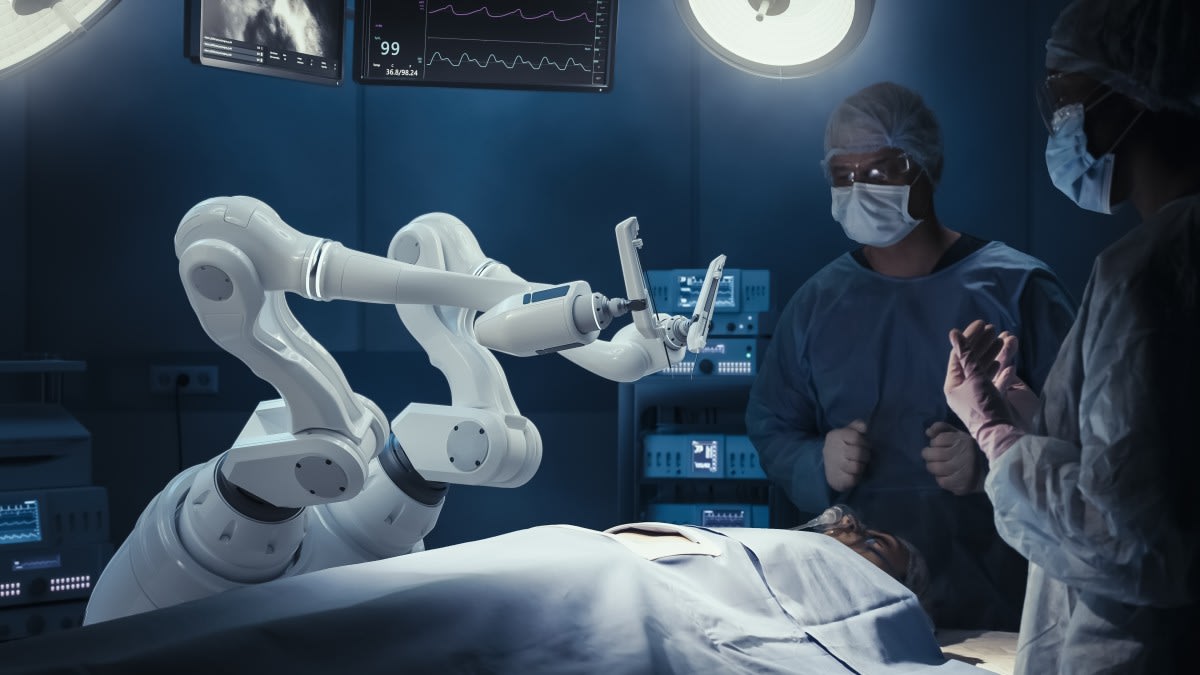
Hong Kong researchers have developed AI-powered surgical robots that can independently handle tasks like tissue retraction and camera positioning through voice commands. The technology could be in operating rooms within five years, reducing surgeon workload during complex procedures.
Surgeons in Hong Kong may soon have a tireless AI assistant in the operating room that responds to their voice and handles routine surgical tasks independently.
Professor Qi Dou and her team at the Multi-Scale Medical Robotics Center have created an AI "co-pilot" for surgery that represents a major leap forward from traditional robotic systems. Instead of surgeons manually controlling every movement, this intelligent assistant can grasp gauze, retract tissue, clip vessels, and position cameras on command.
The breakthrough solves three major challenges that have held back surgical AI. The system works across different patient body types, integrates with existing surgical robots, and collaborates smoothly with human surgeons without getting in the way.
The Hong Kong Science and Technology Parks Corporation provided the critical infrastructure that made this possible. Using state-of-the-art Hybrid Operating Rooms, the team has already completed successful trials on live animals, proving the AI third arm can significantly reduce the mental and physical burden on surgeons during complex procedures.
Meanwhile, Yuanhua Tech is taking a different approach from its headquarters at Hong Kong Science Park. The company's KUNWU robotic system is the world's first to handle five different surgery types on a single platform: knee, hip, spine, trauma, and sports injuries.
CEO Lily Meng explains that their self-developed AI converts CT scans into 3D surgical plans with sub-millimeter accuracy. This precision means less trauma for patients and faster recovery times after surgery.
The Ripple Effect
Hong Kong's medical robotics revolution extends beyond the operating room. Yuanhua Tech is also pioneering active capsule endoscopy, where AI-controlled pills can navigate the digestive system, spot problems in minutes, and even deliver targeted medication to specific areas.
The Hong Kong Science and Technology Parks Corporation is now building INNOPOLE within the San Tin Technopole to scale up these innovations. The hub will provide high-performance computing facilities and production environments to help homegrown surgical robots reach patients worldwide.
Both teams benefit from HKSTP's support in hiring talent and connecting with international markets. What starts as research in Hong Kong labs is rapidly becoming the new global standard for surgical care.
Professor Dou anticipates clinical adoption of the AI co-pilot within five years, though navigating first-of-its-kind regulatory approvals remains a challenge. Once cleared, the technology promises an era where human expertise and artificial intelligence work together to make surgery safer and more precise for millions of patients.
Based on reporting by Google: robotics innovation
This story was written by BrightWire based on verified news reports.
Spread the positivity!
Share this good news with someone who needs it