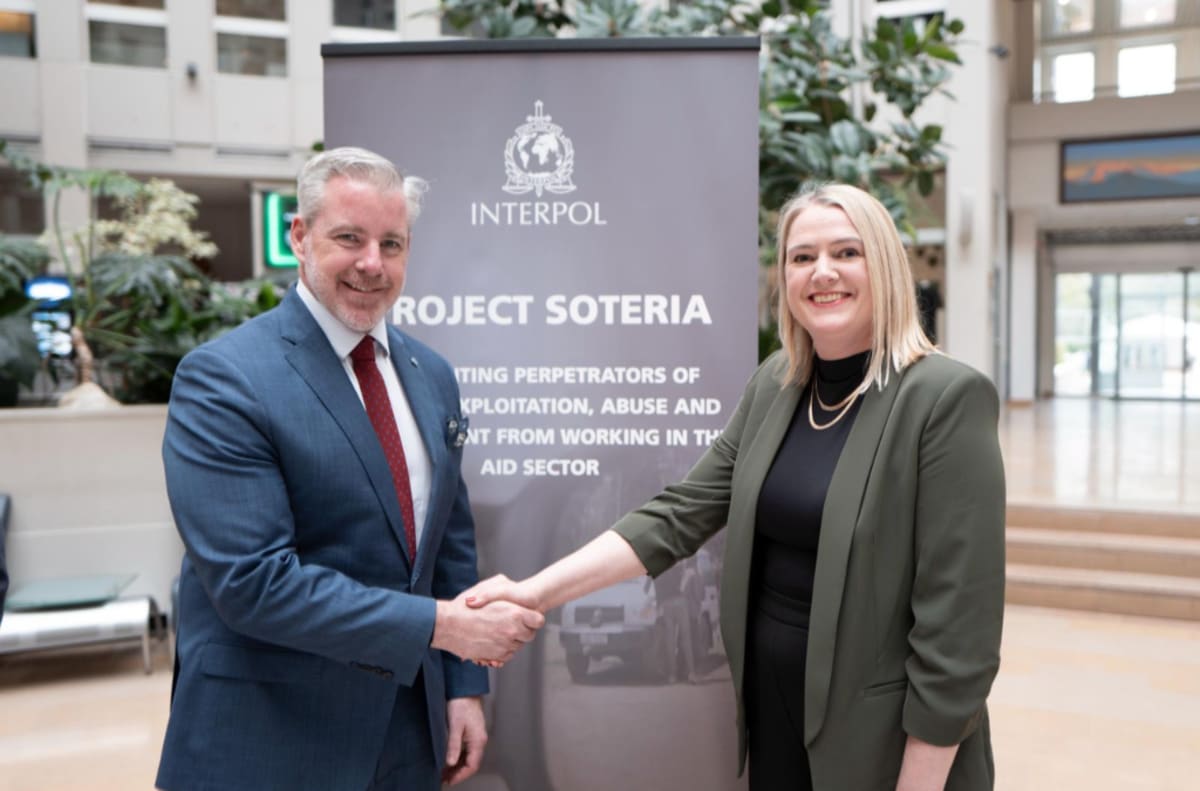
Hope for Justice First to Use INTERPOL Safety Checks
An international anti-trafficking organization is now the first aid group to screen potential employees through INTERPOL's criminal databases, adding a powerful new shield for survivors already traumatized by exploitation. The partnership closes dangerous gaps that allowed abusers to move between humanitarian jobs undetected.
Children living in safe houses after escaping human trafficking now have an extra layer of protection, thanks to a groundbreaking partnership between Hope for Justice and INTERPOL.
The international anti-trafficking organization just became the first aid sector group to implement Project Soteria, a secure channel that checks job candidates against INTERPOL's criminal databases. The system went live in May 2025 after a year of preparation.
Hope for Justice works with some of the world's most vulnerable people, including children at shelters they call Lighthouses and adult survivors of modern slavery. Many have already experienced abuse or exploitation before arriving at the organization's doors.
The problem Project Soteria solves is chilling. As aid organizations increasingly work across borders, perpetrators have been able to move between countries and humanitarian jobs without detection. Background checks often stop at national borders, creating blind spots that offenders exploit to gain access to vulnerable populations.
Now when Hope for Justice screens candidates, their information goes through a secure platform reviewed by INTERPOL criminal intelligence analysts. The system cross-references global databases and member country networks while protecting data privacy and human rights.
"When they come to us, they deserve safety," said Elaine Jones, Chief Operating Officer at Hope for Justice. "They deserve absolute certainty that they are protected from further harm."
Neil Wain, the organization's Senior Security and Safeguarding Advisor, explained that perpetrators actively seek humanitarian roles to access victims. The new checks strengthen existing safeguarding measures and reflect the organization's zero-tolerance approach to sexual exploitation, abuse and harassment.
The Ripple Effect
This partnership could transform how the entire humanitarian sector protects vulnerable people. Project Soteria, funded by the UK Foreign Office and implemented by INTERPOL, is available to aid organizations worldwide.
As Hope for Justice proves the system works, other humanitarian groups can follow their lead. The result could be a global network where abusers can no longer hop between countries and organizations, using helping roles as cover for harm.
David Caunter, INTERPOL's Director of Organized and Emerging Crime, called it a demonstration of how partnerships between law enforcement and aid groups can close gaps that offenders exploit.
Hope for Justice operates across the UK, United States, Ethiopia, Uganda and Australia, working to end modern slavery through survivor support, prevention programs, training and policy reform.
The organization's willingness to pioneer this enhanced screening sends a clear message: protecting survivors means leaving no stone unturned.
Based on reporting by Google: cooperation international
This story was written by BrightWire based on verified news reports.
Spread the positivity!
Share this good news with someone who needs it