How People Spent Free Time From 1920 to 2026 Changed Everything
A stunning data visualization reveals how Americans transformed from meeting friends and reading newspapers to spending 600 minutes daily on screens. Young people are now embracing "Boomer hobbies" to reclaim balance.
We've traded reading newspapers and meeting friends for scrolling social media and streaming videos, and a new data visualization makes the shift impossible to ignore.
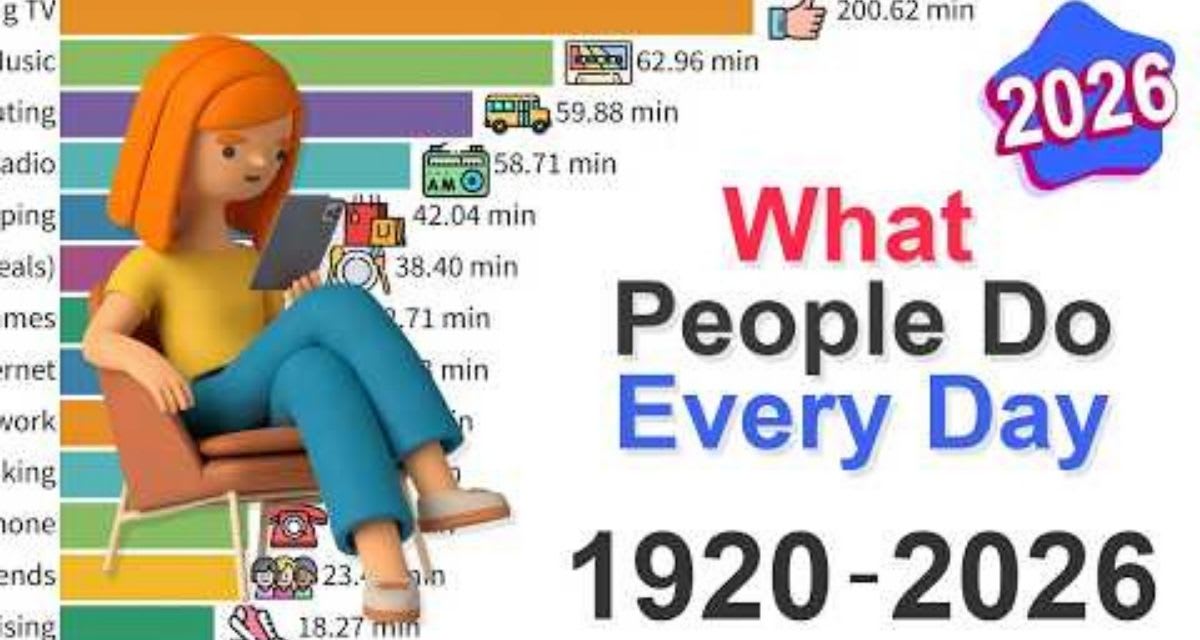
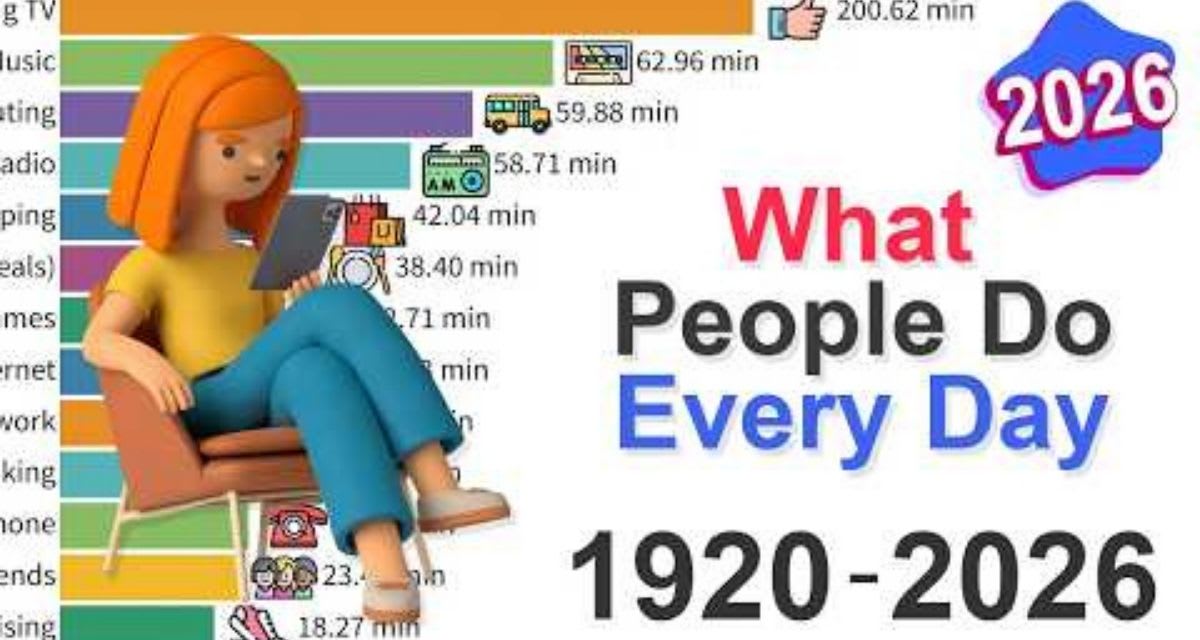
YouTube creator Sasha from Data is Beautiful created a bar chart race showing how people spent their free time from 1920 to 2026, excluding sleep and work. The results tell a powerful story about human behavior across a century.
In 1920, housework, cooking, eating, and meeting friends dominated our days. Reading newspapers and simply doing nothing also ranked high on the list.
Radio changed everything in the 1930s, shooting to number one and staying there through the 1940s. Then television arrived in the 1950s and ruled our leisure time for the next 50 years straight.
The internet era brought the biggest transformation yet. Browsing the web climbed steadily in the 2000s, followed by streaming services and social media. By 2024, both streaming and scrolling had surpassed traditional TV watching.
Today's top five activities outside work and sleep are streaming, scrolling social media, watching TV, listening to music, and playing games. The seven highest ranking activities total about 600 minutes of daily screen time.
Why This Inspires
The good news hidden in this data? We've gained significant leisure time as housework and cooking hours decreased over the decades. Technology freed us from exhausting daily chores our great-grandparents couldn't avoid.
What makes this moment hopeful is how people are responding. Young adults are leading a movement back to what they call "Boomer hobbies" and "granny core" activities.
They're picking up knitting needles, baking bread from scratch, writing letters by hand, and tending gardens. These tactile, hands-on hobbies offer something screens can't provide.
Meeting friends face to face is making a comeback too. People are recognizing that "doing nothing," which completely disappeared from the chart, actually served an important purpose for our mental health.
The trend isn't about rejecting technology entirely or returning to the exhausting housework of 1920. It's about finding balance in a world where screens dominate both work and leisure.
Access to arts through streaming platforms means more people can watch Hamilton or listen to classical music than ever before. The challenge is choosing enriching content over endless scrolling.
This data shows we've spent decades building the screen habit, but a new generation is proving we can build different habits just as deliberately.
More Images


Based on reporting by Upworthy
This story was written by BrightWire based on verified news reports.
Spread the positivity!
Share this good news with someone who needs it