Humans Solve 50-Year Math Puzzle Inspired by AI Breakthrough
Just days after AI cracked an 80-year-old math problem, human mathematicians solved another legendary puzzle using the same techniques. The breakthrough shows how artificial intelligence and human creativity can work together to unlock mysteries that stumped experts for decades.
A mathematical puzzle that frustrated experts for half a century just fell to human researchers, proving that sometimes the best innovations come from watching AI at work and then doing it ourselves.
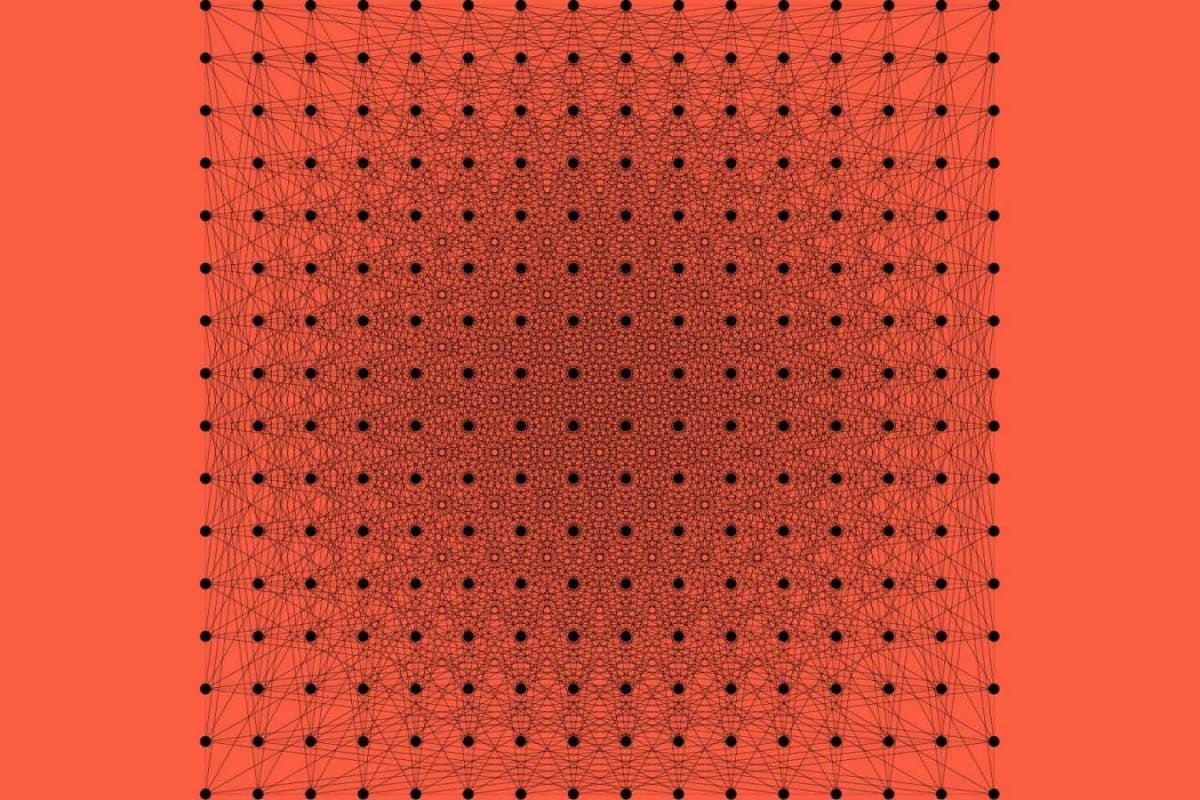
Last week, an unreleased OpenAI model made headlines by disproving the unit distance problem, an 80-year-old conjecture posed by legendary Hungarian mathematician Paul Erdős. The puzzle explored how many equal-length connections you can draw between dots on a flat surface, a question Erdős called his "most striking contribution to geometry."
But here's where it gets exciting. Within just seven days, mathematicians tackled another Erdős conjecture that had stood for 50 years, inspired by the AI's techniques but written entirely by humans.
The rapid one-two punch represents something bigger than just solving old problems. It shows how artificial intelligence can spark human creativity rather than replace it.
Think of it like watching a master chef use a new cooking technique, then adapting that approach to create your own signature dish. The AI showed a new way to think about these problems, and human mathematicians quickly ran with it.
Why This Inspires
This story isn't about humans versus machines. It's about humans and machines bringing out the best in each other.
For 50 years, brilliant minds wrestled with this conjecture and came up short. Then AI demonstrated a fresh approach to tackling similar problems, and suddenly human researchers found the key they needed.
The speed matters too. One breakthrough didn't just sit on a shelf gathering dust. Within a week, it sparked another victory, showing how quickly good ideas can cascade through the scientific community when shared openly.
These aren't just abstract wins for math nerds. The problem-solving techniques developed here could help crack other long-standing puzzles in science, engineering, and technology.
The collaboration between human intuition and artificial intelligence is creating a new golden age for mathematics. Problems that seemed impossible for generations are suddenly within reach.
This breakthrough reminds us that the future of innovation isn't about choosing between human creativity and artificial intelligence. The magic happens when we combine both, letting each amplify the other's strengths to achieve what neither could do alone.
More Images

Based on reporting by New Scientist
This story was written by BrightWire based on verified news reports.
Spread the positivity!
Share this good news with someone who needs it