Humpback Whales Keep Their Mouths Open for Unknown Reasons
Scientists discovered humpback whales sometimes leave their mouths hanging wide open when they're not eating, and nobody knows why. Researchers used social media videos to study this mysterious "gaping" behavior, opening new doors for citizen science.
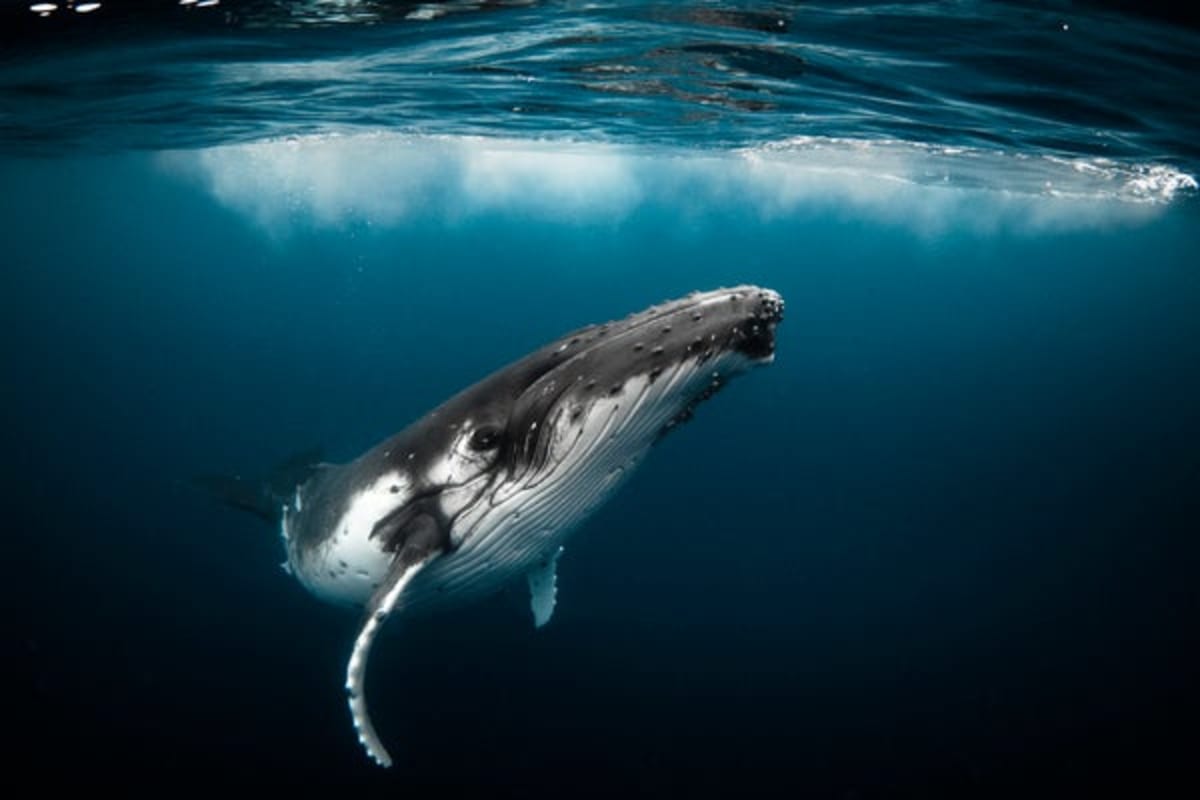
Humpback whales have been caught doing something that has marine scientists completely stumped: they hang out with their mouths wide open, even when there's no food around.
When these giants eat, they open their jaws to gulp massive mouthfuls of water filled with krill or small fish, then filter it through their baleen plates like a colander. But researchers discovered some whales do this "gaping" behavior at random times, for no apparent reason.
"Just when we think we know a lot about humpback whales, we don't," said Vanessa Pirotta, lead author of the study and a lecturer at Macquarie University in Australia. Her team analyzed 66 videos and photos of the strange behavior taken between 2014 and 2025.
The footage came from boats, drones, underwater cameras, and social media posts. Scientists defined "gaping" as a whale opening its mouth outside of feeding, with different sizes of opening and varying lengths of time.
The findings appeared recently in the journal Animal Behavior and Cognition. While the researchers don't have definitive answers yet, they're exploring several possibilities.
The whales might be playing or socializing with each other. They could be cleaning their baleen plates or stretching their jaw muscles. Some might even be reacting to a jaw dislocation that needs adjustment.
Why This Inspires
This discovery shows how much we still have to learn about creatures we've studied for decades. Every new mystery brings opportunities for breakthrough understanding of the ocean's most magnificent animals.
The research also highlights an exciting new tool for marine science: everyday people with smartphones. Tourism operators and whale watchers spend countless hours observing these animals, often capturing rare moments that scientists would never see otherwise.
"Citizen scientists are a powerful resource for capturing and reporting on behavior, using the increasingly high-quality technologies many of us have on hand," Pirotta explained. Social media platforms have become unexpected goldmines for identifying rare animal behaviors across marine mammals.
The study proves that solving nature's mysteries doesn't always require expensive equipment or research vessels. Sometimes it just takes curious observers willing to share what they see with the scientific community.
More Images
Based on reporting by Scientific American
This story was written by BrightWire based on verified news reports.
Spread the positivity!
Share this good news with someone who needs it