Humpback Whales Travel Record 15,000km Between Oceans
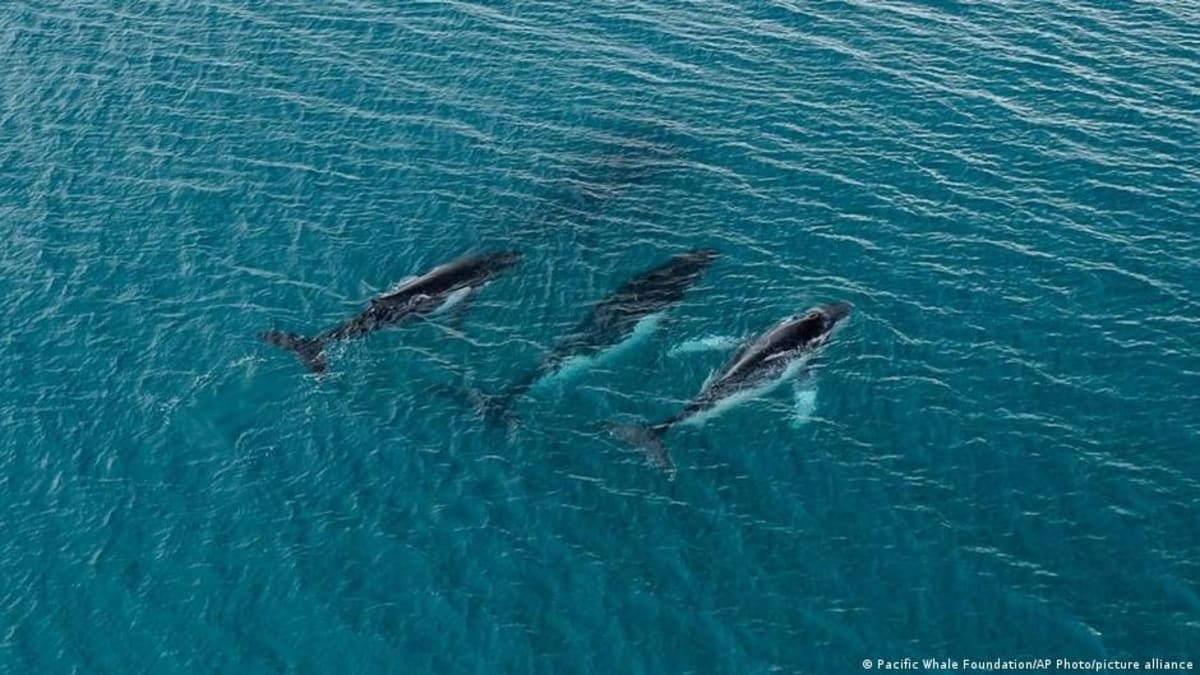
Two humpback whales have been spotted completing unprecedented journeys between Australian and Brazilian waters, swimming up to 15,100 kilometers across ocean basins. Scientists say these rare crossings could help whale populations thrive for generations.
Imagine swimming from one side of the world to another, not once as a migration, but as a lifetime journey to an entirely different ocean. That's exactly what two humpback whales have done, and scientists are celebrating the discovery.
Researchers analyzing tens of thousands of whale tail photos have confirmed two humpbacks made record-breaking journeys between breeding grounds off Australia and Brazil. The distances? A staggering 14,200 and 15,100 kilometers respectively.
One whale was first spotted in Queensland, Australia in 2007 and 2013, then showed up near São Paulo, Brazil in 2019. The other traveled the reverse route over an even longer timeframe, appearing off Bahia, Brazil in 2003 and Queensland 22 years later in 2025.
The findings, published in Royal Society Open Science, used the unique markings on whale tails to identify individuals. Like human fingerprints, no two whale tail patterns are identical, making it possible to track these ocean wanderers across decades.
Dr. Stephanie Stack from Griffith University explained that out of thousands of identified whales studied, only 0.01% completed such journeys. These are likely once-in-a-lifetime events rather than regular migration patterns.
The discovery supports the "Southern Ocean Exchange hypothesis," suggesting whales from different breeding populations might meet at shared Antarctic feeding grounds during summer, then occasionally follow unfamiliar pods to new breeding areas.
The Ripple Effect
While rare, these epic journeys matter tremendously for whale conservation. When individuals travel between distant populations, they bring genetic diversity that keeps whale communities healthy and resilient.
The crossings might even introduce new whale songs to different pods, enriching the cultural traditions these intelligent mammals pass down through generations.
Scientists believe climate change could make these journeys more common as warming oceans shift sea ice patterns and alter where krill congregate. What's exceptional today might become more frequent tomorrow as whales adapt to changing conditions.
The research was made possible by citizen scientists and amateur whale watchers who contributed thousands of photographs. Dr. Cristina Castro of the Pacific Whale Foundation praised their contributions: "Every photo contributes to our understanding of whale biology and, in this case, helped uncover one of the most extreme movements ever recorded."
These remarkable journeys prove that even after decades of studying humpback whales, these ocean giants still have secrets to reveal.
More Images
Based on reporting by DW News
This story was written by BrightWire based on verified news reports.
Spread the positivity!
Share this good news with someone who needs it