Humpback Whale Swims Record 15,100 Kilometers Across Oceans
A humpback whale just shattered the distance record by swimming 15,100 kilometers between Brazil and Australia over 22 years. Scientists discovered the incredible journey by matching unique tail markings in photos taken decades apart.
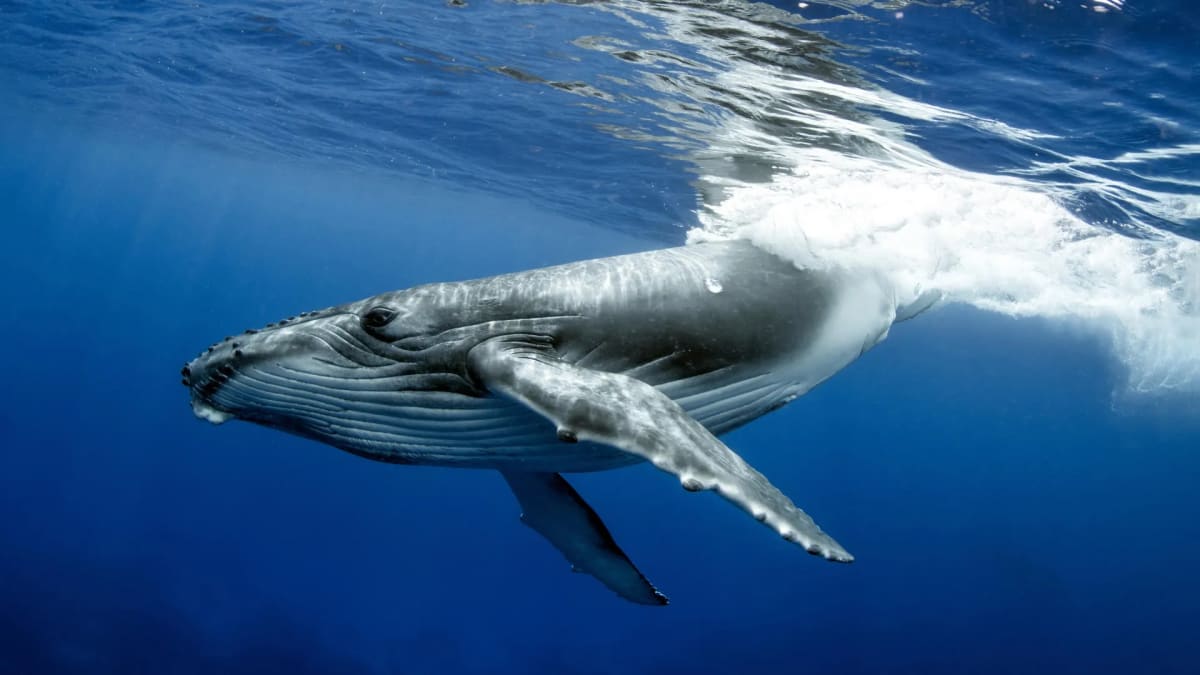
A humpback whale has broken the world record for the longest confirmed journey by any individual whale, traveling at least 15,100 kilometers between breeding grounds in Brazil and Australia.
Scientists discovered the remarkable feat by comparing tens of thousands of whale tail photos collected over four decades. Each humpback has unique markings on its tail, like a fingerprint, allowing researchers to track individual whales across time and oceans.
The record-breaking whale was first photographed in 2003 at Brazil's Abrolhos Bank, swimming with eight other adult whales off the coast of Bahia. Twenty-two years later, in September 2025, the same whale appeared alone in Hervey Bay, Queensland, roughly the distance from Sydney to London.
A second whale made a similarly stunning journey in reverse, traveling from Australia to Brazil and covering at least 14,200 kilometers between sightings. Researchers say both whales likely traveled even farther since only their starting and ending points were recorded.
The discovery came from analyzing 19,283 high-quality photos collected between 1984 and 2025 from eastern Australia and Latin America. Professional researchers and citizen scientists contributed images through Happywhale, a global whale tracking platform that uses automated recognition software to compare photos.
Despite the stunning distances, these ocean crossings appear extremely rare. Out of nearly 20,000 identified humpback whales tracked over 40 years, only two were found to have made the journey between these breeding regions, representing just 0.01 percent of recorded whales.
The Ripple Effect
These rare travelers could play an outsized role in keeping whale populations healthy for generations. Scientists say whales moving between distant breeding grounds help maintain genetic diversity across populations, strengthening their long-term survival.
The journeys also support the "Southern Ocean Exchange" theory, suggesting humpback whales from different breeding areas occasionally meet in shared Antarctic feeding grounds. Some whales may then follow a different migration route home, settling in a completely new breeding region.
Researchers believe climate change might make these crossings more common in the future. Shifts in Antarctic sea ice and changes in krill distribution (the whales' primary food) may be altering migration patterns over time.
The whales even carry culture across oceans. Humpback songs are known to spread between populations much like music trends in humans, and these long-distance travelers may introduce new melodies to distant whale communities.
Lead researcher Dr. Cristina Castro from Pacific Whale Foundation emphasized how every photo helps unlock whale mysteries. PhD candidate Stephanie Stack from Griffith University added that discoveries like this only happen through decades-long research programs and international teamwork.
These gentle giants continue to surprise us with their endurance and adaptability.
Based on reporting by Science Daily
This story was written by BrightWire based on verified news reports.
Spread the positivity!
Share this good news with someone who needs it