Hydrogen Car Smashes Speed Record at 406 MPH in Utah
A retired fighter pilot just drove a hydrogen-powered car over 406 miles per hour, proving clean fuel can power extreme performance. The record-breaking run shattered three previous speed records while producing zero emissions.
The same driver who broke the sound barrier on land just proved that hydrogen cars can compete at the highest levels of motorsport.
Andy Green, a 64-year-old retired British fighter pilot, pushed a hydrogen-powered race car to an average speed of 406.320 miles per hour on Tuesday at Utah's famous Bonneville Salt Flats. The achievement shattered three existing records: fastest hydrogen internal combustion engine, fastest hydrogen fuel cell car, and fastest electric vehicle.
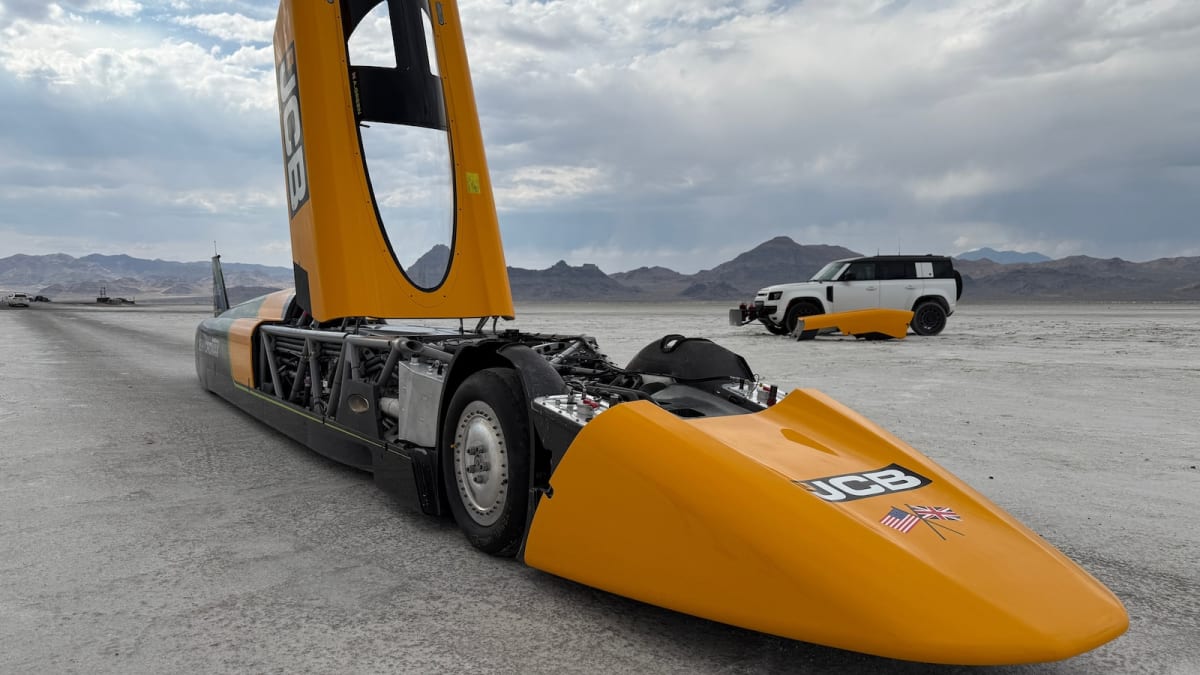
Green made two attempts in the JCB Hydromax, a specially designed 32-foot streamliner equipped with two 800-horsepower engines. His first run averaged 400.623 mph, and his second hit 412.135 mph. The engines use hydrogen fuel instead of gasoline, burning cleaner while delivering incredible power.
The car runs on production-based engines that are already powering construction equipment today. JCB chairman Anthony Bamford emphasized this wasn't just about setting records. "It shows hydrogen works, and it works today at the highest level with zero emissions," he said.
Green holds the overall land speed record from 1997, when he drove a jet-powered vehicle to 763.035 mph. He remains the only person to ever break the sound barrier on land. That record has stood for nearly 30 years.
The Hydromax is classified as a blown gas streamliner, meaning it includes a supercharger that forces extra air into the engine for more power. One engine sits in front of the driver, the other behind. Instead of creating pollution like traditional race cars, the hydrogen engines produce only water vapor.
The Ripple Effect
This record proves clean technology can deliver extreme performance without compromise. The same hydrogen engines breaking speed records are already working in real construction equipment, showing the fuel source is ready for practical use today.
The breakthrough comes as industries search for alternatives to fossil fuels that don't sacrifice power or reliability. Seeing a hydrogen car nearly double the previous clean-power speed record sends a powerful message about what's possible.
Green's achievement demonstrates that the transition to cleaner energy doesn't mean settling for less performance. Sometimes it means going faster than anyone thought possible.
More Images




Based on reporting by Scientific American
This story was written by BrightWire based on verified news reports.
Spread the positivity!
Share this good news with someone who needs it