Qatar Scientists Build Ball-Shaped Solar Panel With Reflector
Researchers created a sphere covered in solar cells that catches sunlight from every angle throughout the day. A reflector underneath boosted energy capture by 71% without needing moving parts to track the sun.
Scientists in Qatar just solved one of solar power's biggest headaches: constantly chasing the sun across the sky.
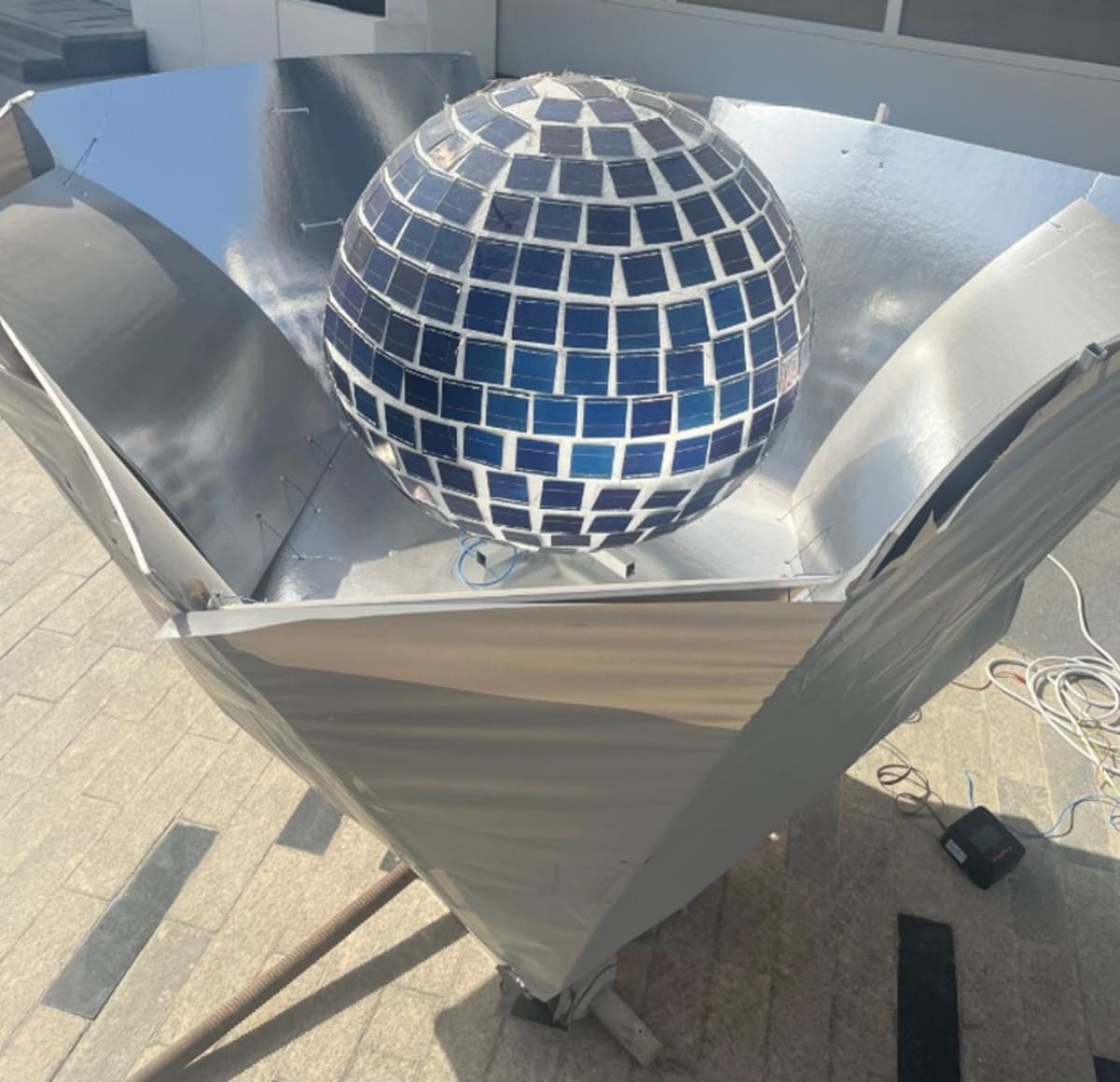
A team at Qatar University built a prototype solar panel shaped like a giant sphere, covered with 450 individual solar cells. Unlike traditional flat panels that only face one direction, this basketball-sized collector catches sunlight from every angle as the sun moves.
The real breakthrough came when they added a polished aluminum bowl underneath. That simple reflector bounced otherwise wasted sunlight back onto the sphere, increasing energy collection by 71% compared to the sphere alone.
Lead researcher Amith Khandakar explained that the sphere has no preferred direction. As the sun travels across the sky, different parts of the sphere naturally face the light without any mechanical tracking systems.
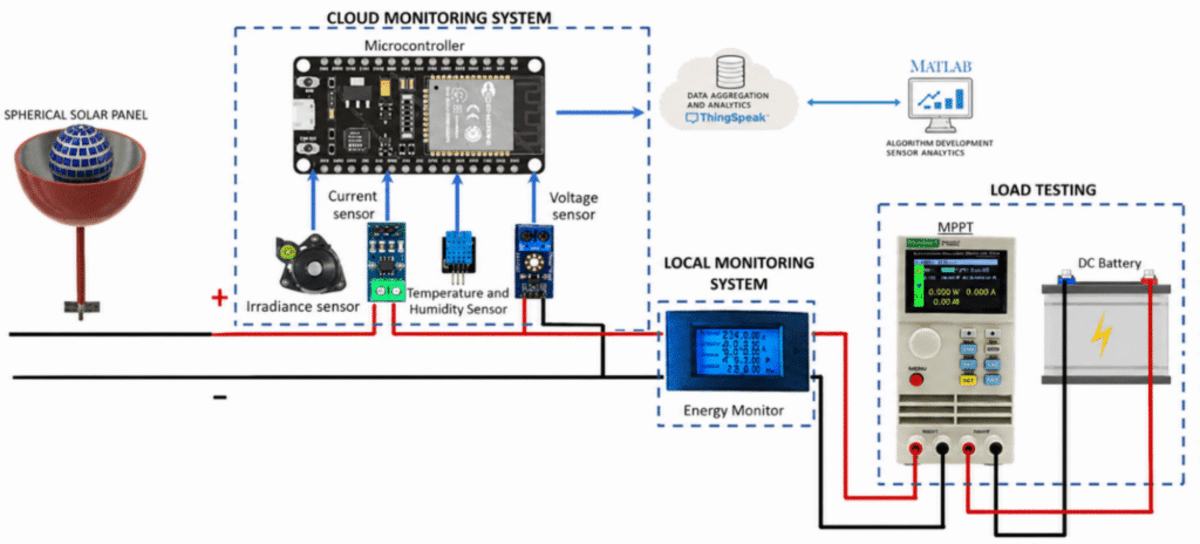
The team tested their prototype outdoors in Doha for nine days straight. The system generated power consistently and showed something unexpected: after nine days without cleaning, it still produced 92% of its original output. Desert dust typically causes bigger problems for flat panels.
The sphere measures about 2.3 feet across and sits in a reflective bowl with roughly 33 square feet of mirror surface. The entire setup takes up less ground space than you might expect, about 18.7 square feet total.
Why This Inspires
This isn't just theoretical science. The researchers built a working model and proved it works in real desert conditions, not just in a lab.
During summer months, the sphere actually outperformed a standard flat panel by 7.3%. The technology shows special promise for places where traditional solar panels struggle: buildings with awkward roof angles, mobile installations, or locations where regular cleaning is difficult.
The sphere costs more right now, about 32.5% higher than flat panels per unit of electricity. But the researchers see clear paths to improvement: better materials, protective coatings, and design refinements that could bring costs down.
The team also noted the sphere performed better in 4 out of 12 months compared to flat panels. Its real strength isn't producing more total energy annually, but rather collecting sunlight more reliably when conditions aren't perfect.
This matters because solar power adoption often stalls in places with space constraints or suboptimal orientations. A panel that works well from any angle opens doors for installations that weren't practical before.
The scientists are now working on durability testing and longer outdoor trials. They're also exploring protective encapsulation to help the spheres withstand harsh weather over years of operation.
Sometimes the best innovations come from literally looking at problems from a different angle.
More Images


Based on reporting by PV Magazine
This story was written by BrightWire based on verified news reports.
Spread the positivity!
Share this good news with someone who needs it