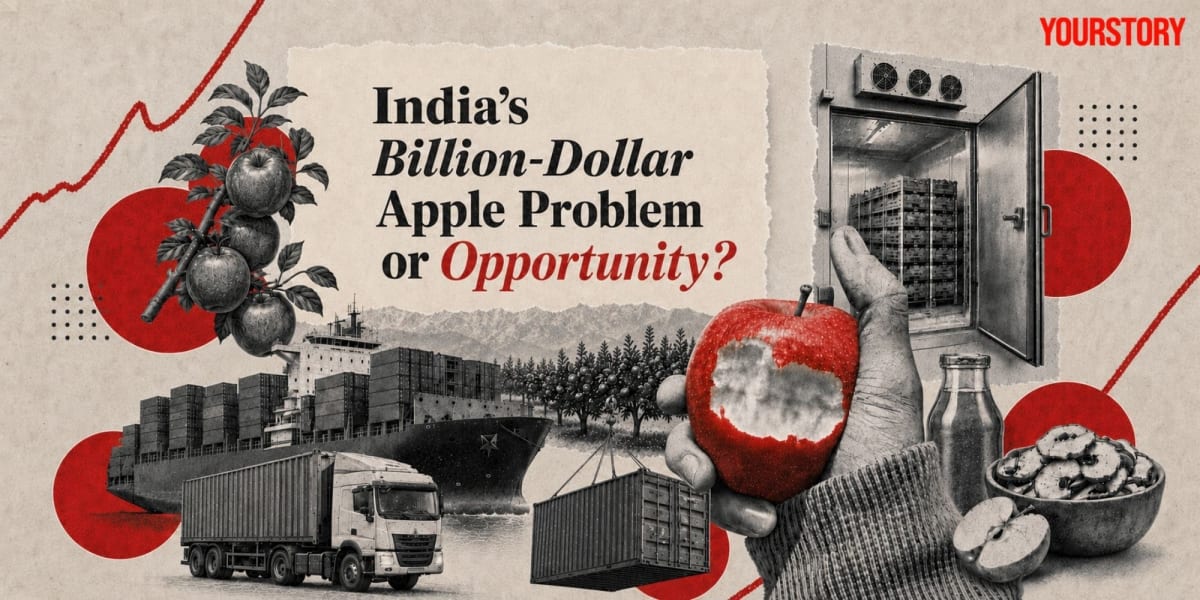
India Builds Cold Storage to Keep Apples Fresh Year-Round
India grows record apple crops but imports millions of dollars worth because homegrown fruit stays fresh for only 8 to 10 days outside storage. A quiet revolution in cold storage facilities is changing that, letting farmers choose when to sell and earning better prices months after harvest.
Kashmiri farmers are solving a puzzle that has cost India $418 million a year: how to make their record apple harvest last beyond autumn.
India produced 2.5 million tonnes of apples in 2024, a record crop. Yet the country still imported 560,000 tonnes of foreign fruit, nearly a quarter of what it grows at home. The reason isn't lack of apples. It's lack of time.
Kashmiri apples ripen between August and November. Once picked and removed from cold storage, they stay fresh for just 8 to 10 days at room temperature. For four months, markets overflow with cheap local fruit. For the other eight months, India fills shelves with imports from Iran, Turkey, America and beyond.
But a storage revolution has been quietly unfolding in Jammu and Kashmir, which grows three-quarters of India's apples. Lassipora in Pulwama district now houses 83 controlled-atmosphere storage facilities holding 345,000 tonnes of fruit. Shopian district added another 50,000 tonnes of capacity, and neighboring areas built 75,000 more.
Twenty new storage projects are under construction. When complete, Kashmir Valley will store up to 600,000 tonnes of apples in conditions that keep them crisp and sellable for months.
Farmers who once dumped unsold fruit on highways at giveaway prices now hold back their harvest. Early 2026 data shows 60 percent of stored apples were still waiting in facilities, with growers betting on better prices as winter stretched into spring.
The strategy works best for premium fruit stored in top facilities, but the shift is real. Controlled-atmosphere storage extends shelf life dramatically, letting apples picked in September reach consumers in February or March in excellent condition.
The Ripple Effect
The storage boom does more than help individual farmers earn better money. It's rebalancing India's entire apple economy.
When domestic fruit stays fresh longer, imports face stiffer competition during the lean months. Prices stabilize across the year instead of swinging from 80 rupees per kilo in September to 220 rupees by January. Consumers get consistent access to homegrown varieties they prefer.
Processing plants and juice factories also benefit from steadier supply. About one-third to 40 percent of Kashmir's crop grades high enough for premium sale or long-term storage. Getting that fruit to market in good condition, when demand peaks, turns waste into profit.
The timing gap that drove imports is narrowing, not because India changed the seasons, but because it built the infrastructure to work around them. More cold storage means farmers control when their apples earn money, not just when they're picked.
India still has work to do on grading, packaging, and expanding apple varieties consumers want. But the hardest piece of the puzzle, keeping millions of tonnes of fruit fresh through eight lean months, is falling into place one storage facility at a time.
More Images




Based on reporting by YourStory India
This story was written by BrightWire based on verified news reports.
Spread the positivity!
Share this good news with someone who needs it