India Replaces Foreign Military Dogs With Native Breeds
India's oldest paramilitary force is phasing out foreign dog breeds by 2050, choosing indigenous dogs that are just as skilled and better adapted to local conditions. The Assam Rifles is leading the charge with disease-resistant dogs from Manipur and Tamil Nadu.
India's Assam Rifles is bringing its canine soldiers home after nearly two centuries of relying on foreign breeds.
The paramilitary force, established in 1835, started a pilot program in 2022 with six Tangkhul Hui dogs from Manipur's Ukhrul district. These indigenous dogs proved so successful that the Ministry of Home Affairs issued a directive in 2025 for all armed forces to recruit more Indian breeds.
Now the Assam Rifles is adding a second native breed to its squad. In April, the force will welcome 10 Kombai dogs from Tamil Nadu, kicking off a partnership between two Indian breeds that could replace foreign dogs entirely by 2050.
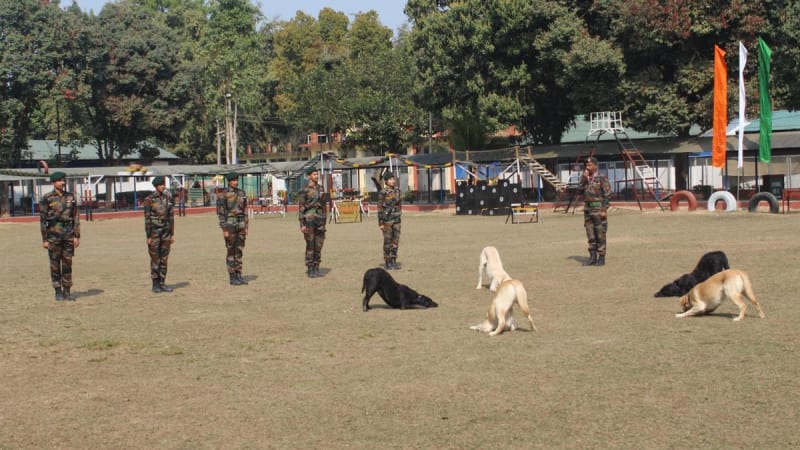
"We are in the process of identifying the parent stock of the Kombai for breeding," said Lt. Col. Alok Palei, Commanding Officer of the Assam Rifles Dog Training Centre in Jorhat. The facility currently trains 104 dogs, all foreign breeds like Belgian Malinois, German Shepherds, and Labradors.
The indigenous breeds bring serious advantages. The Tangkhul Hui is highly disease-resistant and has been used for hunting for generations. The Kombai, traditionally a guard and hunting dog, is known for its loyalty and adaptability to challenging terrain.
These four-legged soldiers play a critical role in security operations. They help the paramilitary force seize major caches of arms and narcotics across northeastern states and Jammu and Kashmir, working as both guard dogs and trackers on the frontlines.
The Ripple Effect
The shift to indigenous breeds creates opportunities beyond security. Breeding programs need to identify genetically superior parent stock, which means investing in local dog populations that have been overlooked for decades. Rural communities in Manipur and Tamil Nadu that have preserved these breeds are now gaining recognition for their stewardship.
The training pipeline takes 15 years from identifying parent dogs to deploying fully trained animals. But the Assam Rifles is moving fast, planning to fully integrate both breeds into its 344-dog squad by March 2027.
Handlers undergo 23 weeks of basic training, learning everything from obedience techniques to four weeks of canine first aid. The dogs themselves complete a 12-week basic course with regular refresher training, ensuring they stay sharp in the field.
The switch proves that homegrown solutions can match or exceed foreign imports when given the chance.
Based on reporting by The Hindu
This story was written by BrightWire based on verified news reports.
Spread the positivity!
Share this good news with someone who needs it