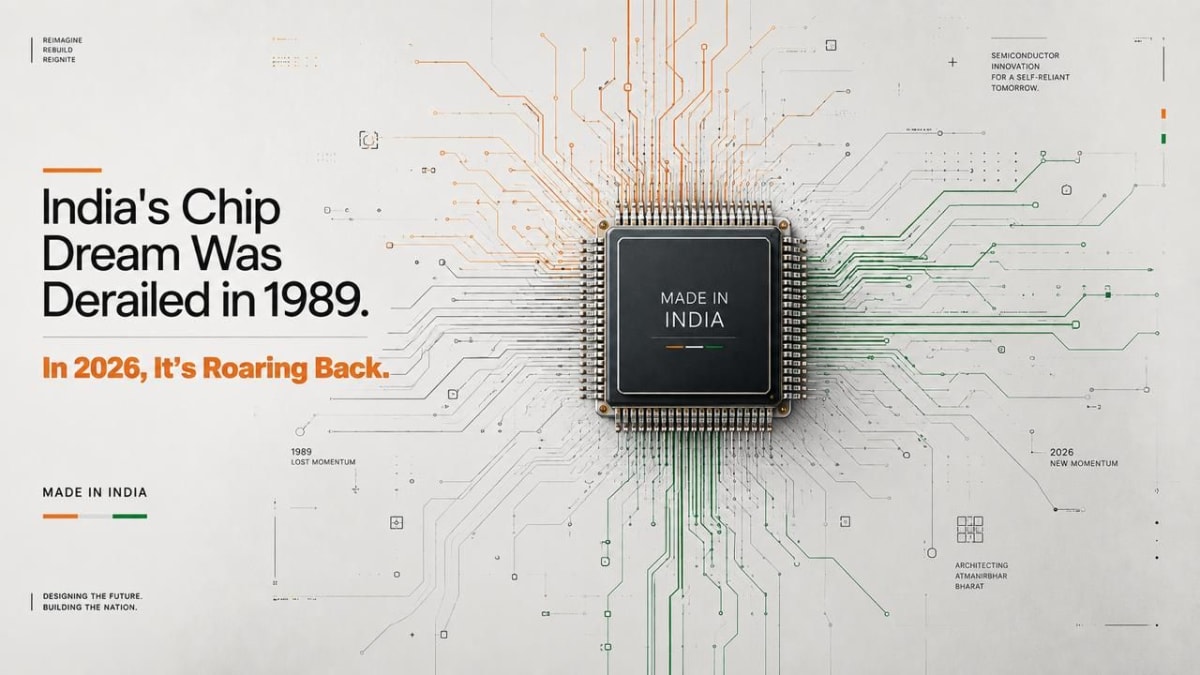
India Ships First Commercial Chips After 37-Year Gap
After a 1989 fire derailed its semiconductor dreams, India just shipped its first commercial memory chips in 2026. Twelve factories worth $19 billion are now rising across the country.
In February 2026, workers at a gleaming factory in Gujarat handed Dell Technologies the first memory modules made in India in nearly four decades, closing a gap that began with flames and bureaucracy but ends with billions in machinery humming to life.
India was actually ahead of the curve once. The country started producing semiconductors in 1984, three years before Taiwan's TSMC even existed. Then a catastrophic fire destroyed the main production line in 1989, and the momentum never recovered until now.
Fast forward to 2026, and the landscape looks completely different. Micron Technology's $2.75 billion plant in Sanand opened in February and is already shipping products. A month later, Kaynes Semicon went from groundbreaking to commercial production in just 14 months, a timeline that would make most industrial projects blush.
The numbers tell the comeback story. Twelve semiconductor manufacturing projects worth roughly $19 billion have government approval and are either running or under construction. Tata Electronics is building India's first commercial wafer fabrication plant in partnership with Taiwan's PSMC, a $10.5 billion facility that's already 50 percent complete and targeting its first chips by late 2026.
Sanand, Gujarat has become the unexpected center of India's chip universe. Three facilities opened there within five months, with CG Semi's power management chip plant joining the cluster in July. The town that was once known mainly for car factories now hosts the country's densest concentration of semiconductor manufacturing.
The Ripple Effect
This isn't just about making chips. India approved a second phase of semiconductor support worth $15 billion in July before the first phase even finished, a sign that government policy is moving at the speed of actual construction for once.
The ripples reach beyond Gujarat. Assam is getting a $3.1 billion assembly and test facility from Tata that will process 48 million chips daily at full capacity. Odisha is building India's first silicon carbide plant. States are competing to host facilities that didn't exist on Indian soil two years ago.
Engineers who left for Taiwan and Arizona are coming home to cleanrooms in Bhubaneswar and Mohali. College graduates have semiconductor jobs that pay well and don't require emigration. Supply chains that routed through three countries might soon have a fourth option.
The transformation from policy announcement to factory floor happened because companies committed billions before the ecosystem existed, and this time the permits and power connections materialized alongside the construction crews instead of years later.
India lost 37 years to a fire and bureaucratic friction, but 2026 is proving that comebacks can be built one wafer at a time.
More Images




Based on reporting by YourStory India
This story was written by BrightWire based on verified news reports.
Spread the positivity!
Share this good news with someone who needs it
%2Ffile%2Fattachments%2Forphans%2FBMDBSAresults2_828301.jpg)