Indian Photographer Captured 30,000 Images 150 Years Ago
Long before photography became common, Lala Deen Dayal documented a disappearing India with 30,000 stunning images of monuments, people, and landscapes. After thousands of his glass plates were nearly lost to scrap dealers, a 1989 rescue saved nearly 3,000 windows into history.
A civil engineer turned photographer just created one of the most important visual records of 19th century India, and his work almost vanished forever.
Lala Deen Dayal started as a surveyor in Indore in 1866, using photography simply to document land. Within a decade, the camera had become his calling.
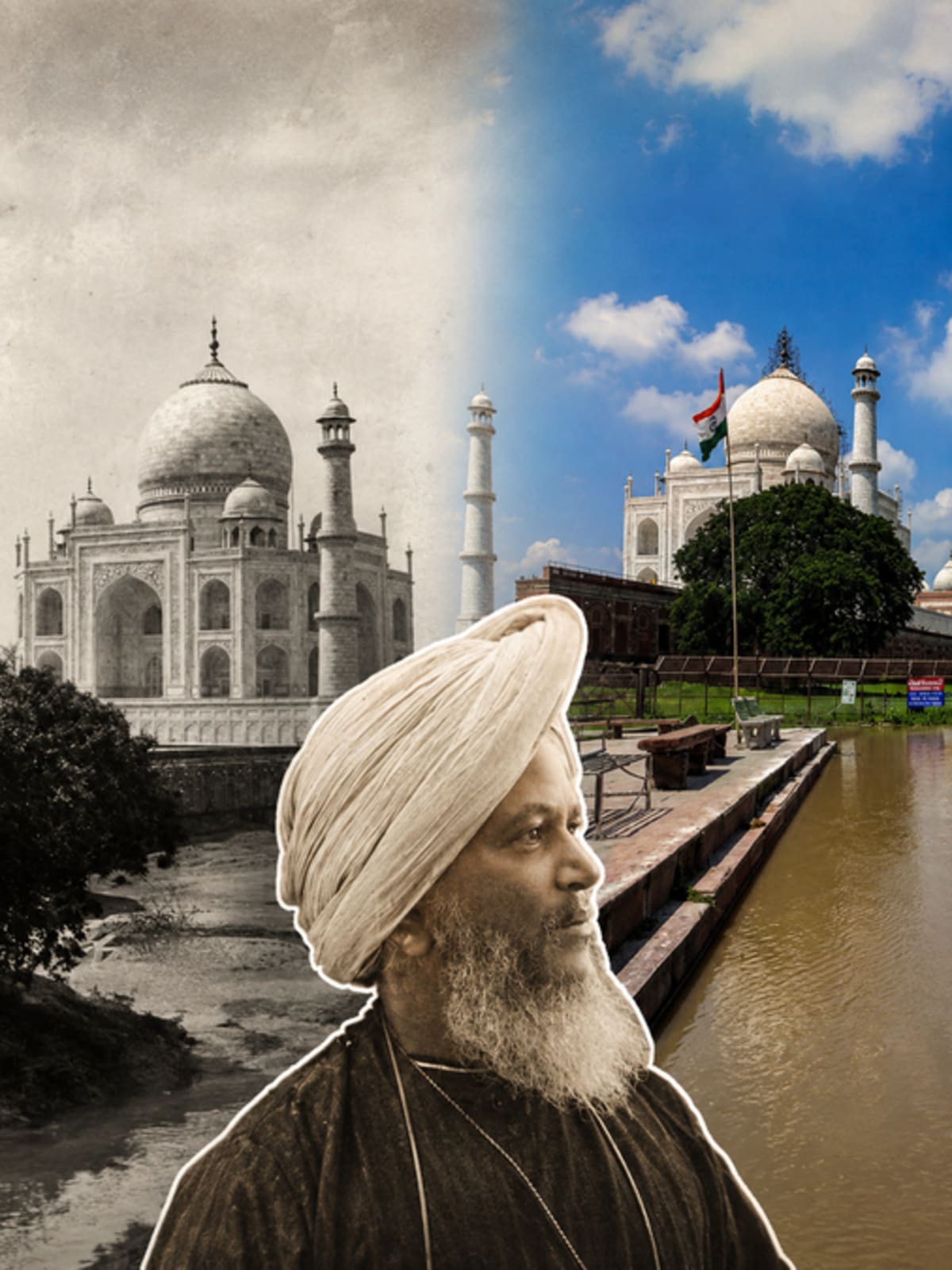
By 1882, Deen Dayal was traveling across India with Sir Lepel Griffin, photographing the Taj Mahal, Sanchi, and Ellora at a time when European photographers dominated the field. His images weren't just beautiful. They became detailed records of architectural treasures, capturing India's heritage stone by stone.
But Deen Dayal photographed more than monuments. His lens documented steam engines cutting through landscapes, British officials and Indian Maharajas, royal ceremonies and everyday life. He captured a country transforming between tradition and modernity.
The Nizam of Hyderabad recognized his extraordinary talent and appointed him court photographer, bestowing the title "Raja Bahadur Musavvir Jung Bahadur," meaning "Bold Warrior of Photography." It was a remarkable achievement in an era of rigid social hierarchies.
Deen Dayal was also a savvy entrepreneur. His studios sold prints and portraits, employed dozens of workers, and even operated a separate zenana studio in Hyderabad where women could be photographed privately, respecting cultural norms of the time.
The Ripple Effect
Over his career, Deen Dayal produced an estimated 30,000 photographs on fragile glass plates. After his death, tragedy struck. Thousands of those irreplaceable negatives were sold as scrap, and decades of India's visual history nearly disappeared.
Then came the rescue. In 1989, the Indira Gandhi National Centre for the Arts acquired 2,857 glass plate negatives from the Dayal studios, creating the largest repository of his work. Those rescued plates became precious windows into an India that no longer exists.
Today, researchers and history lovers can study his images of monuments before modern restoration, landscapes before development, and social worlds that have vanished. His entrepreneurial spirit and artistic vision helped shape how India would see itself and be seen by the world.
One photographer's dedication preserved 150 years of history that future generations can still witness.
Based on reporting by The Better India
This story was written by BrightWire based on verified news reports.
Spread the positivity!
Share this good news with someone who needs it