India's Ancient Crater Lake Gets Court Protection Order
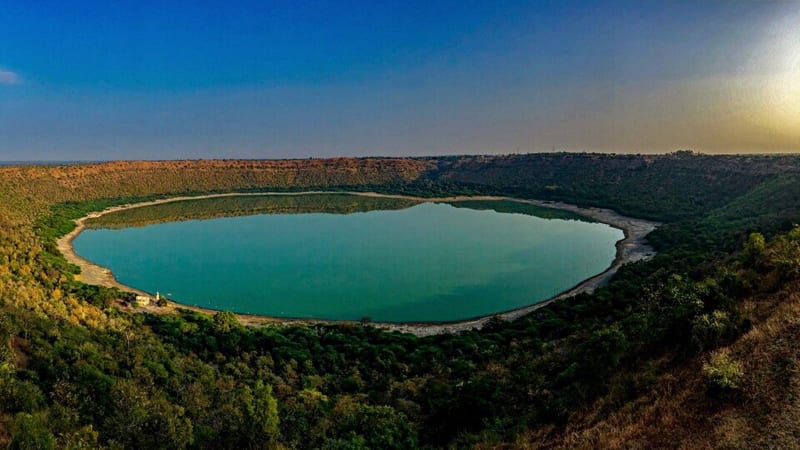
India's highest court just stepped in to save a 50,000-year-old meteorite crater lake and nine ancient temples from an ecological crisis. The rare lake hosts microorganisms found nowhere else on Earth.
A natural wonder that has survived for 50,000 years is finally getting the protection it deserves.
The Bombay High Court launched emergency legal action to save Lonar Crater Lake in Maharashtra, India, after water levels rose nearly 20 feet in recent months. Nine temples, some over 1,200 years old, now sit partially or completely underwater.
But the real breakthrough here is how fast officials are acting. The court gave government agencies just two weeks to respond with action plans, showing that protecting heritage and nature can move at the speed it needs to.
Lonar Crater formed when a meteorite slammed into Earth during the Ice Age. It's the only impact crater in basaltic rock anywhere in India, and its water is so salty and alkaline that only specialized bacteria and algae can survive there.
These rare microorganisms sometimes turn the entire lake pink. Scientists study them because they thrive in conditions similar to early Earth and even Mars.
The rising water threatens this unique ecosystem in two ways. Fresh water flowing in dilutes the salt, which could kill off species that took millennia to adapt. And ancient stone temples along the rim, including the Kamalja Devi and Gaumuk temples, face permanent damage.
The Ripple Effect
What makes this moment special is watching multiple systems work together. The court appointed a legal advocate specifically to speak for the lake and temples. Scientists from IIT Bombay are tracking exactly where the excess water comes from. And officials must now report on everything from sewage treatment to tree planting programs that might be holding too much moisture in the soil.
The court also ordered creation of a real-time monitoring system for water quality. That means scientists can track pH and salinity levels continuously, catching problems before they become disasters.
This kind of coordinated response shows how heritage protection is evolving in India. Rather than waiting for damage and then trying to fix it, authorities are building systems to prevent harm before it happens.
The lake has been a protected geological monument since 1979, but enforcement often lagged. Now it's getting the active management it always needed.
Local communities have watched this crater for generations, and they're finally seeing their concerns turn into concrete action.
Based on reporting by Indian Express
This story was written by BrightWire based on verified news reports.
Spread the positivity!
Share this good news with someone who needs it