India's Coastal Clam Tradition Is Climate-Friendly Protein
For generations, coastal communities in India have harvested clams for their kitchens. Scientists now recognize this humble seafood as one of the planet's lowest-impact protein sources.
At low tide in Goa's coastal villages, women step into riverbeds with simple scraping tools, searching for clams hidden beneath the mud. By evening, the day's catch becomes curry, gets tossed with spices, or lands on family dinner plates across Goa, Kerala, Karnataka, and Bengal.
This centuries-old practice is now catching global attention for an unexpected reason. As researchers search for proteins that don't strain the planet, clams are emerging as quiet climate champions.
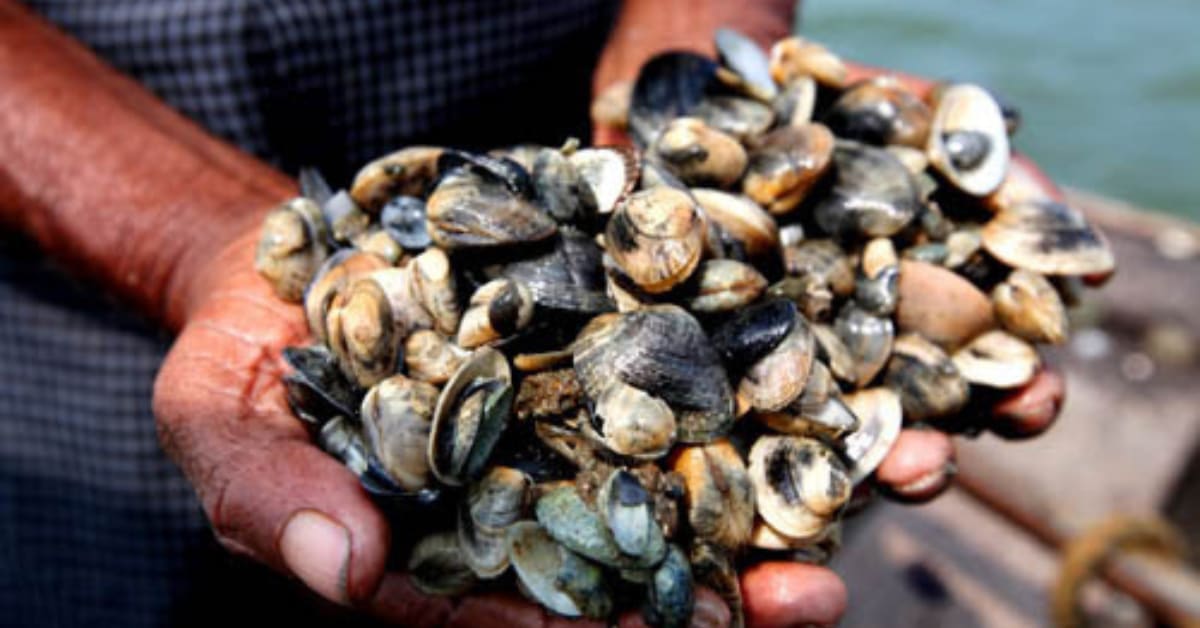
Unlike most farmed seafood or livestock, clams need almost nothing to grow. They survive by filtering naturally occurring phytoplankton from water, requiring no feed, no antibiotics, no fertilizers, and no cleared land.
The numbers tell a striking story. Farmed prawns can produce around 18.2 kg of CO₂ equivalent per 100 grams of protein, while farmed fish generate about 6.0 kg. Clams produce just a fraction of that, with bivalve aquaculture generating roughly 11.1 tonnes of emissions per tonne of protein compared to beef's 300 tonnes.
But clams do more than just avoid harm. Each clam acts as a natural water filter, drawing in seawater, trapping particles, and releasing cleaner water back into its surroundings.
A single littleneck-sized clam can filter several gallons of seawater daily. Multiply that across a clam bed, and the result is clearer water, reduced turbidity, and better conditions for seagrass growth.
This filtering also removes excess nitrogen from coastal waters by converting it into shells and tissue. When harvested, that nitrogen leaves the ecosystem, helping prevent harmful algal blooms that plague many coastlines.
The Ripple Effect
India's coastal communities never needed climate science to value clams. In Goa, black clams called khube and bay clams called tisryo appear in everyday dishes like Khubyanche Tonak, a coconut-based curry, or get stir-fried with tamarind and chilies.
In Kerala, they're known as kakka or elambakka and are cooked with grated coconut. Along the Konkan coast and in Bengal, local variations honor the same ingredient shaped by tides and seasons.
This isn't industrial aquaculture. It's small-scale, seasonal harvesting closely tied to ecological rhythms and traditional knowledge passed down through generations.
In Bhatti Ward in Nerul, North Goa, the connection runs even deeper. Every second Sunday in May, the village celebrates Tisreachem Fest, the Feast of Clams, gathering with traditional scraping tools to honor their relationship with this humble food.
Global food production contributes roughly 35% of human-caused greenhouse gas emissions, with animal-based foods dominating that footprint despite providing only about 20% of the world's calories. As conversations about sustainable diets focus on new technologies and plant-based alternatives, India's coastal communities have been quietly practicing a solution all along.
From coconut curries to spicy masalas, India's clam recipes have been climate-friendly long before sustainability became a buzzword.
More Images
%2Fenglish-betterindia%2Fmedia%2Fmedia_files%2F2026%2F05%2F20%2Fclams-2026-05-20-19-32-27.png)
%2Ffilters%3Aformat(webp)%2Fenglish-betterindia%2Fmedia%2Fmedia_files%2F2026%2F05%2F20%2Fclams-1-2026-05-20-20-41-12.png)
%2Ffilters%3Aformat(webp)%2Fenglish-betterindia%2Fmedia%2Fmedia_files%2F2026%2F05%2F20%2Fclams-2-2026-05-20-20-44-02.png)
Based on reporting by The Better India
This story was written by BrightWire based on verified news reports.
Spread the positivity!
Share this good news with someone who needs it