India's First Private Rocket Reaches Orbit Successfully
A privately built rocket just made India only the third nation in the world with private orbital launch capability. Skyroot Aerospace's Vikram-1 successfully placed payloads into orbit, opening a new era for India's space industry.
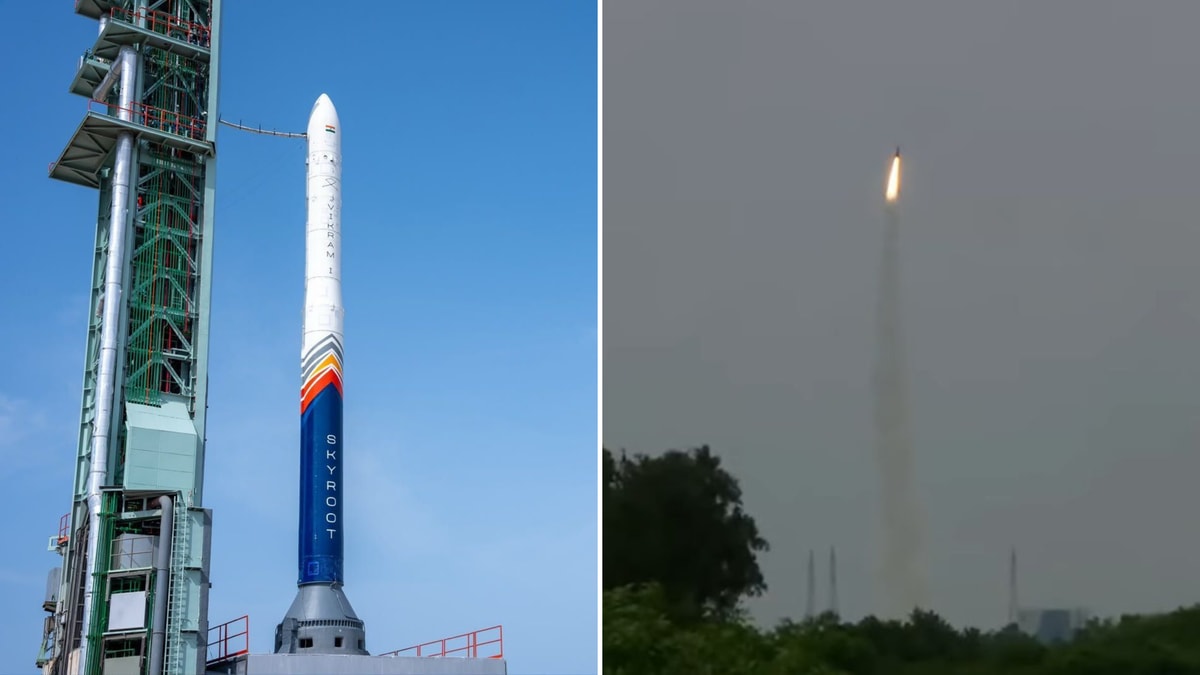
India joined an elite club of space-faring nations on Saturday when Vikram-1, the country's first privately developed orbital rocket, successfully reached space and delivered its payload to low Earth orbit.
The rocket, built by Skyroot Aerospace, lifted off from the Satish Dhawan Space Centre at 12:05 p.m. on July 18, 2026. Named after India's pioneering space scientist Vikram Sarabhai, the seven-story rocket carried technology demonstration payloads, experimental equipment, and even postcards into a 450-kilometer orbit.
The launch had one small hiccup. Five minutes before the original 11:30 a.m. launch time, the automated launch sequence detected an issue and paused the countdown. The team quickly resolved the problem and rescheduled for just 35 minutes later.
What makes Vikram-1 special isn't just that it reached space. The entire rocket was designed and built by a private company using cutting-edge technology, including 3D-printed engines, high-thrust solid-fuel boosters, and an all-carbon composite structure.
The rocket can carry small satellites weighing up to 350 kilograms to low Earth orbit. This test flight, called Mission Aagaman (meaning "arrival"), carried six technology payloads from companies like Grahaa Space, Cosmoserve, and DCubed, plus artwork and micro-sculptures of legendary Indian scientists.
The Ripple Effect
This launch puts India alongside the United States and China as the only countries with successful private orbital rocket launches. For India's growing space industry, this means new opportunities for satellite launches, scientific research, and commercial space ventures at lower costs.
Pawan Kumar Chandana, co-founder and CEO of Skyroot Aerospace, emphasized this was just the beginning. The data collected from this first test flight will help the company refine its technology and establish regular launch schedules. The Indian National Space Promotion and Authorization Centre granted launch authorization, showing how government support is helping private space companies thrive.
Private space launch capabilities mean more frequent satellite deployments for communications, weather monitoring, and Earth observation. It also means India can compete in the growing global market for small satellite launches, creating jobs and advancing technology.
The success comes after years of planning, testing, and innovation by Skyroot's team. Every system on Vikram-1 was tested extensively on the ground before this historic flight, but nothing compares to seeing it perform in the real environment of space.
The future looks bright as India's private space sector takes its place on the global stage, proving that innovation and ambition can reach new heights.
Based on reporting by The Hindu
This story was written by BrightWire based on verified news reports.
Spread the positivity!
Share this good news with someone who needs it