India's Mobile Elephant Hospital Treats Patients in the Wild
When a wild elephant mother in India couldn't walk due to an injured foot, veterinarians spent 10 days treating her in the field instead of risking transport. Wildlife SOS's 'Haathi Sewa' brings X-rays, medicines, and emergency care directly to injured elephants wherever they are.
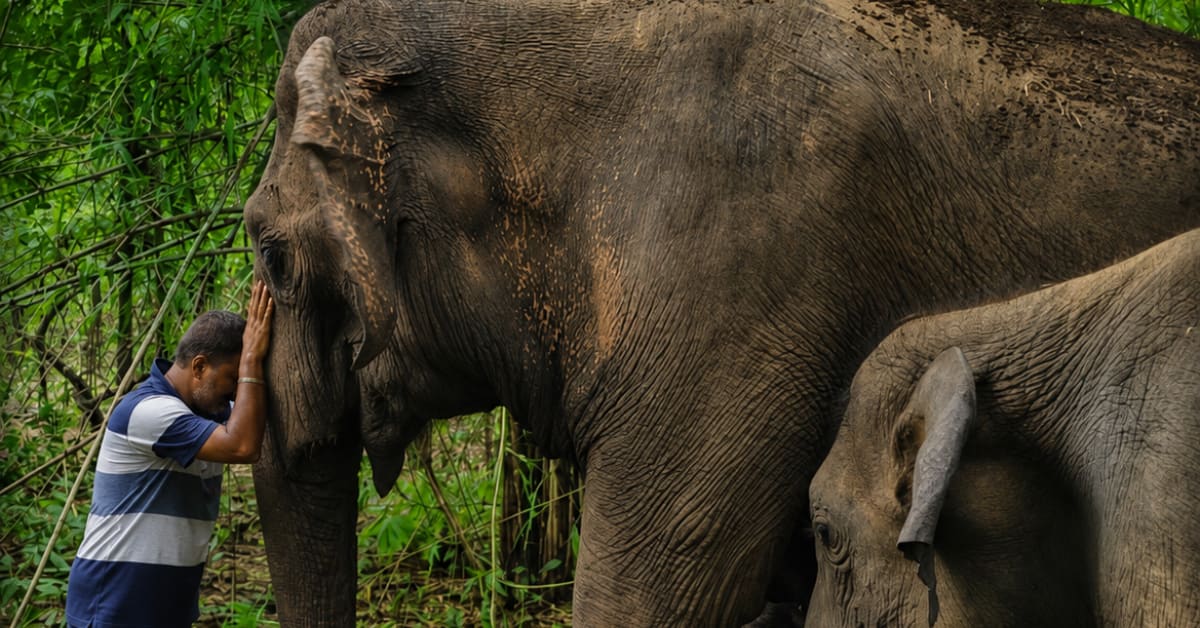
In Jharkhand, India, a wild elephant mother struggled to move. Her injured footpad made walking painful, and her young calf stayed close by her side.
Moving a several-ton wild animal to a hospital would cause dangerous stress, especially with an injury and a baby to protect. So the veterinarians made a different choice: they brought the hospital to her.
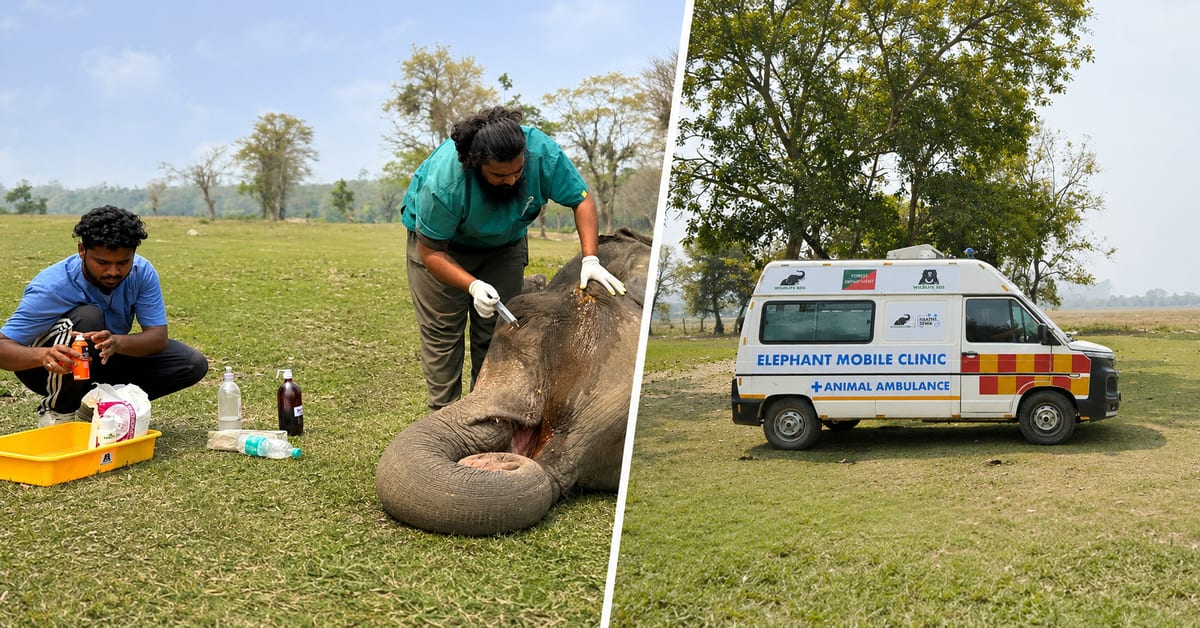
For 10 days, the team stayed in the field, treating the mother elephant where she stood and monitoring her recovery alongside her calf. They never had to separate them or risk the trauma of transport.
This is the mission behind Haathi Sewa, Wildlife SOS's mobile veterinary program. The name means "in service to elephants," and that's exactly what it delivers.
The mobile unit works like a clinic on wheels, equipped with X-ray machines, blood testing equipment, thermal imaging, and medicines for emergency care. Veterinarians can perform wound treatment, fluid therapy, eye exams, laser therapy, and foot care right in the field.
"If an elephant needs urgent medical care, moving it may not always be the safest option," explains Dr. Arun A Sha, Director of Research & Veterinary Operations at Wildlife SOS. "Haathi Sewa is about taking quality veterinary care to elephants where they are."
The approach changes everything about elephant rescue. Instead of asking "How do we transport this elephant?" teams can ask "What does this elephant need right here?"
That shift matters especially during human-elephant conflict situations. An injured elephant might be near a village, beside a road, or surrounded by frightened onlookers. The animal may charge or refuse to move not from aggression, but from pain and fear.
Wildlife SOS co-founder Geeta Seshamani emphasizes understanding the elephant's perspective. "An elephant that behaves aggressively during a rescue may be frightened, injured or traumatised," she says. The team assesses what's causing the reaction before deciding how to approach treatment.
The Ripple Effect
Haathi Sewa's impact extends beyond emergency response. Every program includes training for mahouts and local caregivers, teaching them to recognize early signs of illness or injury in elephants. This education helps prevent small problems from becoming emergencies.
The mobile hospital also reduces the impossible choice between an elephant's immediate safety and its long-term wellbeing. Wild elephants stay with their herds and in familiar territory. Captive elephants avoid the trauma of transport while still receiving hospital-quality care.
For the mother elephant in Jharkhand, the mobile treatment worked. She recovered without ever leaving her calf's side, and both eventually returned to their natural routine.
When hospitals can't reach the patient, bringing the patient to the hospital isn't always the answer. Sometimes the best medicine is meeting them exactly where they are.
More Images
%2Fenglish-betterindia%2Fmedia%2Fmedia_files%2F2026%2F08%2F12%2Fmobile-clinic-for-hospitals-2026-08-12-21-45-31.png)
%2Fenglish-betterindia%2Fmedia%2Fmedia_files%2F2025%2F11%2F20%2Fwild-at-heart-banner-image-microsite-banner-2025-11-20-16-17-04.jpg)
%2Ffilters%3Aformat(webp)%2Fenglish-betterindia%2Fmedia%2Fmedia_files%2F2026%2F08%2F12%2Fwildlife-sos-4-2026-08-12-20-33-51.png)
Based on reporting by The Better India
This story was written by BrightWire based on verified news reports.
Spread the positivity!
Share this good news with someone who needs it